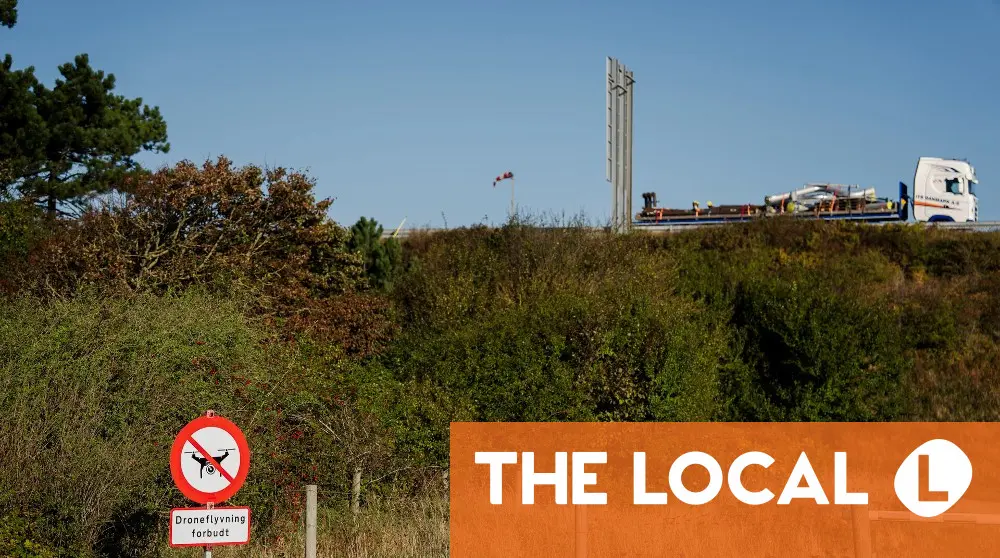
Europe Fortifies Against Drone Threats: A New Defense Ecosystem takes Shape
Recent discussions among European Union leaders signal a significant shift in approach to regional security, specifically addressing the escalating threat of drones – and the mysterious flights that accompany them. While concerns about Russian activity are paramount,the emerging strategy aims for a broader,more resilient defense “ecosystem” across the continent. This isn’t about building a single “wall,” but a layered, adaptable system.
The Rising Drone Threat & Eastern Flank Focus
The impetus for this initiative stems from the increasing sophistication and prevalence of drone warfare, as tragically demonstrated in Ukraine. The eastern flank - nations bordering Russia - naturally takes precedence due to geographical proximity. However, the EU recognizes that drone threats aren’t confined by borders.
“Technology is changing so rapidly that we cannot have one idea and believe that will solve all our problems,” Danish Prime Minister Mette Frederiksen stated, highlighting the need for constant adaptation.
Learning from Ukraine’s experience
Ukraine has become a global leader in countering drone attacks after nearly four years of conflict. The EU intends to leverage this hard-won expertise.
President Volodymyr zelensky has pledged to share Ukraine’s experience, which includes:
* Extensive sensor networks: Providing early warning and tracking capabilities.
* Low-cost counter-drone technologies: Innovative solutions for neutralizing threats without exorbitant expense.
* A dynamic, adaptive approach: Constantly evolving tactics to stay ahead of evolving drone technology.
Beyond “iron Domes” & “Drone Walls”
While the idea of impenetrable defenses is appealing, leaders acknowledge the complexity of the challenge. French President Emmanuel Macron cautioned against simplistic solutions like “iron domes” or “drone walls,” emphasizing a more nuanced reality.
The focus is shifting towards a multi-layered system incorporating detection, identification, and response capabilities. This includes exploring advanced technologies and fostering collaboration between member states.
The Funding Question: A Critical Hurdle
As with any large-scale EU initiative, financing remains a significant obstacle. Countries like Germany, focused on bolstering their own military capabilities, are hesitant to shoulder the entire financial burden.
Currently, a €150 billion loan scheme exists, largely utilized by eastern European nations. Though, some argue that these frontline states, effectively shielding the rest of Europe, deserve greater financial support.
estonian prime Minister Kristen Michal advocates for “common procurement” and “common instruments for sharing the burden with the Eastern border.” EU Defense Commissioner Andrius Kubilius estimates the project will require “several billion euros, not hundreds of billions.”
Why the EU is Taking the Lead
Traditionally, NATO has been the primary forum for defense discussions. Though, growing uncertainty surrounding U.S. commitment to Europe, notably under a potential second Trump administration, is prompting the EU to assume a more prominent role.
This isn’t about replacing NATO, but about bolstering European self-reliance and ensuring a robust defense capability independent of external factors.
What’s Next? A Concrete Proposal is Due
Following initial discussions in Copenhagen, EU leaders have authorized the European Commission to develop a detailed proposal. This includes:
* Detailed cost analysis: A comprehensive breakdown of projected expenses.
* Specific technological solutions: Identifying and evaluating potential technologies.
* A clear funding mechanism: Outlining how the project will be financed.
The Commission has three weeks to present its findings at the next EU leaders’ meeting in Brussels. European council chief Antonio Costa has declared this upcoming meeting “decision time.”
Implications for You & European Security
This initiative represents a proactive step towards safeguarding European security in a rapidly evolving threat landscape. For you, as a European citizen, it means a greater focus on investment in defense technologies, increased collaboration between member states, and a more resilient security posture.
While challenges remain – particularly regarding funding and implementation – the EU’s commitment to building a comprehensive drone defense ecosystem signals a new era of European security cooperation. The goal is not just to react to threats, but to anticipate and mitigate them, ensuring a safer future for all.
Worth a look