
As the global health community continues to prioritize rapid vaccine development and pandemic preparedness, recent financial developments have brought renewed attention to the role of specialized biotechnology firms in international health initiatives. PopBioTech, an affiliate of the South Korean vaccine developer Eubiologics, has secured significant funding from the Coalition for Epidemic Preparedness Innovations (CEPI) to advance its research and development capabilities.
This funding represents a strategic investment in the enhancement of vaccine platform technologies, specifically targeting the acceleration of manufacturing processes and the improvement of vaccine accessibility on a global scale. The capital infusion, which amounts to approximately 9.7 million USD, is earmarked for the development of advanced delivery systems that could prove critical in responding to future infectious disease outbreaks, as noted in official project disclosures from the Coalition for Epidemic Preparedness Innovations.
Strategic Alignment with CEPI’s Global Mission
The partnership between CEPI and PopBioTech underscores a broader trend in public health policy: the decentralization of vaccine manufacturing. CEPI, founded in 2017 to develop vaccines against emerging infectious diseases, has consistently focused on funding organizations that demonstrate potential for rapid, scalable, and equitable vaccine production. By providing these funds, CEPI aims to strengthen the regional capacity for vaccine manufacturing, particularly in markets that have previously faced hurdles in supply chain logistics.
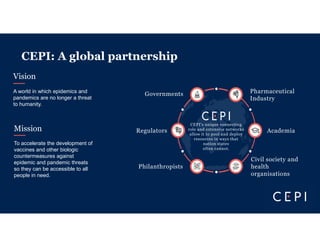
For Eubiologics, the success of its affiliate, PopBioTech, in securing this grant serves as a validation of its technological infrastructure. The company has long been recognized for its work in oral cholera vaccines and its commitment to expanding its reach into other prophylactic medical solutions. The collaboration with CEPI allows PopBioTech to leverage international expertise while contributing to the global stockpile of medical countermeasures.
Understanding the Technology: Why It Matters
At the heart of this investment is the development of platforms that can be rapidly adapted to new pathogens. The biotechnology sector is currently shifting toward “plug-and-play” vaccine architectures. These systems allow scientists to swap out specific genetic components of a vaccine—the “antigen”—while keeping the delivery mechanism consistent. This approach drastically reduces the time required for clinical trials and regulatory approval, as the safety profile of the delivery vehicle is already well-characterized.
According to CEPI’s strategic framework for pandemic response, the goal is to compress the timeline for vaccine development to within 100 days of identifying a new viral threat. Investments in companies like PopBioTech are essential components of this “100 Days Mission.” By supporting specialized biotech firms, CEPI is effectively creating a robust ecosystem of manufacturers capable of pivoting their production lines at a moment’s notice.
Impact on Regional Healthcare and Innovation
The influx of funding is expected to have a tangible impact on the pharmaceutical landscape in South Korea and the broader Asian market. By integrating with global health initiatives, local firms gain access to international clinical networks and regulatory guidance. This fosters a collaborative environment where local innovations are pressure-tested against global standards of safety, and efficacy.
the financial support from CEPI serves as a signal to other investors that the technology developed by PopBioTech is commercially and scientifically viable. While the funding is specifically tied to pandemic preparedness projects, the underlying research often has spillover benefits for other areas of medicine, including oncology and chronic disease management, where similar delivery technologies are being explored.
Looking Ahead: The Path to Implementation
As PopBioTech begins to deploy these resources, the focus will shift toward technical milestones. These include the optimization of manufacturing yields, the stabilization of vaccine formulations for transport in diverse climates, and the initiation of pilot clinical studies. Stakeholders and observers in the global health sector will be monitoring these developments closely to see how the project scales over the coming months.
For public health officials, the priority remains the successful transition of these technologies from the laboratory to mass production. Future updates regarding the project’s progress will be available through CEPI’s official news portal, which provides ongoing reports on the status of its various funded initiatives and partnership milestones.
We encourage our readers to stay informed on these developments. As the landscape of medical innovation continues to evolve, the role of public-private partnerships will remain a central theme in our coverage. Please feel free to share your thoughts or questions in the comments section below, and join the conversation on how global health funding is shaping the future of medicine.