For millions of homeowners across Europe, the monthly mortgage statement is more than just a bill; This proves a direct reflection of the volatility within the European money market. As of May 2026, the financial landscape is characterized by a renewed sense of tension for those holding variable-rate loans. The benchmark that dictates these payments—the Euribor—has moved past periods of relative stability, leaving borrowers to grapple with the reality of rising costs.
Understanding the Euribor impact on variable-rate mortgages requires a look beyond the headline numbers. It involves understanding the delicate mechanism of interbank lending and how a shift of even a few basis points can translate into hundreds of euros in additional monthly expenses. For many, the transition from a low-interest environment to a higher-rate regime is not merely a mathematical adjustment but a significant challenge to household liquidity and long-term financial planning.
As a financial journalist and economist, I have observed that the “sticker shock” associated with rate hikes often stems from a misunderstanding of how variable mortgages are structured. Unlike fixed-rate loans, where the cost of borrowing is locked in, variable mortgages are living documents. They breathe with the market, expanding and contracting based on the price at which European banks lend to one another. When the interbank market tightens, the burden shifts directly to the consumer.
The current trajectory of these rates suggests that the era of “cheap money” has evolved into a more complex environment. For borrowers, the priority has shifted from simply securing a loan to managing the risk of future fluctuations. This shift in strategy is essential for maintaining the delicate balance between home ownership and financial solvency.
What Exactly is the Euribor?
To understand why mortgage payments fluctuate, one must first define the Euro Interbank Offered Rate, commonly known as the Euribor. At its core, the Euribor represents the average interest rates at which a large panel of European banks borrow funds from one another. It serves as the primary reference rate for the European money market, providing the foundation for a wide array of financial products, including interest rate swaps, futures, savings accounts, and, most notably, mortgages Euribor Rates Information.

The Euribor is not a single, static number. Instead, it is calculated based on different maturities, which reflect the duration of the interbank loans. These range from one week to one year. For most homeowners, the 12-month Euribor is the most critical figure, as it is frequently used to determine the annual revision of mortgage installments. As of May 8, 2026, the rates across these maturities were as follows Euribor Rates Information:
- 1 week: 1.916%
- 1 month: 1.967%
- 3 months: 2.234%
- 6 months: 2.472%
- 12 months: 2.708%
These figures illustrate a clear upward slope: the longer the term of the loan, the higher the interest rate. This curve reflects the market’s expectation of risk and inflation over time. When these rates rise, the cost of borrowing for banks increases, and those costs are passed on to the consumer through the variable-rate mortgage mechanism.
The Anatomy of a Variable-Rate Mortgage
A variable-rate mortgage is composed of two primary elements: the reference index (the Euribor) and a fixed differential, often referred to as the “spread.” The spread is a percentage agreed upon between the borrower and the bank at the time the mortgage is signed. While the Euribor fluctuates daily, the spread typically remains constant throughout the life of the loan UCI Mortgage Guide.
The formula for calculating the interest payable is straightforward: Euribor + Spread = Total Interest Rate. This means that if the Euribor rises, the total interest rate increases, leading to higher monthly repayments. Conversely, if the index falls, the monthly payment decreases.
The timing of these changes depends on the specific terms of the mortgage contract. Most financial institutions apply updates on a half-yearly or annual basis. This process is typically automatic; the bank identifies the current state of the reference index and adjusts the installment amount without requiring intervention from the client Santander Mortgage Insights.
The Mathematical Impact: Real-World Examples
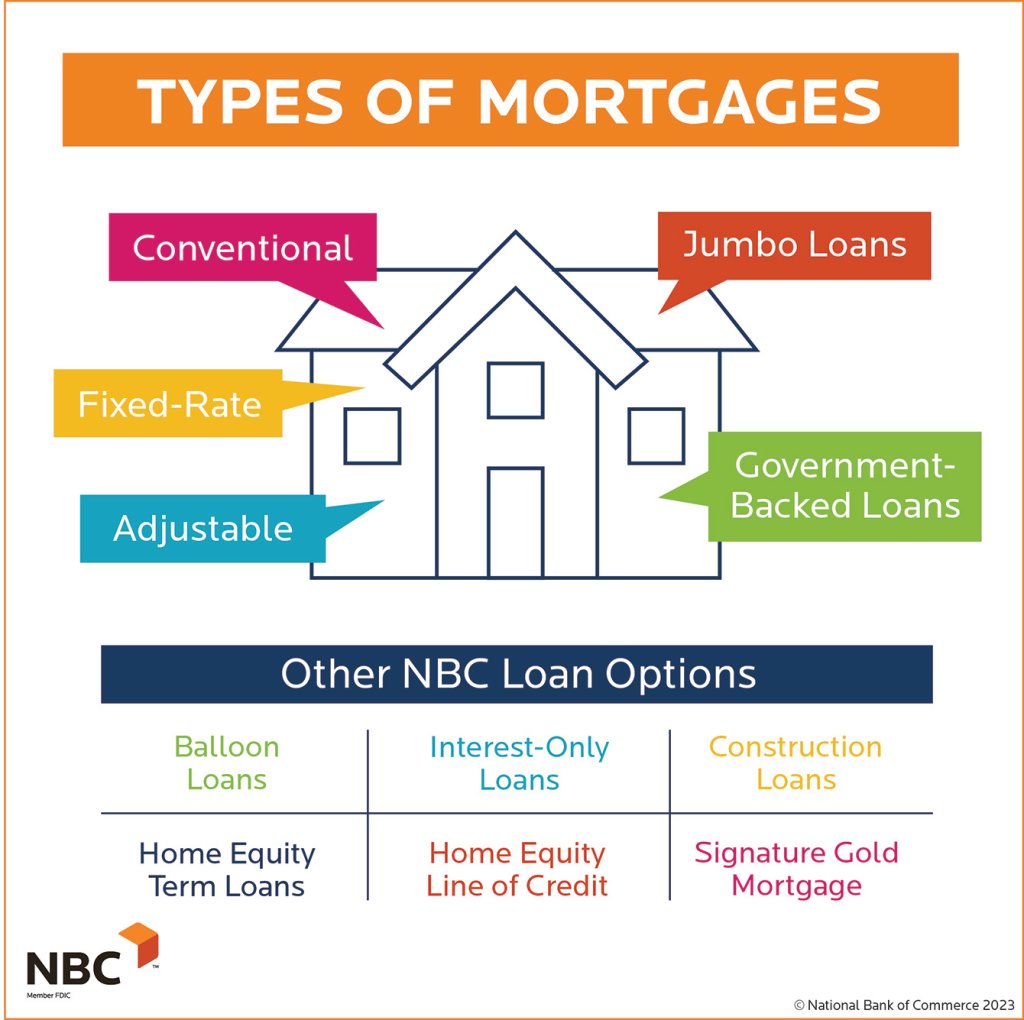
To visualize how these shifts affect a household budget, it is helpful to look at hypothetical scenarios. The difference between a low-rate environment and a high-rate environment can be stark. For instance, consider a mortgage of EUR 200,000 with a 25-year term and a 1% spread Santander Mortgage Insights:
- At a Euribor of 0.1%: The monthly repayment would be approximately EUR 762.83.
- At a Euribor of 0.5%: The monthly repayment rises to EUR 799.87.
While a 0.4% increase may seem marginal on paper, it results in a monthly increase of over EUR 37. When scaled across thousands of households, this represents a significant diversion of disposable income away from the broader economy.
The impact is even more pronounced when comparing current trends to historical peaks. Consider a EUR 120,000 mortgage with a 30-year term and a 2% spread UCI Mortgage Guide. If the Euribor were at -0.384%, the monthly payment would be approximately 508.6 euros. However, if the Euribor were to return to levels seen in 2008—around 5.393%—that same monthly payment could jump to 891.2 euros. This represents an increase of 382.6 euros per month, a surge that could push many households into financial distress.
Factors Driving Euribor Fluctuations
The Euribor does not move in a vacuum. It is influenced by a complex interplay of macroeconomic factors and policy decisions. The most significant driver is the interest rate policy set by the European Central Bank (ECB). When the ECB raises its benchmark interest rates to combat inflation or stabilize the currency, the Euribor generally follows suit UCI Mortgage Guide.
Beyond the ECB, other factors include:
- Economic Stability in Europe: General economic health, GDP growth, and inflation rates influence how banks perceive risk.
- Bank Solvency: The Euribor reflects the rate at which banks lend to *each other*. If banks perceive other banks as risky or insolvent, they will demand higher interest rates to lend funds, pushing the Euribor upward.
- Market Expectations: Because the Euribor has different maturities (like the 12-month rate), it often reflects what the market *expects* will happen to interest rates in the future.
This interconnectedness means that a homeowner in a small town is directly affected by high-level policy decisions made in Frankfurt and the systemic health of the European banking sector.
Financial Planning and Risk Mitigation
Given the inherent volatility of variable rates, financial experts emphasize the importance of rigorous budgeting. A widely accepted benchmark is that a mortgage payment should not exceed 30% to 40% of a household’s monthly income UCI Mortgage Guide. When the Euribor is low, it is tempting for borrowers to take on larger loans because the initial payments are affordable. However, this creates a “risk gap”—the difference between the current payment and what the payment would be if rates returned to historical averages.
For those currently feeling the “tension” of rising rates, several strategies can be considered:
- Stress Testing: Borrowers should calculate their potential payments if the Euribor were to rise by another 1% or 2% to ensure they have a sufficient financial buffer.
- Evaluating Fixed-Rate Options: In periods of high volatility, some borrowers seek certainty by switching to a fixed-rate mortgage, which eliminates the risk of future hikes but may come with a higher initial cost.
- Amortization Adjustments: Increasing the principal repayment can reduce the total interest paid over the life of the loan, although this requires additional upfront liquidity.
Key Takeaways for Variable-Rate Borrowers
- Euribor Definition: It is the average rate at which European banks lend to one another and serves as the benchmark for variable mortgages.
- The Formula: Your total interest rate is the current Euribor (usually the 12-month rate) plus the fixed spread agreed with your bank.
- Current Status: As of May 8, 2026, the 12-month Euribor stands at 2.708%, contributing to increased pressure on monthly repayments.
- Budgeting Rule: Aim to keep total mortgage payments between 30% and 40% of your gross income to withstand rate fluctuations.
- External Influence: Rates are heavily influenced by European Central Bank (ECB) policy and the overall solvency of the European banking system.
The Broader Economic Implications
The tension in variable-rate mortgages does not just affect individual homeowners; it has a ripple effect across the entire economy. When a significant portion of the population sees their disposable income shrink due to rising mortgage costs, consumer spending typically declines. This can lead to a slowdown in sectors such as retail, tourism, and services.
the shift toward variable-rate tension often drives a change in consumer behavior. We are seeing a trend where borrowers move away from variable products in search of “certainty,” pushing variable mortgages into a more residual part of the market. Banks, in turn, must balance their own risk portfolios, ensuring they have enough liquidity to handle potential defaults if rates rise too sharply or too quickly.
For the global observer, the European experience serves as a case study in the risks of benchmark-pegged debt. While variable rates offer the advantage of lower payments during economic downturns or periods of low inflation, they expose the borrower to systemic risks that are entirely outside of their control.
As we move further into 2026, the focus for homeowners will remain on the ECB’s next moves and the stability of the interbank lending market. The ability to navigate these waters depends on a combination of proactive financial planning and a clear understanding of the mechanisms that drive the Euro Interbank Offered Rate.
The next confirmed checkpoint for those monitoring these trends will be the upcoming European Central Bank interest rate announcement, which will provide critical clues as to whether the Euribor will continue its upward trajectory or begin to stabilize.
Do you have a variable-rate mortgage? How have the recent changes in the Euribor affected your monthly budgeting? Share your experiences and questions in the comments below.
Related reading