
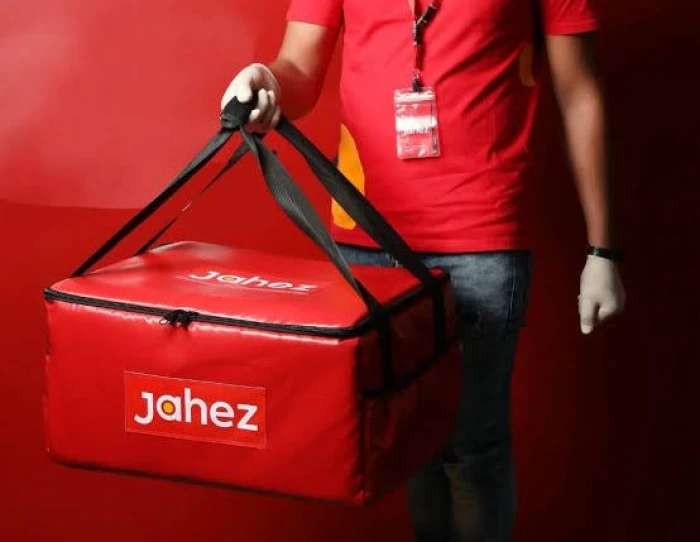
Jahez Reports Q1 2026 Net Loss Amid Strategic Pivot and International Expansion
Jahez International Company for Information System Technology has reported a significant shift in its financial trajectory, posting a net loss for the first quarter of 2026. The Saudi-based delivery giant, which has long been a dominant force in the Kingdom’s food delivery sector, saw its bottom line move into the red as it navigates an increasingly competitive domestic market and an aggressive international growth strategy.
The company reported a net loss attributable to shareholders of SAR 9.2 million for the first quarter of 2026, a stark contrast to the SAR 33.3 million net profit recorded during the same period in 2025. This downturn comes at a critical juncture for the firm as it attempts to transition from a localized delivery service into a diversified, international platform-led entity.
Industry analysts suggest that the loss is not necessarily a sign of operational failure, but rather the financial byproduct of a “strategic pivot.” By investing heavily in international acquisitions and diversifying its service offerings, Jahez is prioritizing long-term market share and ecosystem growth over short-term quarterly profitability.
Analyzing the Q1 2026 Financial Downturn
The transition from a profit of SAR 33.3 million to a loss of SAR 9.2 million represents a meaningful swing in the company’s quarterly performance. According to official interim financial results disclosed via the Saudi Exchange (Tadawul), the loss is reflective of the broader costs associated with scaling operations and defending market territory in Saudi Arabia.
While the net loss has drawn attention, the company’s operational metrics provide a more nuanced picture. The firm has focused on increasing its Average Order Value (AOV) and maintaining stable commission rates, suggesting that the core delivery business remains functional despite the net loss. This tension between operational growth and net profitability is common among high-growth tech platforms expanding into new geographies.
Strategic Weight: The Snoonu Integration and International Growth
Central to the current financial volatility is Jahez’s international expansion strategy, which relies heavily on the Snoonu platform. The integration of Snoonu is a cornerstone of the company’s ambition to move beyond the Saudi border, treating the platform as a vehicle for rapid entry into new markets.
The strategy involves a “platform-led model,” which allows Jahez to leverage existing infrastructure in new regions rather than building from the ground up. However, such expansions typically involve high upfront costs, integration expenses, and initial marketing spends that can weigh heavily on quarterly earnings. The Snoonu platform has already demonstrated significant scale, recording revenues of SAR 904.8 million, though the costs of integrating these operations into the wider Jahez ecosystem continue to impact the consolidated balance sheet.
The Legacy of Q4 2025 One-Off Impacts
To understand the Q1 2026 loss, it is necessary to look at the preceding quarter. CEO Ghassab Al Mandeel previously noted that the fourth quarter of 2025 was heavily impacted by one-off items totaling approximately SAR 55 million. These non-recurring expenses created a financial overhang that influenced the company’s starting position for 2026.
The one-off costs in late 2025 included several critical financial adjustments:
- Credit loss provisions totaling SAR 23.4 million.
- Goodwill impairment of SAR 11.8 million.
- Investment losses amounting to SAR 12 million.
- Acquisition-related expenses of SAR 8 million.
These figures indicate that the company has been aggressively cleaning its balance sheet and accounting for the risks associated with its acquisitions. The goodwill impairment, in particular, suggests a recalibration of the perceived value of certain acquired assets, a common occurrence when tech companies consolidate multiple platforms.
Domestic Competition and the Unified App Strategy
While international growth is a priority, the Saudi market—Jahez’s primary revenue driver—has become increasingly competitive. To protect its market share, Jahez has launched a unified application that combines food and grocery delivery into a single user experience.

This strategic move is designed to increase customer stickiness and raise the average order value, which reached SAR 65.6 in the final quarter of 2025. By diversifying into non-food segments, Jahez aims to reduce its reliance on the volatile restaurant delivery market. The company reported that total merchandise value in these non-food segments nearly doubled year-on-year, with customer acquisition momentum continuing into the first quarter of 2026.
Despite these gains, the cost of maintaining a competitive edge—through promotional campaigns and merchant incentives—has contributed to the pressure on profit margins. The company has managed to keep commission rates stable at 16.2% by focusing on high-value merchants, but the overall cost of customer acquisition in a saturated market remains a significant headwind.
What This Means for Investors and Stakeholders
For shareholders, the shift to a net loss in Q1 2026 raises questions about the timeline for a return to consistent profitability. However, the company’s leadership maintains that the current losses are a calculated part of a larger growth trajectory. The focus has shifted from “profit at all costs” to “scale, and diversification.”
The key metrics to watch in the coming quarters will be:
- The rate of growth in non-food merchandise value.
- The ability to stabilize the cost of international expansion via Snoonu.
- The impact of the unified app on customer retention and AOV.
If Jahez can successfully convert its international investments into sustainable revenue streams while maintaining its dominant position in Saudi Arabia, the current losses may be viewed in retrospect as a necessary investment in the company’s future infrastructure.
The next major checkpoint for the company will be the release of its second-quarter financial results, which will reveal whether the Q1 loss was a temporary dip or a trend associated with its new strategic direction. Investors will be looking for a reduction in one-off expenses and a clearer path toward operational break-even for its international ventures.
World Today Journal will continue to monitor Jahez’s financial filings and strategic announcements. We invite our readers to share their thoughts on the evolution of the Middle Eastern delivery market in the comments below.