
Europe continues to face a persistent and dangerous heat wave that has strained power grids, shuttered schools, and caused dozens of fatalities across the continent. As temperatures climb to record-breaking levels in countries like Switzerland and the United Kingdom, public health officials are struggling to manage the impact of prolonged extreme heat on vulnerable populations, while energy operators work to maintain grid stability amid surging demand for cooling.
The intensity of this weather event has prompted widespread concern regarding infrastructure resilience and public safety. In France, officials have reported at least 48 deaths linked to the heat, while in Germany, authorities are investigating at least 20 drowning incidents as residents sought relief in lakes and rivers, according to reporting by Reuters. The intersection of record-high ambient temperatures and human activity near water has created a significant spike in emergency service calls across the region.
Infrastructure and Public Health Challenges
The current heat wave has forced authorities to make difficult decisions regarding public infrastructure. In several regions, schools have been ordered to close to protect students from the extreme conditions, and in areas where the heat has threatened to compromise cooling systems, certain nuclear power plants have been taken offline or had their output reduced, as reported by BBC News. These measures are intended to prevent technical failures during a period of high electricity consumption.
The disruption to power generation is a secondary effect of the high temperatures, which limit the ability of plants to use river water for cooling purposes. When the water temperature in rivers used for cooling rises too high, operators must curtail production to adhere to environmental regulations that protect aquatic ecosystems. This delicate balance between maintaining power supply and following safety protocols remains a primary focus for European energy regulators.
Record Temperatures Across Europe
Meteorological data indicates that the heat is not localized but is affecting a broad swath of the continent. Switzerland has officially recorded some of its highest temperatures in history, with national weather services confirming that several monitoring stations have exceeded previous all-time highs, according to data from MeteoSwiss. Similarly, the United Kingdom experienced unprecedented heat, with the Met Office issuing its first-ever extreme heat warning as temperatures surpassed the 40-degree Celsius threshold in parts of the country.
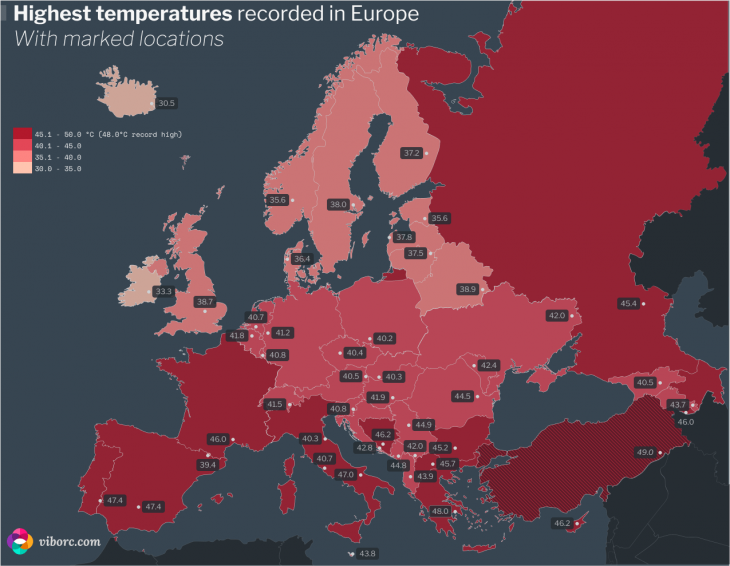
This pattern of extreme weather is consistent with broader trends observed by climate scientists, who note that heat waves in Europe are becoming more frequent and more intense. The duration of this current event, which has lasted for several days, significantly compounds the health risks for the elderly and those with pre-existing conditions, as the human body is given little time to recover during the cooler nighttime hours.
Safety Guidance and Future Outlook
Health authorities across Europe continue to issue urgent advisories, urging residents to stay hydrated, remain indoors during peak sun hours, and check on elderly neighbors. The risk of heat-related illness, including heat exhaustion and heatstroke, remains elevated as long as temperatures stay above seasonal norms. Officials have emphasized that the high number of drowning incidents serves as a grim reminder of the dangers of unsupervised swimming in non-designated areas during periods of extreme heat.
The next major update regarding the stability of the European power grid is expected to come from the European Network of Transmission System Operators for Electricity (ENTSO-E), which monitors cross-border energy flows. As the weather patterns shift, meteorologists are tracking incoming low-pressure systems that may bring relief, though many regions remain under high-heat alerts until further notice. We invite our readers to share their local experiences or safety tips in the comments section below as we continue to track this developing situation.
Related reading
- AGOA Extension to 2028 Will Boost Kenya’s Trade and Manufacturing, Says CS Kinyanjui
- Global Debt Crisis: US and China Invest in Productivity While the EU Prints Money
- English Channel: 230 Migrants Cross in Record-Breaking Inflatable Boat (time.news)
- UK Braces For Record-Breaking Heatwave (newsdirectory3.com)