
The European Commission has proposed a sweeping reform of its carbon emissions trading system, aiming to slow emission allowance reductions, ease pressures on industrial competitiveness, and expand coverage to include flights under 5,000 kilometers and waste incinerators.
European regulators are recalibrating the mechanisms underpinning the continent’s climate policy. Facing mounting warnings from energy-intensive industries over escalating compliance costs and international competition, the European Commission presented a reform package for the emissions trading system (ETS), which serves as the primary instrument for establishing carbon prices across the continent.
Slowing Emission Reductions and Adjusting Allowance Trajectories
The reform introduces a less steep reduction curve for greenhouse gas emissions leading up to the target year of 2040. According to projections outlined by climate officials, the annual reduction rate will settle at 3.7 percent between 2030 and 2035, followed by a 1.7 percent reduction rate from 2036 through 2040. Industries will also be permitted to utilize up to two percent in international credits.
While the long-term objective remains cutting carbon dioxide emissions by 90 percent by 2040 compared to 1990 levels, the adjustments are designed to mitigate price volatility for emission coupons. Over the past two decades, the trading framework has contributed to a near-halving of emissions within covered industrial sectors, backed by approximately 270 milijard evrov in decarbonization investments, executive leaders noted.
Expanding ETS Reach to Aviation and Waste Incineration
As part of the structural overhaul, regulatory scope is widening to encompass sectors where emissions continue to climb. Aviation remains one of the few fields with rising greenhouse gas output. Consequently, the Commission proposes integrating all flights originating within the European Union—including private aircraft—on routes up to 5,000 kilometers into the ETS framework starting in 2029.
Waste management is also slated for inclusion. To accelerate waste recycling, Brussels has proposed phasing in waste incinerators between 2031 and 2034. Member states will face stricter mandates on revenue allocation as well, requiring them to direct half of all money gathered through ETS auctions toward decarbonization and industrial innovation.
Industrial Pressures and the Push for Electrification
The regulatory adjustments arrive amid intense debate surrounding the costs of the green transition. Energy-intensive manufacturers have argued that stringent climate obligations disadvantage European producers against global competitors in the United States and China, where environmental constraints are less burdensome. In response, the Commission has prioritized economic competitiveness while maintaining its overarching electrification agenda.
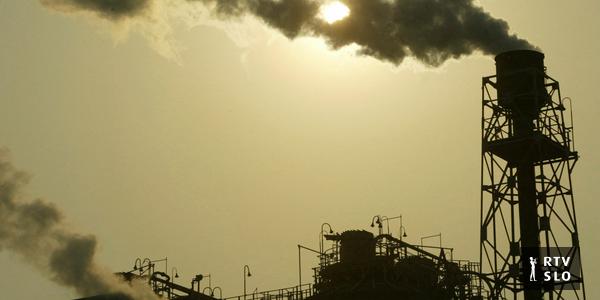
An accompanying electrification action plan sets a target to double the share of electricity in total energy consumption from 23 percent today to 46 percent by 2040. Officials project that establishing Europe as a fully electrified continent will eliminate the need for hundreds of billions of euros spent importing fossil fuels.
Commercial Adaptation Across the Energy Sector
Private enterprises are adapting rapidly to these evolving regulatory and market realities. Storage solutions, such as large-scale battery systems deployed by firms like NGEN, manage frequency regulation for transmission operators across Europe while addressing the intermittent nature of solar and wind generation.
Market participants note that while historical roots of the European climate framework stretch back to the 1990 Kyoto Protocol and the 2019 Green Deal, current commercial structures function independently of direct subsidies.
I think the transformation is now so advanced that there is no longer a need for subsidies for green technologies, as the solutions pay off even without them. Roman Bernard, NGEN
As the European Union moves forward with its legislative revisions, the balance between ambitious climate targets and industrial viability remains the central challenge for policymakers and market participants alike.
Related reading