
Ireland’s Gross Domestic Product (GDP) often fails to reflect the domestic economy’s actual strength due to the disproportionate influence of multinational corporations. Economists and policymakers increasingly rely on Modified Gross National Income (GNI*) to provide a more accurate measure of Ireland’s economic health and its true impact on the broader Eurozone.
The volatility of Irish economic data has become a central concern for international analysts tracking the Eurozone. While traditional metrics like GDP show massive swings in wealth, these figures are frequently distorted by the movement of intellectual property and the accounting practices of large-scale multinational firms. This discrepancy creates a “strange case” where a nation’s headline growth figures may suggest an economic boom or bust that does not align with the lived reality of its citizens or the domestic business environment.
The phenomenon, often referred to by economists as “Leprechaun Economics,” first gained global attention following a massive, anomalous spike in Irish GDP in 2015. Since then, the Central Statistics Office (CSO) has worked to refine metrics to prevent such distortions from skewing national policy. Understanding the gap between GDP and GNI* is essential for anyone analyzing the stability of the Irish economy and its role within the European Central Bank’s (ECB) monetary jurisdiction.
Why Ireland’s GDP is considered a misleading metric
In a standard economy, GDP measures the total value of all goods and services produced within a country’s borders. However, Ireland’s unique economic structure—characterized by a high concentration of multinational corporations (MNCs) in the pharmaceutical, technology, and financial services sectors—renders this figure unreliable for domestic planning. According to the Central Statistics Office (CSO), the presence of these entities leads to “contractual” shifts in economic data that do not represent actual production or consumption within the state.
The primary driver of this distortion is the relocation of intellectual property (IP). When a multinational corporation moves its IP to an Irish subsidiary, the resulting increase in recorded profits can cause a massive jump in GDP. Conversely, if a company shifts its IP to another jurisdiction, the GDP can “implode” or contract sharply, even if the actual number of employees and physical factories in Ireland remains unchanged. This creates a statistical illusion of extreme volatility that does not reflect the domestic labor market or consumer spending.
To address this, the Irish government and the CSO utilize GNI*. This metric is designed to strip out the effects of the multinational sector by adjusting for:
- Depreciation on relocated intellectual property.
- The presence of aircraft leasing companies, which are disproportionately represented in Ireland.
- The impact of non-resident entities on the national accounts.
By focusing on GNI*, policymakers can better assess the capacity of the Irish state to fund public services, manage debt, and plan for long-term infrastructure needs without being misled by the transient movements of global capital.
The impact of multinational corporations on Irish statistics
The scale of multinational influence in Ireland is significant. A substantial portion of the country’s recorded economic activity is tied to the profit-shifting and accounting structures of global giants. These companies often use Ireland as a European hub, utilizing the country’s favorable corporate tax environment to manage global intellectual property portfolios. While this brings significant tax revenue to the Irish Exchequer, it creates a “dual economy” where the multinational sector operates on a scale that dwarfs the domestic SME (Small and Medium Enterprise) sector.
This dualism means that headline economic indicators often signal trends that are irrelevant to the domestic economy. For instance, a decline in GDP might be triggered by a single large-scale corporate restructuring or a change in international tax law, such as the OECD’s global minimum tax agreement. Such events can cause the Irish economy to appear to be in a recession on paper, while domestic employment and local business activity remain stable or even grow.
Furthermore, the high concentration of these sectors makes Ireland’s economic data highly sensitive to global shifts in technology and pharmaceutical demand. When global tech valuations fluctuate or pharmaceutical patent cycles shift, the impact is amplified in Ireland’s GDP figures, making it difficult for the European Central Bank to use Irish data as a reliable proxy for broader Eurozone health.
How Eurozone economic trends intersect with Irish volatility
Ireland does not exist in a vacuum; its economic health is inextricably linked to the stability of the Eurozone. As a member of the single currency bloc, Ireland is subject to the monetary policy decisions of the ECB. When the ECB raises interest rates to combat inflation across the Eurozone, the impact is felt differently in Ireland due to the specific composition of its economy.
While high interest rates can dampen domestic consumer spending, they can also affect the massive inflows of foreign direct investment (FDI) that drive the multinational sector. If global capital becomes more expensive, the movement of IP and corporate profits into Ireland may slow down, leading to a cooling of GDP figures. This creates a complex feedback loop where Eurozone-wide monetary tightening can inadvertently trigger a “statistical contraction” in Ireland, even if the domestic economy remains resilient.
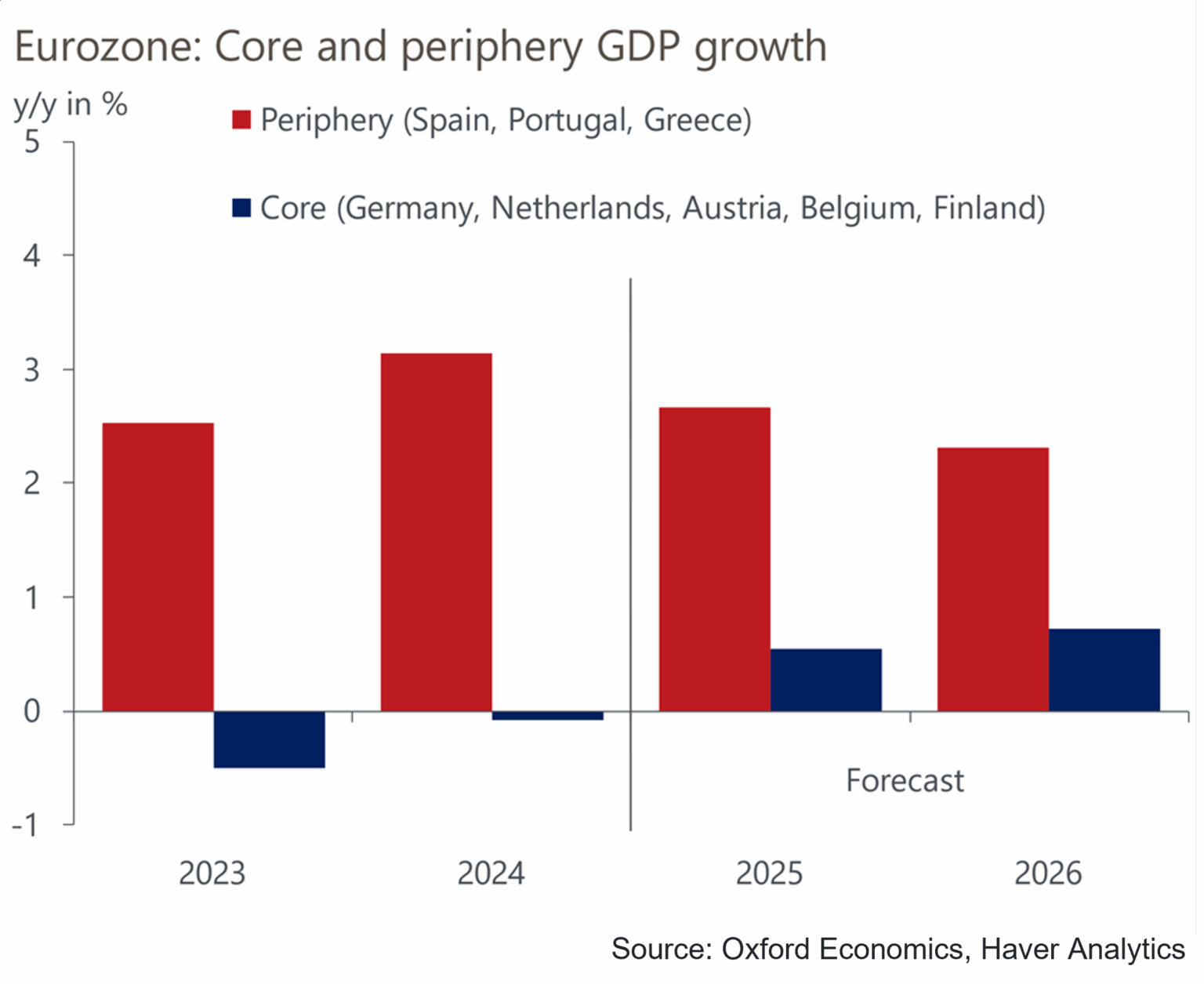
Current economic trends in the Eurozone show a period of cautious recovery following high inflation and energy price shocks. However, the divergence between the “paper economy” of Ireland and the “real economy” of the Eurozone remains a point of concern for analysts. If the Eurozone relies too heavily on the distorted growth figures of highly specialized economies like Ireland, it risks miscalculating the timing and necessity of interest rate adjustments.
| Feature | Gross Domestic Product (GDP) | Modified Gross National Income (GNI*) |
|---|---|---|
| Primary Focus | Total production within borders. | Economic activity of residents. |
| MNC Sensitivity | Extremely High (IP & Profit shifting). | Low (Adjusted for MNC distortions). |
| Policy Utility | Global economic standing/prestige. | Fiscal planning and budget stability. |
| Volatility | High (Subject to sudden swings). | Moderate (Reflects domestic trends). |
Key Takeaways for Investors and Policymakers
- Distinguish between GDP and GNI*: Do not use Irish GDP as a standalone indicator of domestic economic health or consumer strength.
- Monitor IP Movements: Changes in international tax laws or corporate IP management are more likely to drive Irish GDP volatility than local market conditions.
- Watch the ECB: Eurozone monetary policy will continue to influence the cost of capital for the multinationals that drive Irish economic data.
- Focus on Domestic Metrics: For a clearer picture of Ireland’s actual economic trajectory, prioritize GNI* and domestic employment data.
The next major checkpoint for understanding Ireland’s economic direction will be the release of the quarterly national accounts by the CSO, which will provide the most recent verified data on both GDP and GNI*. Analysts will be watching these figures closely to see if the current trends in the Eurozone are being mirrored in Ireland’s domestic sectors or if the headline figures continue to diverge from reality.
What are your thoughts on the use of GNI* versus GDP in assessing national economic health? Share your insights in the comments below and share this article with your network.
Related reading
- Donald Trump Posts Truth Social Images Linking Himself to US Historical Figures and Mocking Rosie O’Donnell
- ASN Bank Benefits as SNS, RegioBank, and BLG Wonen Brands Are Phased Out
- Shanghai Ports Suspend Operations Ahead of Approaching Typhoon (archynewsy.com)
- Inflatable Planetarium Installed in Ballon-Saint-Mars Ahead of Eclipse (newsdirectory3.com)