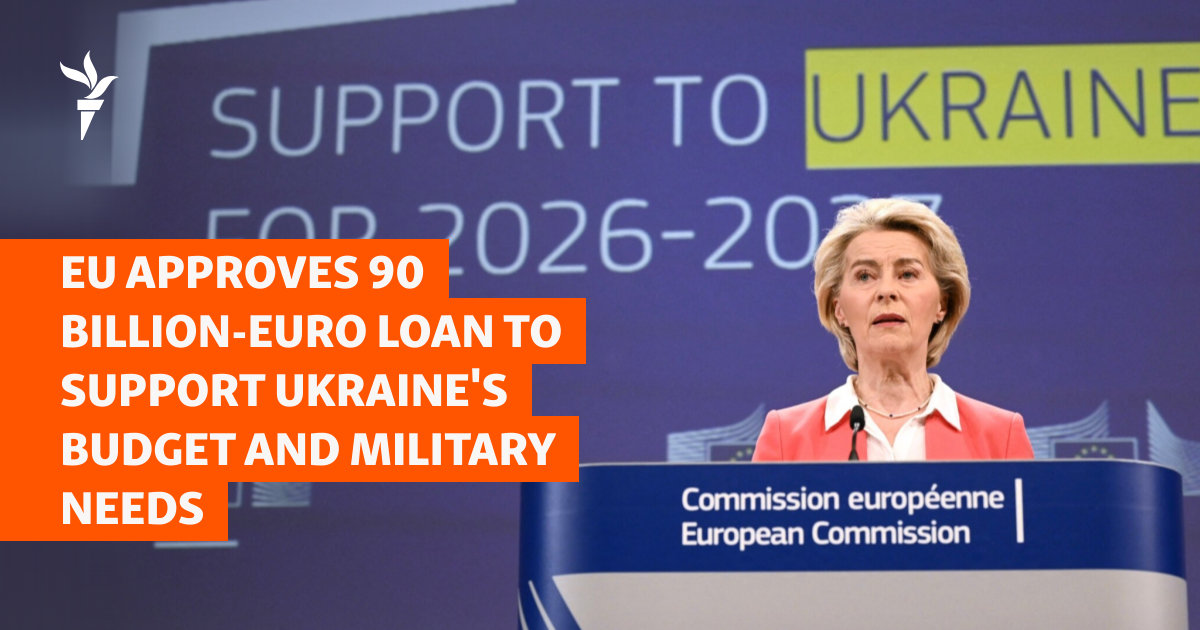
On April 23, 2026, the European Union formally approved a €90 billion loan package for Ukraine, marking a significant milestone in Western support for Kyiv amid its ongoing conflict with Russia. The decision came after months of delay, primarily due to objections from Hungary, which had blocked the measure over concerns about financial liability and the use of frozen Russian assets as collateral. With Hungary’s veto lifted, the 27-member bloc moved forward with a plan that relies on joint EU borrowing rather than seized Russian funds, addressing legal and political reservations raised by several member states.
The loan, structured as an interest-free facility, is intended to support Ukraine over the next two years as it faces an estimated €135 billion in combined financial and defense needs for 2026 and 2027. Of the total package, €30 billion is allocated for budgetary support to sustain government operations and public services, while €60 billion is earmarked for military procurement, including weapons, ammunition, and defense equipment. The remaining €45 billion required to meet Ukraine’s full funding gap is expected to come from non-EU partners, including the United States, Canada, Japan, and international financial institutions.
According to verified reports from VRT and BusinessAM, the financing mechanism involves the EU raising funds on international capital markets, with the union’s budget serving as a guarantee for the debt. This approach ensures that individual member states are not directly liable for the loans, whereas the 24 participating countries (excluding Hungary, Slovakia, and the Czech Republic, which opted out of financial obligations) will share the annual repayment costs, estimated at €2–3 billion per year. The exclusion of these three nations reflects a compromise reached during negotiations to secure unanimous agreement among the remaining members.
The approval process was closely tied to broader discussions about Ukraine’s future relationship with the European Union. While the loan does not constitute a step toward membership, it has reinvigorated debate over Kyiv’s long-term integration prospects. Ukrainian President Volodymyr Zelenskyy has consistently framed Western financial and military support as essential not only for survival but also for reinforcing Ukraine’s European identity and reform agenda. In recent weeks, EU officials have signaled openness to advancing accession talks, though no formal timeline has been established, and several member states remain cautious about setting firm dates.
Conditions attached to the loan emphasize accountability and transparency. Disbursements are contingent upon Ukraine’s continued progress in anti-corruption reforms, public financial management, and defense procurement oversight. The EU has stated that funds will be released in tranches, with each installment subject to verification by independent monitors and EU oversight bodies. This mechanism aims to reassure taxpayers in contributing countries that the money is being used effectively and in accordance with agreed-upon benchmarks.
Strategically, the loan also serves European interests beyond altruism. By supporting Ukraine’s resistance to Russian aggression, the EU seeks to uphold the rules-based international order, prevent further destabilization in Eastern Europe, and reduce the long-term security burden on its eastern flank. A successful Ukrainian defense, bolstered by Western aid, could deter future aggression and reinforce NATO’s deterrence posture. The “Made in Europe” principle—promoted by France and adopted as part of the loan agreement—encourages Ukraine to prioritize European defense manufacturers when sourcing military equipment, thereby strengthening the EU’s defense industrial base and reducing reliance on external suppliers like the United States.
The defense industrial dimension of the loan has drawn particular attention. Under the cascade principle, Ukraine is expected to first seek arms and ammunition from EU member states and neighboring countries before turning to other markets. This preference aims to stimulate European defense production, sustain jobs in the sector, and enhance strategic autonomy. However, officials acknowledge that if European supplies prove insufficient or delayed, Ukraine may still need to procure from the United States or other allies to meet urgent battlefield needs.
Geopolitically, the loan underscores the EU’s evolving role as a security actor. Traditionally focused on economic integration and diplomacy, the union has increasingly taken on geopolitical responsibilities in response to the war in Ukraine. The ability to raise substantial funds collectively and channel them to a partner nation under strict conditions reflects a growing capacity for coordinated action, even amid internal disagreements. Analysts note that the successful approval of the loan, despite Hungarian resistance, demonstrates that the EU can act decisively when core principles—such as sovereignty and territorial integrity—are at stake.
Looking ahead, the next key development will be the monitoring of Ukraine’s reform progress and the scheduled tranche releases under the loan agreement. The European Commission is expected to publish regular reports on compliance with anti-corruption benchmarks and fund utilization. Official updates will be available through the EU’s External Action Service and the Directorate-General for Neighbourhood and Enlargement Negotiations. No further votes or summits are currently scheduled specifically for this loan package, but broader EU-Ukraine relations will continue to be discussed in the context of the Association Agreement and ongoing accession dialogue.
For readers seeking to follow developments, official information on the EU’s support for Ukraine can be accessed through the European Commission’s dedicated Ukraine support portal, which provides transparency on funding allocations, disbursement schedules, and reform tracking. The EU Council also maintains public records of decisions related to foreign assistance and sanctions policy.
As the war enters its fourth year, the €90 billion loan represents both a lifeline for Ukraine and a strategic investment in European security. While framed as assistance, the package reflects a convergence of moral obligation and self-interest—supporting a partner under attack while reinforcing the stability and resilience of the European project itself. The true test will lie not only in the delivery of funds but in their effective use to strengthen Ukraine’s defenses, institutions, and long-term prospects for peace and integration.
Stay informed, share this article, and join the conversation in the comments below.
Worth a look