For patients living with rare genetic disorders, aggressive cancers, or chronic inflammatory diseases, the journey to wellness is rarely a straight line. It is often a complex navigation through a maze of specialized providers, rigorous insurance authorizations, and the urgent need for medications that require precise handling. In the world of internal medicine, we recognize that the medication itself is only half the battle; the other half is the logistics of delivery and the coordination of care.
This logistical challenge is the primary driver behind a significant expansion in healthcare infrastructure in the United States. Evernorth Health Services has recently launched its largest specialty pharmacy and distribution facility in the U.S., a 200,000-square-foot operation located in Newark, Delaware. By integrating pharmacy services and distribution under one roof, the facility aims to reduce the friction points that often delay life-saving treatments for patients across the Northeast and the broader U.S. Evernorth’s new Delaware facility is designed to address the rising demand for specialty pharmacy care coordination by streamlining the path from the provider’s prescription to the patient’s doorstep.
The facility represents a strategic shift toward a more integrated care model. Rather than treating distribution and dispensing as separate links in a chain, Evernorth has co-located Accredo Specialty Pharmacy and CuraScript SD specialty distribution operations. This structural change is intended to improve care coordination, streamline fulfillment, and, most importantly, help patients begin their treatment regimens more quickly.
Defining the Complexity of Specialty Care
To understand why a dedicated, integrated facility is necessary, one must first understand what constitutes a “specialty medication.” Unlike standard prescriptions, these therapies are categorized by two primary characteristics: they are highly complex and high-touch. According to Evernorth, highly complex medications may require specialized administration—such as infusions or injections—and often necessitate temperature-controlled storage and rigorous monitoring to maintain efficacy of the Newark specialty care facility.
The “high-touch” aspect refers to the intensive patient support required for these therapies. Patients often need comprehensive education on how to adhere to complex regimens and how to safely administer their own medications. This requires a level of oversight from specialized pharmacists and technicians that exceeds the capabilities of a traditional retail pharmacy. The Newark site is equipped to manage these needs for patients facing conditions such as rheumatoid arthritis, bleeding disorders, and various rare diseases.
Integrating Distribution and Dispensing
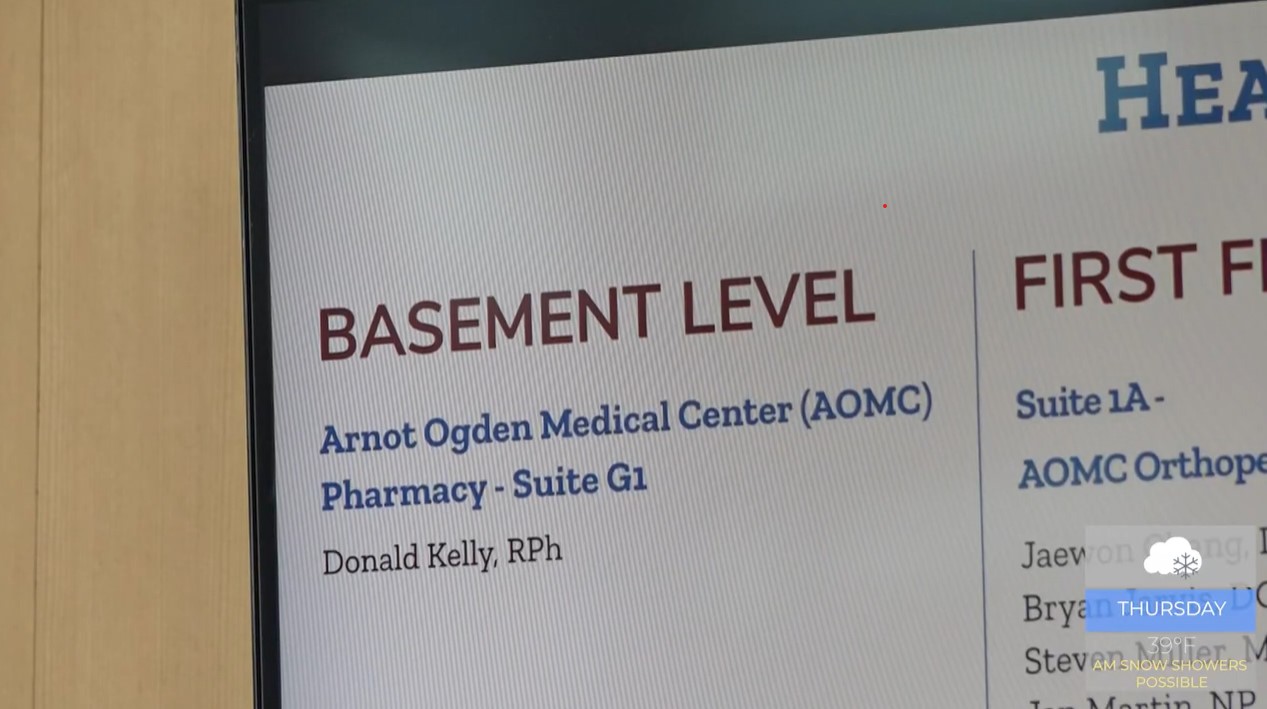
The core innovation of the Newark facility is the co-location of two distinct but interdependent entities: Accredo Specialty Pharmacy and CuraScript SD. Accredo is a pharmacy that serves approximately 1 million patients annually, dispensing nearly 8 million prescriptions for complex conditions. CuraScript SD, conversely, is a specialty medication distributor that serves more than 12,000 healthcare providers nationwide of the Newark specialty care facility.
By bringing these two operations together in one 200,000-square-foot space, Evernorth is attempting to eliminate the traditional silos of the pharmaceutical supply chain. When distribution and pharmacy services operate in the same location, the communication gap between the entity sourcing the drug and the entity dispensing it to the patient is minimized. This integration is a critical component of specialty pharmacy care coordination, as it reduces the potential for delays in the fulfillment process.
The scale of the operation is significant. The facility is anticipated to dispense 1.5 million specialty prescriptions from Accredo and distribute nearly 200,000 orders of specialty medications and related supplies from CuraScript SD each year Evernorth’s new Delaware facility. This volume underscores the growing demand for specialized pharmaceutical logistics in the U.S. Healthcare system.
Technological Innovation in Fulfillment
Beyond the physical layout, the facility employs advanced robotics and automation to ensure the safety and speed of medication delivery. Because many specialty drugs are temperature-sensitive, any failure in the “cold chain”—the temperature-controlled supply chain—can render a medication useless or dangerous. To mitigate this risk, Evernorth has implemented custom assembly-line systems and robotics to streamline how medications are retrieved, and packed.
A key feature of this technological suite is the use of automated “cold-pick” machines. These robots retrieve refrigerated medications, verify the accuracy of the order, apply labels, and prepare the items for packing without the delays associated with manual retrieval Evernorth’s technology solution. The site utilizes ice-loading machines that automatically add cooling bricks to containers, ensuring that temperature-sensitive therapies remain stable during transit.
This automation is not merely about speed; it is about precision and safety. Evernorth’s integrated team of software developers and engineers developed four patented technologies specifically to accelerate fulfillment whereas maintaining strict safety standards. Dallas Long, managing director of information technology at Evernorth, noted that the goal was to create a “blueprint” for automation that could eventually be replicated across other specialty care sites Evernorth’s technology solution.
Economic and Community Impact
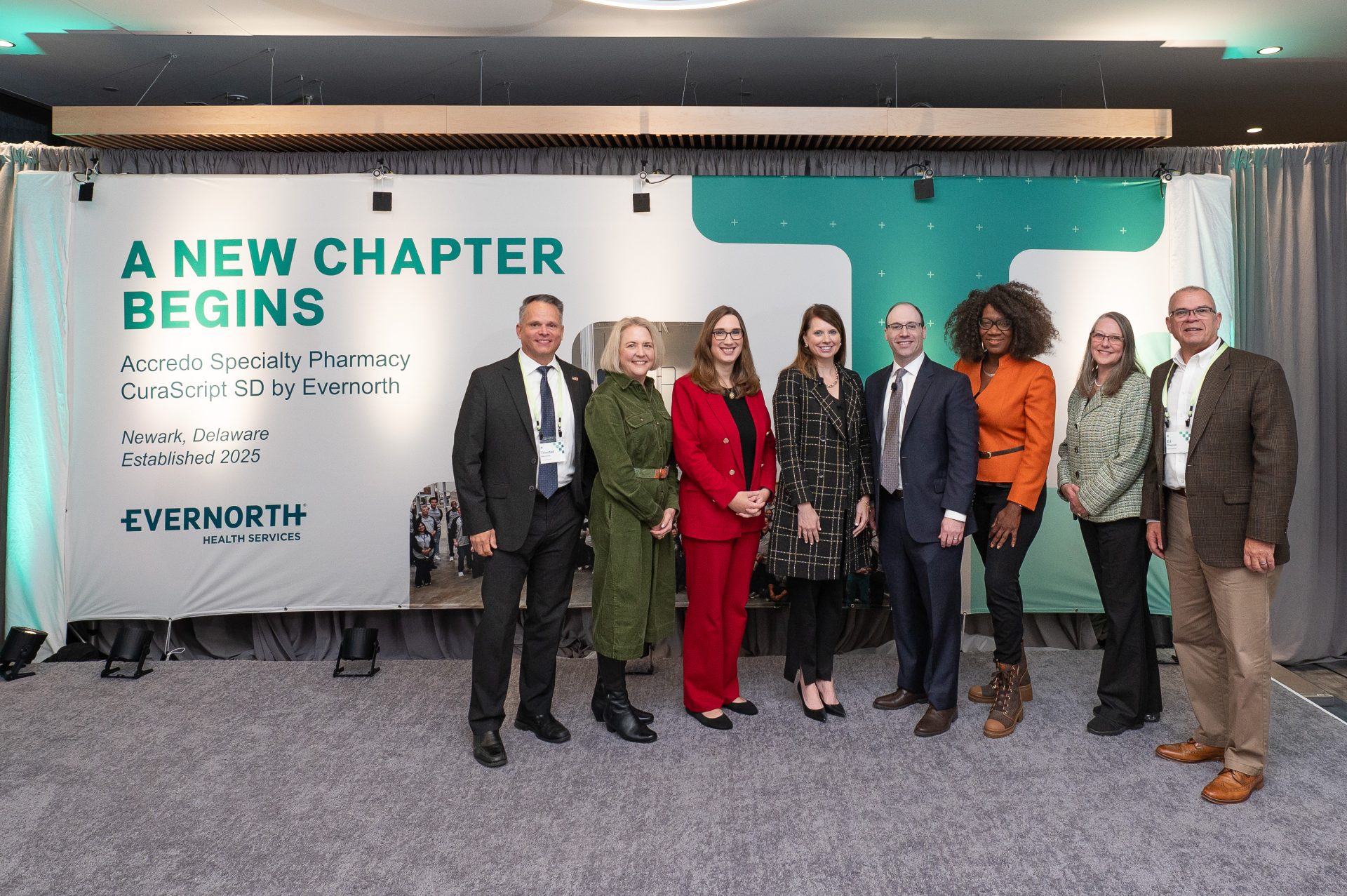
The opening of the facility, which was celebrated on October 29, 2025, in the presence of Governor Matt Meyer and U.S. Representative Sarah McBride, also brings a direct economic impact to the region. The facility is staffed by more than 100 Delawareans, providing specialized employment opportunities in the healthcare logistics sector Evernorth’s new Delaware facility.
From a public health perspective, the facility’s location in Newark is strategic for serving the Northeast corridor, one of the most densely populated regions in the U.S. By increasing the capacity to distribute and dispense treatments for rare and complex conditions—including genetic disorders and inflammatory diseases—the facility helps ensure that geography does not become a barrier to accessing life-saving care.
Key Operational Metrics of the Newark Facility
| Metric | Accredo Specialty Pharmacy | CuraScript SD |
|---|---|---|
| Annual Dispensing/Distribution | 1.5 million prescriptions | Nearly 200,000 orders |
| Primary Function | Patient dispensing & support | Provider distribution |
| Key Focus Areas | Complex & chronic conditions | Specialty medication supply |
The Path Forward for Specialty Care
The development of the Newark facility highlights a broader trend in healthcare: the move toward “vertical integration” of the pharmacy supply chain to improve patient outcomes. When the distributor and the pharmacy are aligned, the “time-to-therapy”—the duration between a doctor’s decision to prescribe a drug and the patient receiving the first dose—can be significantly reduced. For a patient with a rapidly progressing cancer or a severe bleeding disorder, these saved days are clinically meaningful.
Matt Perlberg, president of pharmacy and care delivery at Evernorth Health Services, has emphasized that the expansion is a response to the accelerated growth in demand for specialty medications. He describes the Newark facility as an essential part of a network that collectively dispenses millions of medications annually Evernorth’s new Delaware facility.
As we look toward the future of medical innovation, the integration of robotics and co-located services suggests a shift toward a more industrial, yet highly precise, model of pharmacy. The success of this “blueprint” in Delaware may determine how other specialty care sites are designed, potentially leading to a standardized, high-efficiency model for delivering complex therapies across the globe.
The next phase for this facility involves the continued optimization of its four patented automation technologies to further refine turnaround times for patients. As these systems evolve, the focus remains on the intersection of high-tech logistics and high-touch patient care.
Do you believe the integration of robotics in pharmacy will improve patient adherence, or is the human element of pharmacy more critical? Share your thoughts in the comments below.
Keep reading
- Giving Birth at 37 Weeks: Embracing God’s Will Over a Natural 40-Week Birth
- Genetic Risk Loci for Fibromyalgia Identified in Massive Multi-Ancestry GWAS Study
- Experienced Accounts Payable Manager Sought for Contract Engagement in Newark, Delaware (news-usa.today)
- Spy Shots: Ferrari 12Cilindr, BMW i4 Convertible and Range Rover Sport – Specialty Equipment Market (archyde.com)