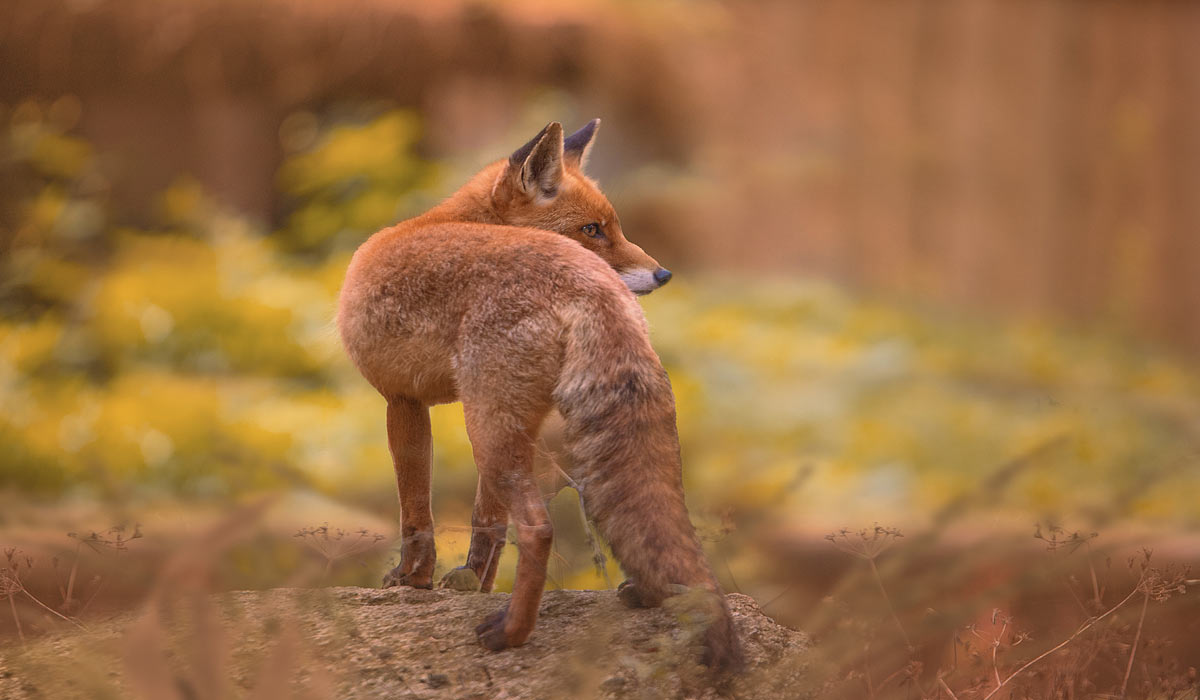
In the quiet corners of rural France, a quiet revolution is taking root—not in boardrooms or laboratories, but in the soil, the hedgerows, and the daily rhythms of a restored farmstead. At Domaine de Nicouleau, a former agricultural property in the Gers department, the question being asked is not how to maximize yield, but how to relearn coexistence with the living world. This is not a retreat from modernity, but an attempt to reweave the frayed threads between human activity and wild life, guided by ecological observation and ancestral wisdom.
The initiative, profiled by the French environmental platform Savoir Animal, emerges from a growing recognition that conventional land management—even when well-intentioned—often overlooks the quiet, unseen work of biodiversity. From pollinators navigating fragmented hedges to amphibians returning to rewetted ditches, the domain’s approach centers on listening to what the land already knows. As one observer noted in the platform’s coverage, “Each year, hundreds of thousands of wild animals, invisible to many, fall victim to our ways of life, and despite all the warnings…” The sentence trails off, not from lack of concern, but from the weight of what remains unmeasured.
What sets Domaine de Nicouleau apart is its refusal to treat conservation as a sidebar to productivity. Instead, the project integrates habitat restoration directly into land use: replanting native hedgerows, delaying mowing to allow insect life cycles to complete, and leaving buffer zones along waterways untouched. These are not grand gestures, but tiny, repeated acts of attention—leaving a patch of thistles for goldfinches, maintaining a pile of dead wood for beetles and fungi, or simply pausing before draining a seasonal puddle that might host tadpoles.
The underlying philosophy draws from agroecology and rewilding principles, but is deeply local. Rather than importing exotic species or imposing rigid templates, the stewards of the domaine observe what returns when pressure is lifted. In the Gers, a region known for its rolling hills and traditional polyculture, this has meant encouraging the return of species like the European hedgehog, the common toad, and various ground-nesting birds—none of them rare, but all of them indicators of ecological health.
This approach aligns with broader scientific consensus that landscape heterogeneity—mixing crops, woods, wetlands, and fallow areas—supports greater biodiversity than monocultures, even organic ones. Research from the French National Institute for Agricultural Research (INRAE) has shown that farms with complex edge habitats support up to twice as many pollinator species as those with clean, cleared borders. While the domaine does not publish formal monitoring data, its practices mirror those promoted in France’s “Agroecological Project” initiative, which encourages farmers to dedicate at least 10% of their land to ecological infrastructure.
Critically, the work at Domaine de Nicouleau avoids the pitfalls of fortress conservation—the idea that nature must be sealed off from human contact to thrive. Instead, it invites observation, even participation. Guided walks, seasonal workshops, and quiet observation points allow visitors to witness not spectacle, but subtlety: the way a shrew moves through leaf litter, how a bat emerges at dusk from a crevice in an old barn, or how a colony of ants rebuilds after a rainstorm. The goal is not to entertain, but to attune.
This sensitivity to scale—valuing the small, the overlooked, the nearly invisible—is what makes the project resonant beyond its borders. In an era where conservation often focuses on flagship species or vast wilderness preserves, the domaine reminds us that ecological healing can begin in the margins: the ditch, the hedge, the corner of a field left unplowed. It is a form of quiet resistance to the assumption that productivity and presence are mutually exclusive.
The broader context, as highlighted by sources like Autourdesanimaux and Le Monde des Animaux, underscores how deeply embedded wild life is in the fabric of rural landscapes—even when unnoticed. From the nocturnal foraging of badgers to the seasonal flights of migrant warblers, these animals are not intruders in the countryside. they are part of its quiet metabolism. When their habitats are disrupted—not by malice, but by indifference or habit—the effects ripple through food webs, soil health, and even crop resilience.
What Domaine de Nicouleau offers, then, is not a blueprint, but an invitation: to slow down, to look closely, and to consider what it might mean to live not beside the wild, but within it. In a time of accelerating ecological strain, such experiments in attentive stewardship may prove as vital as any technological fix—less because they scale easily, but because they restore a way of seeing that modernity has all too often forgotten.
For those interested in similar efforts, France’s Chamber of Agriculture offers regional guidance on integrating biodiversity into farm management, while organizations like Ligue pour la Protection des Oiseaux (LPO) provide resources on creating wildlife-friendly spaces in agricultural settings. These tools, combined with local observation, can help translate the ethos of places like Nicouleau into broader practice.
The work is ongoing, and its success is measured not in hectares restored, but in the return of the unnoticed: the rustle in the undergrowth, the fleeting shadow of a vole, the hum of a bee in a clover patch. These are the signs that the land is remembering how to live—and that we, too, might be learning to listen.
As the seasons turn at Domaine de Nicouleau, the next step is not a grand announcement, but the quiet continuation of observation and adjustment. There are no scheduled public hearings or regulatory filings tied to the project’s daily operations, as it remains a private land stewardship initiative. Those wishing to follow its evolution can do so through updates shared by Savoir Animal, which periodically features profiles of ecological land projects across rural France.
We invite our readers to reflect on their own relationship with the living world—whether in a backyard, a balcony, or a shared green space. What small changes might allow more life to persist? Share your thoughts and experiences in the comments below, and consider sharing this piece with others who believe that healing the planet begins not with grand gestures, but with renewed attention to the quiet, persistent life all around us.
Worth a look
- Meghan Markle: Caught in the Web of Caleb and Doug Mills’ Political Games
- Peanuts Movie 2026: Release Date and Everything We Know
- Netflix to Stop Releasing Viewership Data Every 6 Months, Will Shift to Annual Reports (archyworldys.com)
- MLS Allocation Money, Explained: Why Every Club's Total Differs (daybreakwire.com)