
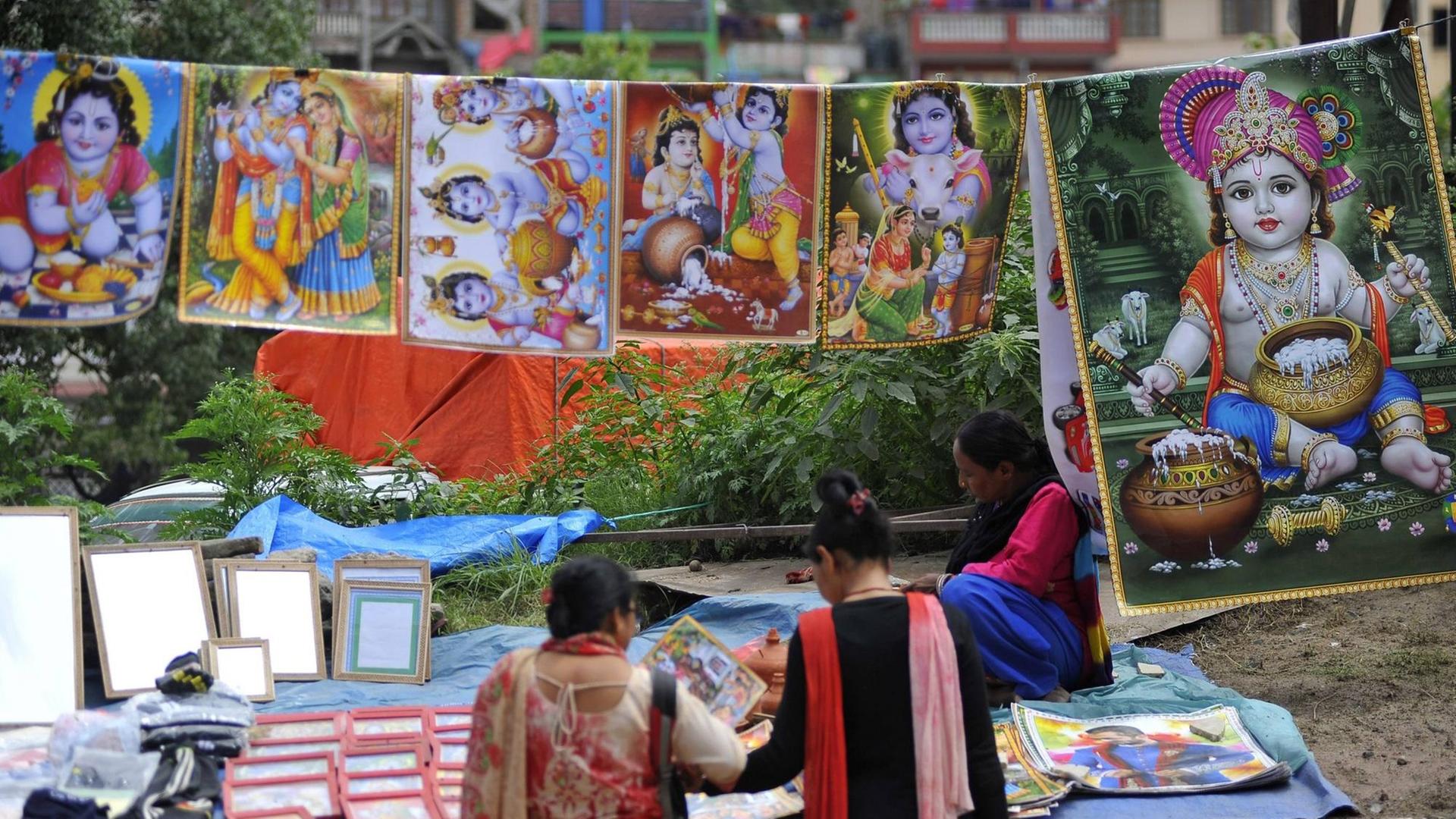
The Museum Fünf Kontinente in Munich is hosting a special exhibition dedicated to the Hindu deity Krishna, running from April 24 to November 8, 2026. Titled “Krishna. Religion, Kunst und Popkultur,” the show explores the god’s significance across religious traditions, artistic expressions, and contemporary global culture. Featuring over 100 objects from the museum’s collection, the exhibition traces Krishna’s life story, devotional practices, and his evolving presence in modern media and popular imagination.
According to the museum’s announcement, visitors will encounter a diverse array of artifacts including historical sculptures, paintings, ritual items, a decorated swing from Rajasthan, a portable folding altar from Tirupati, and five large-format religious wall hangings known as Pichwais. These textiles, some displayed publicly for the first time, illustrate Krishna’s role in historical and regional contexts. The exhibition was developed in cooperation with the Centrum für Religionswissenschaftliche Studien (CERES) at Ruhr-Universität Bochum and supported by the museum’s friends’ association.
The presentation follows a chronological narrative, beginning with Krishna’s life and moving into everyday worship and major festivals such as Janmashtami, which celebrates his birth, and Holi, the festival of colors. Audiovisual elements are used to depict both domestic rituals and large-scale public observances. The final section examines Krishna’s integration into global pop culture, where he is often associated with themes of spiritual seeking, meditation, and inner peace.
As noted in a Deutschlandfunk report aired on April 26, 2026, highlights of the exhibition include a carved swing from Rajasthan, a portable altar, and the aforementioned Pichwais. The report emphasized that in Hindu tradition, images are considered living manifestations of the divine, and the exhibition aims to convey both the continuity and transformation in how Krishna has been understood across time and geography.
Krishna, whose name translates to “the Dark One” or “the Black One,” is widely recognized by his blue skin and frequent depiction playing a flute. He is revered in Hinduism as a divine hero, a spiritual lover, and a wise teacher. The Krishna movement, known for its saffron-clad devotees who chant “Hare Krishna” in public spaces, has contributed to his visibility beyond India. The Munich exhibition seeks to present this multifaceted figure through objects spanning centuries and artistic styles.
The Museum Fünf Kontinente, located in Munich’s Maxvorstadt district, specializes in non-European cultures and holds extensive collections from Africa, the Americas, Asia, and Oceania. Its special exhibitions often combine anthropological insight with artistic presentation, aiming to foster cross-cultural understanding. The Krishna show aligns with this mission by highlighting how a single religious figure can inspire varied interpretations across ritual, art, and global media.
Admission details and opening hours were not specified in the verified sources. The exhibition is scheduled to close on November 8, 2026. No further updates regarding extensions, special events, or accompanying publications were available in the consulted materials as of the publication date.
For ongoing coverage of cultural exhibitions and global arts initiatives, readers are encouraged to follow updates from Museum Fünf Kontinente and related cultural institutions. Share your thoughts on the intersection of religion, art, and pop culture in the comments below, and help spread awareness by sharing this article with others interested in world heritage and contemporary spirituality.