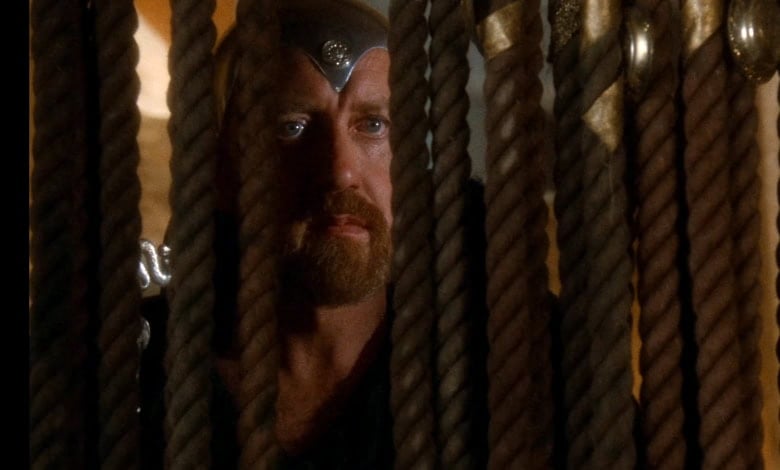
John Boorman’s 1981 epic Excalibur remains a definitive cinematic interpretation of the Arthurian legend, noted for its distinct visual style and uncompromising tone. While the film has occasionally been overshadowed by more recent adaptations, it continues to be recognized by critics and film historians as a significant achievement in fantasy filmmaking due to its technical craft and thematic depth.
The film serves as a retelling of the King Arthur legend. Directed by John Boorman, the production is frequently cited for its surreal atmosphere and the performance of Nicol Williamson as the wizard Merlin, which anchors the film’s narrative. The project represented a comeback film for Boorman, following his previous features, including Zardoz (1974) and Exorcist II: The Heretic (1977).
Production and Visual Legacy
A primary element of Excalibur’s enduring status is its visual presentation. Cinematographer Alex Thomson, who also shot Ridley Scott’s Legend (1985), Jim Henson’s Labyrinth (1986) and David Fincher’s Alien 3 (1992), utilized a distinct color palette and lighting design that emphasized the mythic quality of the story. The film’s armor is vividly depicted as an obstacle as much as a means of protection.

Boorman co-wrote the screenplay with Rospo Pallenberg. Despite the film’s reliance on practical effects, it remains an example of high-concept fantasy.
A Talent-Rich Ensemble Cast
Excalibur is often remembered for its cast. Nigel Terry portrayed Arthur, while Helen Mirren delivered a performance as Morgana. The film also included appearances by Patrick Stewart, Liam Neeson and Gabriel Byrne, who featured in the production as Uther Pendragon.
The chemistry between these actors, combined with Williamson’s idiosyncratic portrayal of Merlin, provided the film with a sense of gravity that balanced its more fantastical sequences. Critics have often noted that the film’s willingness to treat the Arthurian myth with a blend of brutal realism and dreamlike imagery set it apart from other versions of the legend, such as the 1963 animated film The Sword in the Stone or the 1996 release First Knight.
The Impact of Boorman’s Direction
John Boorman’s approach to the material was characterized by a tendency to take significant creative risks. His filmography includes the critically acclaimed Deliverance (1972). In Excalibur, this manifested as a story that focused heavily on ego run amok, contrasted with unlikely heroes emerging.

The film’s soundtrack features great uses of classical music. While some contemporary reviewers in 1981 found the film’s pacing and structure to be dense, retrospective analysis often highlights these same traits as evidence of Boorman’s singular artistic vision. The film remains a benchmark for how directors can adapt complex literary cycles into a cohesive, if challenging, cinematic experience.
Why the Film Continues to Resonate
For modern audiences, Excalibur offers a contrast to contemporary digital-heavy fantasy epics. The reliance on practical sets and location cinematography gives the film a tangible quality that persists decades after its release. It serves as a reminder of a period in Hollywood when directors were granted the creative freedom to produce highly stylized, adult-oriented fantasy projects.
As the film continues to find new audiences, it remains a touchstone for those interested in the history of Arthurian adaptations. Readers are invited to share their thoughts on the film’s legacy or their favorite performances from the cast in the comments section below.