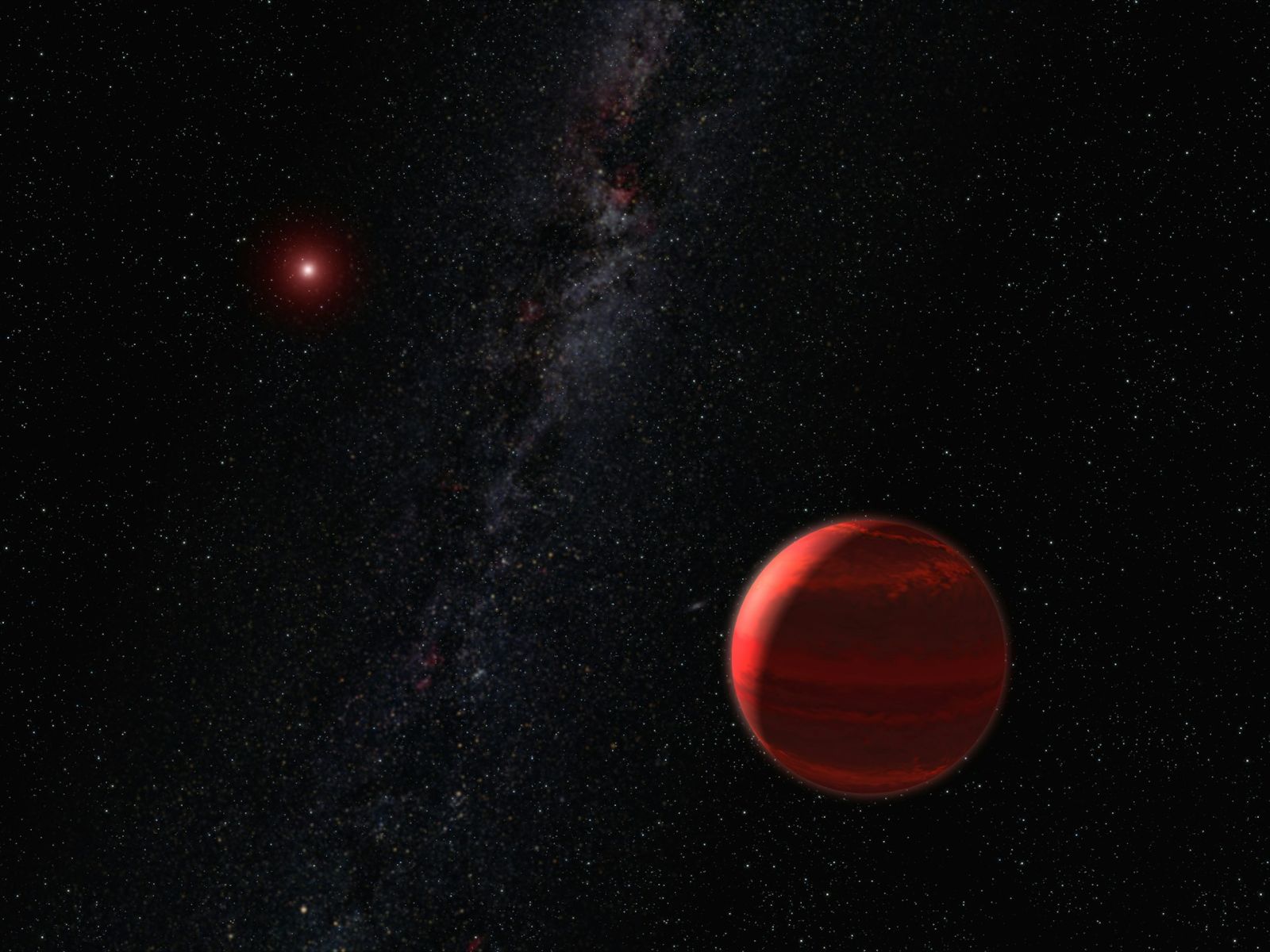
James Webb Telescope Reveals Unexpected Water Ice Clouds on Jupiter-Like Exoplanet
In a groundbreaking discovery that challenges existing atmospheric models, astronomers have detected water ice clouds on Epsilon Indi Ab, a gas giant exoplanet orbiting a nearby star. The findings, made possible by the James Webb Space Telescope’s (JWST) advanced imaging capabilities, suggest that the atmospheres of these distant worlds are far more complex than previously understood. This observation marks a significant step forward in the ongoing search for habitable planets and the potential for life beyond our solar system, offering latest insights into the formation and evolution of planetary systems.
The research, led by Elisabeth Matthews at the Max Planck Institute for Astronomy (MPIA), focused on Epsilon Indi Ab, a planet comparable in size to Jupiter. Unlike many exoplanets studied to date, Epsilon Indi Ab is relatively cool, making it a valuable point of comparison for understanding the atmospheres of gas giants. The team’s observations revealed a surprising lack of ammonia in the planet’s atmosphere, which they attribute to the presence of thick, patchy water ice clouds obscuring the lower layers. This discovery highlights the limitations of current atmospheric models and underscores the need for further investigation into the dynamics of exoplanetary atmospheres.
Direct Imaging and the Power of JWST
The success of this study hinges on JWST’s ability to directly image exoplanets – a feat that was previously extremely difficult. Prior to JWST, scientists primarily relied on indirect methods, such as observing the wobble of a star caused by a planet’s gravity or detecting the slight dimming of a star’s light as a planet passes in front of it. These methods could reveal a planet’s mass and size, but offered limited information about its atmospheric composition. As detailed by the Max Planck Institute for Astronomy, JWST’s Mid-Infrared Instrument (MIRI) allowed astronomers to block out much of the host star’s glare, enabling them to capture the faint light emitted by Epsilon Indi Ab in mid-infrared wavelengths. This direct imaging approach provides a wealth of data about the planet’s atmosphere, including its temperature, composition, and cloud structure.

Epsilon Indi Ab is estimated to be approximately 7.6 times the mass of Jupiter, classifying it as a true gas giant. It orbits its star, Epsilon Indi A, at a considerable distance, placing it in a colder region of the system. The proximity of the Epsilon Indi system – located in the southern constellation Indus – makes it an ideal target for detailed study. The ability to directly observe this planet provides a unique opportunity to refine our understanding of giant planet atmospheres and to develop more accurate models for predicting the conditions on other exoplanets.
The Search for Life and the Evolution of Exoplanet Research
The discovery of water ice clouds on Epsilon Indi Ab is not only significant for its implications for understanding exoplanet atmospheres, but also for its contribution to the broader search for life beyond Earth. The field of exoplanet research has undergone a dramatic evolution over the past few decades. From 1995 to around 2022, the primary focus was on simply discovering new exoplanets. As SciTechDaily reports, the launch of JWST in 2022 ushered in a new era, allowing astronomers to analyze the atmospheres of exoplanets in unprecedented detail. This shift in focus represents a crucial step towards identifying planets that could potentially harbor life.
While the current research focuses on gas giants like Epsilon Indi Ab, the techniques and knowledge gained from these studies are directly applicable to the search for Earth-like planets. Understanding the atmospheric processes on these larger planets provides valuable insights into the conditions that might exist on smaller, rocky planets. The ultimate goal is to detect biosignatures – indicators of life – in the atmospheres of these distant worlds. However, this remains a significant challenge, requiring even more advanced telescopes and sophisticated analytical techniques.
Implications for Atmospheric Modeling
The unexpected presence of water ice clouds on Epsilon Indi Ab has significant implications for atmospheric modeling. Current models often predict a greater abundance of ammonia in the atmospheres of gas giants. The observed scarcity of ammonia suggests that it is being hidden by the thick ice clouds, indicating a more complex interplay of atmospheric processes than previously assumed. This finding necessitates a reevaluation of existing models and the development of new ones that can accurately account for the formation and distribution of clouds in exoplanetary atmospheres.
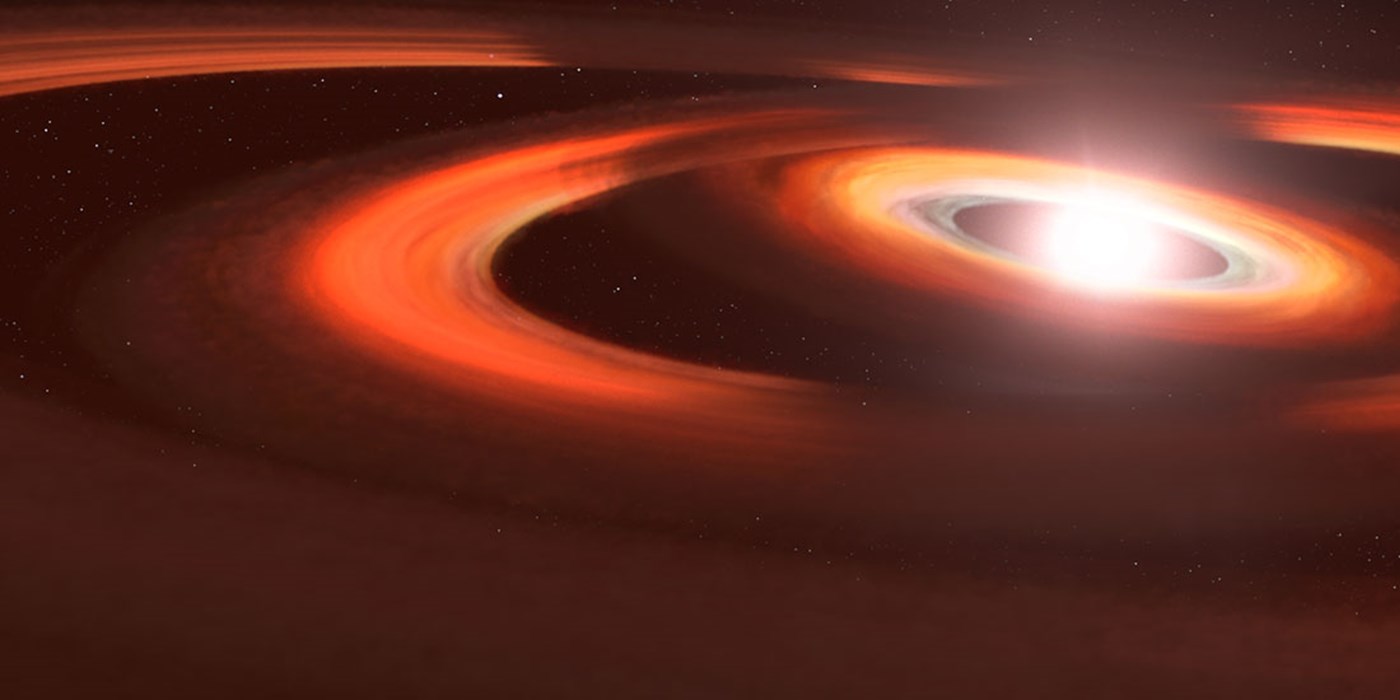
the patchy nature of the clouds suggests that the atmosphere of Epsilon Indi Ab is highly dynamic, with regions of varying temperature and humidity. This dynamic behavior could be driven by a variety of factors, including the planet’s rotation, its orbital path, and the energy it receives from its star. Further observations will be needed to fully understand the forces that shape the atmosphere of this intriguing exoplanet.
Future Research and the Quest for Habitable Worlds
The discovery of water ice clouds on Epsilon Indi Ab is just the beginning. Astronomers plan to continue studying this planet and others like it, using JWST and future telescopes to gather more detailed data about their atmospheres. These observations will help to refine our understanding of exoplanetary atmospheres and to identify potential targets for the search for life. The ongoing development of new technologies, such as extremely large telescopes and advanced spectroscopic instruments, will further enhance our ability to probe the atmospheres of distant worlds.
The search for habitable planets is one of the most ambitious and exciting endeavors in modern science. The discovery of water ice clouds on Epsilon Indi Ab represents a significant milestone in this quest, demonstrating the power of JWST and the potential for future discoveries. As we continue to explore the vastness of space, we are inching closer to answering the fundamental question of whether we are alone in the universe.
Researchers are already planning follow-up observations of Epsilon Indi Ab to further characterize its atmospheric composition and cloud structure. These observations will utilize different wavelengths of light to probe deeper into the atmosphere and to map the distribution of water ice clouds with greater precision. The data collected will be used to refine atmospheric models and to improve our understanding of the processes that govern the formation and evolution of exoplanetary atmospheres.
The next major step in this research will involve studying the atmospheres of smaller, rocky exoplanets that are more likely to be habitable. While these planets are more difficult to observe than gas giants, the techniques developed for studying Epsilon Indi Ab will be invaluable in this endeavor. The ultimate goal is to identify planets with atmospheres that contain biosignatures – indicators of life – such as oxygen, methane, or other gases that are produced by living organisms.
The James Webb Space Telescope continues to deliver groundbreaking insights into the universe, and its observations of Epsilon Indi Ab are a testament to its remarkable capabilities. As we move forward, the combination of advanced technology and innovative research will undoubtedly lead to even more exciting discoveries in the field of exoplanet science.
Key Takeaways:
- The James Webb Space Telescope has detected water ice clouds on the exoplanet Epsilon Indi Ab, a Jupiter-like gas giant.
- This discovery challenges existing models of exoplanet atmospheres, which often predict a greater abundance of ammonia.
- The presence of thick ice clouds suggests that the atmosphere of Epsilon Indi Ab is highly dynamic and complex.
- This research represents a significant step forward in the search for habitable planets and the potential for life beyond Earth.
The team plans to continue observing Epsilon Indi Ab and other exoplanets to further refine our understanding of their atmospheres and to search for potential biosignatures. Stay tuned for future updates as this exciting field of research continues to evolve. Share your thoughts on this incredible discovery in the comments below!
Worth a look