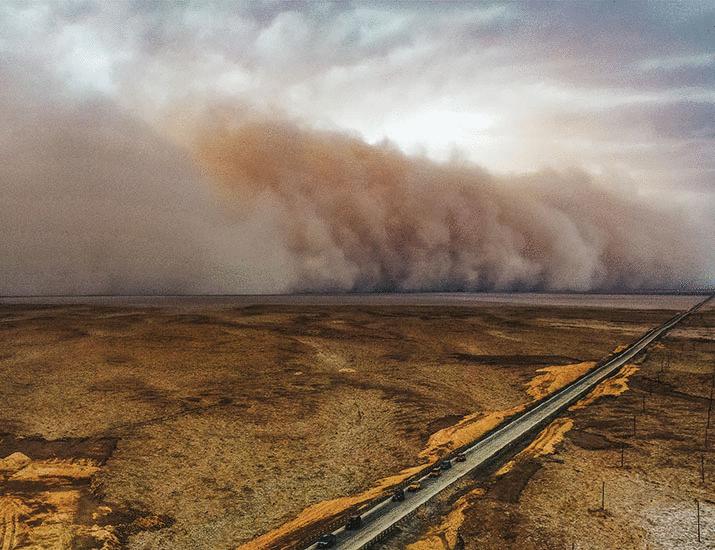
The increasing frequency and intensity of dust storms pose a growing threat to global health and stability. Whereas often perceived as regional events, these meteorological phenomena are now recognized as having far-reaching consequences, impacting air quality, exacerbating respiratory illnesses, and contributing to significant economic disruption. Recent research underscores the urgent require for proactive measures to mitigate the risks associated with these extreme weather events, particularly as climate change continues to reshape global weather patterns.
Dust storms, formed when strong winds lift vast quantities of sand and dust from arid and semi-arid regions into the atmosphere, are not new. However, scientists are observing a concerning trend: an increase in both the frequency and severity of these storms. Factors contributing to this include land degradation, unsustainable agricultural practices, and, crucially, the effects of a changing climate. These storms can travel thousands of kilometers, carrying particulate matter that impacts regions far removed from their origin. The health implications are particularly acute, with fine particulate matter penetrating deep into the lungs and bloodstream, triggering a range of adverse effects.
The Health Risks of Dust Storms: Oxidative Stress and Beyond
The health hazards associated with dust storms extend beyond simple particulate matter inhalation. Recent studies, including research published in Nature, highlight the role of oxidative potential (OP) and environmentally persistent free radicals (EPFRs) in mediating the adverse health effects. These reactive species induce oxidative stress within the body, damaging cells and contributing to inflammation. The research, conducted across 1735 sites in China during dust storm periods from 2021-2023, utilized a random forest model to map OP and EPFR concentrations.
Analysis of over 855,869 hospitalizations in Beijing between 2015 and 2022 during dust storm events revealed statistically significant associations between exposure to EPFRs and increased hospital admissions for circulatory diseases (a 3.05% increase with each 1012 spins/m3) and respiratory illnesses (a 2.02% increase with the same EPFR concentration increase). Similarly, increased OP levels were linked to a 3.52% rise in circulatory disease hospitalizations (with each 0.2 nmol/min/m3 increase) and a 2.08% increase in respiratory disease admissions. The study further estimated that 20.47% of all-cause hospitalizations were attributable to OP exposure, and 27.26% to EPFRs exposure, demonstrating the substantial public health burden imposed by these storms.
These findings are consistent with other research examining the impact of dust storms on respiratory and cardiovascular health. A study published in PubMed corroborates the link between sand and dust storms (SDS) and adverse health outcomes, specifically noting the role of oxidative stress induced by OP and EPFRs. The implications are particularly concerning for vulnerable populations, including children, the elderly, and individuals with pre-existing respiratory or cardiovascular conditions.
Geographical Hotspots and Global Reach
While dust storms occur in various regions globally, certain areas are particularly prone to these events. Africa, Central Asia, North America, and Australia are frequently affected, but the impact is increasingly felt in other parts of the world due to long-range transport of dust particles. The Middle East, for example, experiences intense dust storms originating from the Arabian Peninsula and surrounding deserts. East Asia, as demonstrated by the research from China, is also a significant hotspot.
The sources of dust are diverse, ranging from natural desert environments to areas impacted by human activities such as deforestation, overgrazing, and unsustainable agricultural practices. Land degradation weakens the soil structure, making it more susceptible to wind erosion. Climate change exacerbates these issues by increasing the frequency and intensity of droughts, further contributing to land degradation and dust storm formation. The interplay between these factors creates a complex and challenging situation.
Mitigation and Preparedness: A Multi-faceted Approach
Addressing the growing threat of dust storms requires a comprehensive and multi-faceted approach encompassing both mitigation and preparedness strategies. Mitigation efforts focus on reducing the sources of dust, while preparedness measures aim to minimize the health and economic impacts when storms occur.
Key mitigation strategies include:
- Sustainable Land Management: Implementing practices that prevent land degradation, such as reforestation, afforestation, and sustainable grazing management.
- Water Conservation: Promoting efficient water use and reducing water stress, which can contribute to desertification.
- Climate Change Mitigation: Reducing greenhouse gas emissions to gradual the pace of climate change and its associated impacts on land degradation and weather patterns.
- Improved Agricultural Practices: Adopting farming techniques that minimize soil erosion and promote soil health.
Preparedness measures are equally crucial. These include:
- Early Warning Systems: Developing and implementing robust early warning systems that provide timely alerts to communities at risk.
- Public Health Advisories: Issuing public health advisories during dust storm events, recommending that vulnerable populations stay indoors and take precautions to protect their respiratory health.
- Air Quality Monitoring: Enhancing air quality monitoring networks to track dust concentrations and provide real-time information to the public.
- Healthcare Capacity Building: Strengthening healthcare systems to cope with the increased demand for medical services during dust storm events.
The Role of International Cooperation
Given the transboundary nature of dust storms, international cooperation is essential. Sharing data, best practices, and resources can significantly enhance the effectiveness of mitigation and preparedness efforts. Collaborative research initiatives can also improve our understanding of dust storm dynamics and their impacts, leading to more informed decision-making. The World Meteorological Organization (WMO) plays a key role in coordinating international efforts related to dust storm monitoring and forecasting.
Looking Ahead: Continued Research and Proactive Planning
The scientific community continues to investigate the complex processes driving dust storm formation and their impacts on health and the environment. Ongoing research is focused on improving dust storm forecasting models, understanding the chemical composition of dust particles, and assessing the long-term health effects of exposure. Further investigation into the specific mechanisms by which EPFRs and OP contribute to disease is also warranted.
As the frequency and intensity of dust storms are projected to increase in the coming years, proactive planning and investment in mitigation and preparedness measures are critical. Ignoring this growing threat will have significant consequences for public health, economic stability, and environmental sustainability. The need for a coordinated global response is becoming increasingly urgent.
The next key development to watch is the release of updated air quality guidelines from the World Health Organization (WHO), expected in late 2026, which are anticipated to include more specific recommendations for managing dust-related air pollution. Staying informed about these developments and advocating for effective policies are crucial steps in protecting communities from the harmful effects of extreme dust storms. Share your thoughts and experiences with dust storms in the comments below.
Keep reading