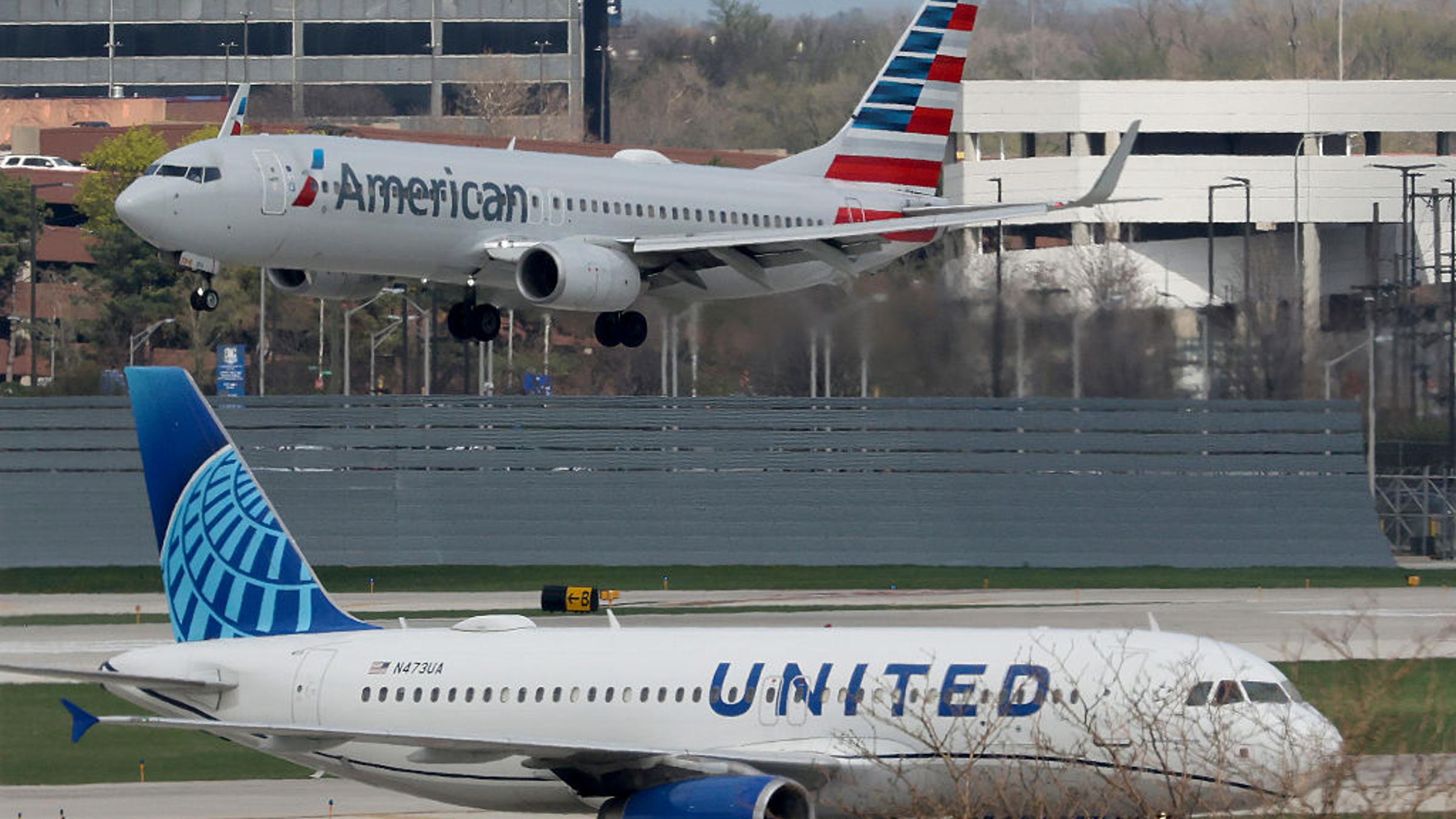
Chicago O’Hare International Airport will see hundreds fewer flights each day this summer after the Federal Aviation Administration imposed a daily cap on operations to address growing congestion and delay concerns. The move comes as the nation’s busiest airport by flight volume faced pressure from competing expansion plans by its two dominant carriers, United Airlines and American Airlines, which had scheduled significantly more flights than the airport’s infrastructure could reliably handle during peak travel months.
The FAA’s order, issued on April 16, 2026, limits total daily takeoffs and landings to 2,708 between May 17 and October 24, a reduction of nearly 400 operations from what airlines had originally planned for peak summer days. Transportation Secretary Sean Duffy said the original schedules were “unrealistic” and would have “dramatically” exceeded what the airport’s runways, terminals and air traffic control systems could safely manage, emphasizing that the agency’s priority is ensuring flight schedules reflect what the system can handle to protect the flying public.
According to the FAA’s own data cited in the order, last summer only 56% of departing flights and 58% of arriving flights at O’Hare operated without delays, with ongoing construction projects cited as a major contributing factor. The agency noted that rehabilitation work on Taxiways A and B, along with other taxiway closures and rerouting to accommodate concrete work west of the main terminal, had constrained the airfield’s capacity just as airlines sought to increase flights.
The FAA stated that the initial summer 2026 schedule would have represented a 15% increase in peak-day operations compared to the previous summer, pushing planned operations above 3,080 on the busiest days. This projected volume, the agency said, would “exceed the airport’s capacity throughout the Summer 2026” and risked creating a cascade of delays and cancellations that could undermine reliability during the peak travel season.
American Airlines estimated in an internal memo shared with TIME that it would demand to cut no more than 40 flights per day—including arrivals and departures—under the fresh cap, while anticipating that United Airlines would need to reduce its schedule by about 200 flights daily during peak periods. United did not provide its own estimate of the impact when contacted for comment.
Both airlines publicly thanked the Department of Transportation and the FAA for facilitating a collaborative process, with American stating that the action would “improve reliability and reduce delays for customers traveling from, to, and through O’Hare this summer,” and United saying it was reviewing the order and would share further details after its internal assessment.
The FAA indicated that the seasonal restriction is not expected to extend beyond October 24, 2026, as it anticipates “significant progress on airfield construction through the Summer 2026 season” will alleviate the current constraints. FAA Administrator Bryan Bedford reiterated that the agency appreciates the airlines’ cooperation in reaching a responsible operational level that balances safety, efficiency, and customer experience.
Why O’Hare Needed a Flight Cap This Summer
The decision to impose flight limits at O’Hare stems from a combination of infrastructure constraints and aggressive airline scheduling that threatened to overwhelm the airport’s ability to maintain on-time performance. As the largest airport in the United States by total flight operations, O’Hare serves as a critical hub for both United and American Airlines, with gate allocation historically tied to prior-year flight volume—a system that has incentivized carriers to maximize their scheduled flights to secure future access.
This year, both airlines announced expansion plans for the summer season, driving the combined schedule toward levels that the FAA determined would strain runways, taxiways, and air traffic control capacity. The agency specifically pointed to ongoing airfield rehabilitation projects, including partial closures of Taxiways A and B and revised routing for concrete work west of the main terminal, as factors that reduced the airport’s effective capacity even as flight demand was projected to rise.
In February, the FAA had warned airlines that it might need to intervene if schedules continued to escalate, noting that planned operations for summer 2026 exceeded 3,000 per day on peak days—well above the previous summer’s peak of around 2,680 daily operations. After schedule reduction meetings with the airlines and Chicago’s Department of Aviation, the FAA initially considered a cap of about 2,800 flights per day but ultimately determined that a lower limit was necessary to prevent systemic delays.
The final limit of 2,708 daily operations represents a compromise reached through negotiation, aiming to preserve enough flexibility for airlines to maintain core service while reducing the likelihood of cascading disruptions. The FAA emphasized that the measure is temporary and tied to the construction timeline, with the expectation that once taxiway rehabilitation progresses sufficiently, the airport will be able to handle higher volumes without compromising safety or reliability.
Impact on Travelers and Airline Operations
For passengers, the flight cap is intended to translate into a more predictable travel experience during the traditionally busy summer months, when O’Hare typically sees heightened demand for both domestic and international connections. By preventing overscheduling, the FAA aims to reduce the frequency of gate holds, tarmac delays, and missed connections that have plagued the airport in recent periods when demand approached or exceeded operational limits.
The reduction will not be applied uniformly across all days; instead, the cap will result in fewer flights being scheduled only on days when airlines had originally planned operations above the 2,708 threshold. On lighter travel days, the existing schedules may remain largely intact, meaning the impact will be most noticeable during peak periods such as holiday weekends and weekday business travel peaks.
While American Airlines expects to trim a relatively modest number of flights, United’s anticipated reduction of around 200 daily flights during peak times suggests a more significant adjustment to its summer schedule. The disparity reflects differences in each carrier’s expansion plans and reliance on O’Hare as a connecting hub, though neither airline has disclosed which specific routes or flight times will be affected.
Both carriers have declined to detail how the cuts will be distributed across their fleets or which aircraft types might see reduced utilization, noting that internal reviews are ongoing. Though, they have affirmed their commitment to working with federal authorities to implement the changes smoothly and minimize inconvenience to customers.
Context: O’Hare’s Role in National Air Travel
As a major international gateway and the primary hub for two of the world’s largest airlines, O’Hare plays an outsized role in the U.S. Air transportation system. Its position as the nation’s busiest airport by flight volume means that operational disruptions there can have ripple effects across the national network, particularly for connecting passengers and time-sensitive cargo operations.
The airport has undergone extensive modernization efforts in recent years, including terminal upgrades and runway improvements, but certain airfield components—particularly taxiways serving the main terminal complex—have required phased rehabilitation to maintain long-term usability. These projects, while necessary for safety and durability, temporarily reduce the number of aircraft that can move efficiently between gates and runways at any given time.
The FAA’s intervention highlights the ongoing challenge of balancing infrastructure limitations with airline demand at constrained airports. Similar actions have been taken in recent years at other major hubs, including Newark Liberty International Airport, where the FAA imposed flight caps in 2025 to address comparable concerns about overscheduling and system strain.
By setting a clear, enforceable limit on daily operations, the agency seeks to provide airlines with the certainty needed to build reliable schedules while protecting the traveling public from the worst effects of congestion. The measure will remain in place through the end of the October 2026 travel season, after which the FAA will reassess whether the constraints have eased sufficiently to allow a return to higher volumes.
Travelers seeking updates on the flight cap or its potential impact on specific itineraries are encouraged to consult their airline’s official channels or the Federal Aviation Administration’s website for notices and advisories. Chicago’s Department of Aviation similarly provides real-time operational data for O’Hare and Midway airports through its public portal.
As the summer travel season approaches, the effectiveness of the cap will be measured not only in on-time performance metrics but in passenger confidence—whether travelers can book flights with the assurance that their plans are less likely to be upended by avoidable delays.
Worth a look