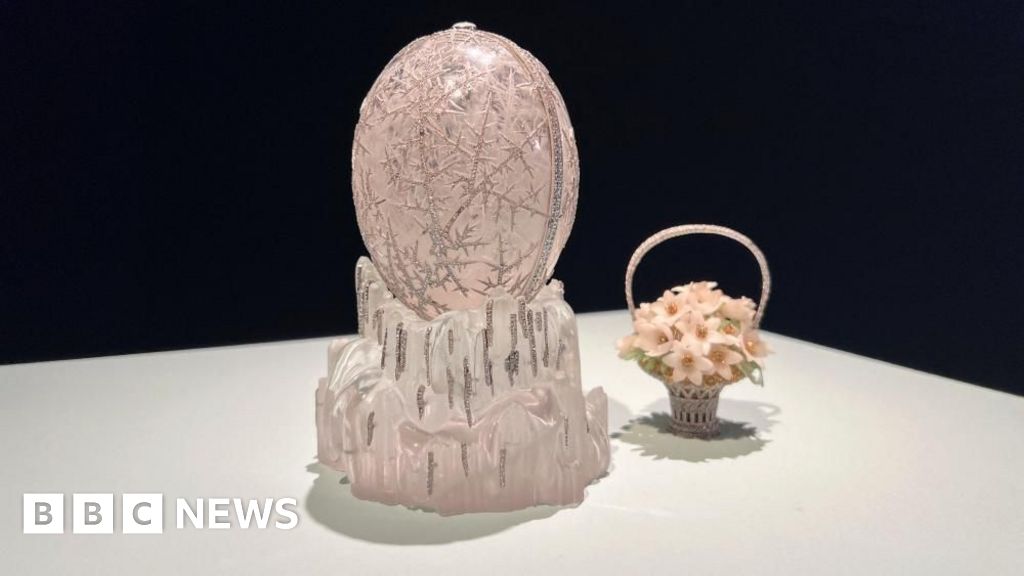
The imperial Winter Egg: A Record-Breaking Fabergé Masterpiece
Have you ever wondered what a symbol of opulent artistry and a poignant piece of Russian history would fetch in today’s market? The answer, as of late 2023, is a staggering £22.9 million ($30.2 million).This record-breaking price was achieved by the Imperial Winter Egg, a breathtaking creation by Carl Fabergé, once belonging to the Romanov dynasty. This sale isn’t just about a stunning object; it’s a window into a vanished world of imperial grandeur and exquisite craftsmanship.
A Legacy in Crystal and Diamonds
commissioned in 1913 by Tsar Nicholas II as a gift for his mother, Empress Maria feodorovna, the Winter egg is considered one of Fabergé’s most stunning achievements. The 8.2cm (3.2in) tall egg is meticulously carved from rock crystal and adorned with approximately 4,500 brilliant-cut diamonds. Delicate platinum snowflake motifs further enhance its icy beauty.
This sale dramatically surpasses the previous record for a Fabergé egg, which stood at £8.9 million, paid in 2007. According to Christie’s auction house, where the sale took place, this result “reaffirms the enduring significance of this masterpiece.” https://www.christies.com/
Key Features of the Imperial Winter Egg:
* Material: Rock crystal, diamonds, platinum
* Commissioned by: Tsar Nicholas II
* Recipient: Empress Maria Feodorovna
* Year of Creation: 1913
* Design: Based on the work of Alma Theresia Pihl, a rare female workmaster at Fabergé.
The Fabergé Legacy & Imperial Eggs
Carl Fabergé wasn’t just a jeweler; he was an artist who catered to the Russian Imperial Court for over three decades. From 1885 until the 1917 abdication of Tsar Nicholas II, Fabergé created approximately 50 Imperial eggs. Each egg was a unique, elaborate surprise, often containing intricate mechanical automatons or miniature portraits.
These weren’t simply decorative objects. They were deeply personal gifts, reflecting the Tsar’s affection and political relationships. The Imperial Easter Eggs – as they are commonly known – became a symbol of the romanov dynasty’s wealth and power. Today, only a handful remain in private hands, making each one incredibly valuable. The Winter Egg is one of just seven still held by private collectors, with the rest residing in museums and institutions.
understanding Fabergé’s Techniques: Fabergé’s mastery lay in his innovative use of materials and techniques. He pioneered techniques like guilloché enameling - a decorative technique where intricate patterns are etched into metal and then covered with translucent enamel.He also expertly combined precious stones, gold, and other materials to create objects of unparalleled beauty.
Why the Record Price? Factors Driving Value
Several factors contributed to the Winter Egg’s record-breaking price. Beyond its inherent beauty and historical significance, the rarity of Fabergé eggs in private collections plays a crucial role. The tumultuous history of the Romanov family and the subsequent dispersal of their treasures adds to the allure.
recent trends in the luxury collectibles market also demonstrate a growing appetite for unique, historically significant items. A report by Deloitte in late 2023 indicated a 15% increase in auction sales of art and collectibles exceeding $1 million. https://www2.deloitte.com/us/en/pages/financial-services/articles/art-and-finance-report.html This suggests a strong investor interest in tangible assets with a compelling narrative.
Related Searches: Russian Imperial art, Fabergé egg valuation, collectible jewelry investment, rare antique eggs, Romanov dynasty artifacts.
Inside the Winter Egg: A Delicate Surprise
Opening the Winter Egg reveals a delightful surprise: a miniature basket woven from white quartz, containing exquisitely crafted flowers. This hidden detail exemplifies Fabergé’s
Worth a look