
In the bustling digital corridors of Francophone Africa, a quiet but fierce battle is being waged over the nature of truth. For journalists dedicated to the rigorous process of verification, the reward for their labor is often not gratitude, but a label: trouble-fête—the party poopers. In an era where viral narratives often travel faster than the facts, those who step in to correct the record are increasingly viewed as disruptors of a convenient, if fictional, consensus.
This tension highlights a growing crisis in the information ecosystem across West and Central Africa. As social media becomes the primary news source for millions, the line between organic grassroots communication and coordinated disinformation has blurred. The role of the journalist has shifted from being the primary provider of information to becoming a forensic analyst of existing claims, a transition that often puts them at odds with the very publics they aim to serve.
The challenge of fact-checking in Francophone Africa is not merely a technical hurdle of sourcing and verification. it is a sociological one. When a piece of news aligns with a population’s hopes, fears, or political leanings, the act of debunking that news is often perceived as a political attack rather than a journalistic service. This perception is particularly acute in regions experiencing political volatility, where the appetite for “strongman” narratives often overrides the desire for nuanced accuracy.
Nowhere is this more evident than in Burkina Faso, where the intersection of military leadership and digital communication has created a fertile ground for both genuine support and dangerous falsehoods. The struggle to maintain an objective record in such an environment reveals the high stakes of the verification process, where a single deepfake or a misinterpreted policy claim can have real-world geopolitical implications.
The Burden of the ‘Trouble-Maker’ Label
For many journalists in the region, the process of fact-checking is often met with hostility. The term “trouble-fête” captures the essence of this friction: the journalist is seen as someone who arrives at the complete of a celebratory or empowering narrative only to tell the crowd that the story is not true. This creates a psychological barrier where the truth is viewed as an unwelcome intrusion.
This hostility is often amplified by the speed of digital consumption. In the time it takes a professional team to verify a claim, cross-reference sources, and publish a correction, the original falsehood has already been shared thousands of times, becoming an internalized “truth” for the audience. When the correction finally arrives, it is not seen as a helpful update but as an attempt to censor or undermine a popular sentiment.
there is a critical distinction emerging between “fact-checking” and “debunking.” While fact-checking is often a proactive process of verifying claims before or during publication, debunking is the reactive process of dismantling a lie after it has already taken hold. In much of Francophone Africa, journalists find themselves trapped in a perpetual cycle of debunking—fighting a “forest” of lies with a few “trees” of truth—which often leaves them exhausted and viewed as purely negative actors in the public discourse.
Case Study: Disinformation in Burkina Faso
The current political climate in Burkina Faso provides a stark example of how disinformation targets high-profile leaders and national stability. President Ibrahim Traoré, a central figure in the country’s current administration, has been the subject of numerous viral claims that require constant monitoring and verification to prevent public mislead.
One such instance involved claims that President Traoré had declared the country tax-free, a narrative that would naturally appeal to a population facing economic hardship. However, rigorous verification found no evidence to support the claim that the president had made such a declaration via Africa Check.
Beyond domestic policy, the use of sophisticated technology to create “deepfakes” has introduced a new layer of danger. A circulating video recently attempted to portray Burkina Faso as having backed Iran in a conflict involving Israel and the United States. This was later confirmed to be a deepfake, a fabricated piece of media designed to mislead the public about the nation’s foreign policy and diplomatic alignments via Ghana Fact.
The volume of these claims is significant. In 2025 alone, multiple claims regarding the leadership of Ibrahim Traoré were subjected to formal fact-checking processes to separate political rhetoric from factual reality via Dubawa.
The Linguistic Barrier: A Critical Gap in Defense
While much of the high-level fact-checking occurs in French—the official language of many Francophone African states—a massive portion of the population consumes information in local languages. This creates a dangerous “verification gap.” Disinformation often spreads through voice notes on WhatsApp or Facebook posts written in local dialects, where the reach is vast but the presence of professional fact-checkers is minimal.
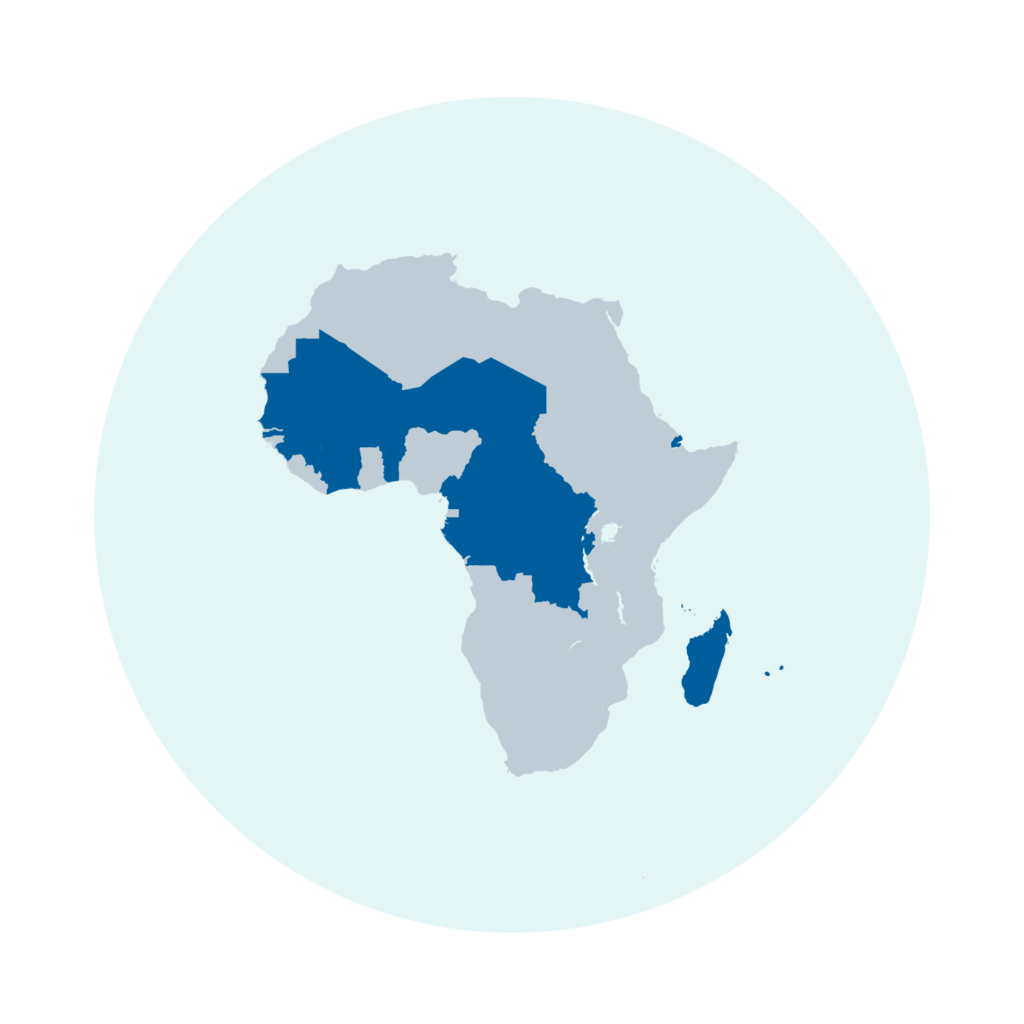
Fighting disinformation in local languages is not just a matter of translation; it requires cultural nuance and a deep understanding of local idioms and social structures. When a claim is debunked in French, it may never reach the people who first believed it in a local tongue. This makes the effort to localize fact-checking one of the most urgent challenges for media organizations in the region.
Without a robust presence in local languages, fact-checkers remain isolated in urban, educated circles, while the rural populations—often the most vulnerable to disinformation—continue to operate in an environment where falsehoods go unchallenged. This linguistic divide effectively shields disinformation from the tools of verification, allowing rumors to solidify into perceived facts.
Why This Matters for Global Stability
The struggle for truth in Francophone Africa is not a localized issue; it has global ramifications. In an interconnected world, a deepfake suggesting a West African nation has entered a conflict with a global superpower can trigger diplomatic tensions or influence international security strategies. When the public loses trust in verified journalism, they become more susceptible to external influence operations designed to destabilize regions for geopolitical gain.
the “trouble-fête” perception of journalists undermines the democratic ideal of an informed citizenry. When the act of correcting a lie is viewed as an act of aggression, the shared reality necessary for governance and social cohesion begins to crumble. The result is a fragmented society where truth is determined not by evidence, but by tribal or political loyalty.
Key Takeaways on Regional Disinformation
- Perception Gap: Fact-checkers are often viewed as “trouble-makers” (trouble-fête) for disrupting popular but false narratives.
- Technological Threats: The rise of deepfakes, such as those involving Burkina Faso’s foreign policy, poses a significant threat to diplomatic stability.
- Linguistic Vulnerability: A critical lack of fact-checking in local languages allows disinformation to spread unchecked among non-French speaking populations.
- Reactive vs. Proactive: There is a systemic struggle between “debunking” (reactive) and “fact-checking” (proactive), with the former often dominating the landscape.
The path forward requires more than just better tools; it requires a restoration of the relationship between the journalist and the public. This involves moving beyond the “correction” model and toward a “literacy” model, where audiences are taught how to verify information themselves rather than relying on a journalist to tell them they are wrong.
As we continue to monitor the information landscape in West Africa, the next critical checkpoint will be the implementation of more localized, language-specific verification initiatives. The ability of media organizations to bridge the gap between official languages and local dialects will determine whether the truth can finally outpace the lie.
We invite our readers to share their thoughts on the challenges of digital disinformation in their own regions. How can journalists move from being seen as “trouble-makers” to being seen as essential guides in the digital age? Join the conversation in the comments below.
Keep reading