Falling Review: Jack Thorne’s Religious Romance Is a Misguided Mess
May 19, 2026
Channel 4’s new drama Falling promises to be a modern retelling of the age-old forbidden love story—this time between a priest and a nun. With a stellar cast including Paapa Essiedu and Keeley Hawes, the production appears destined for critical acclaim. But from its opening scenes, the drama stumbles, leaving viewers wondering whether the story’s religious themes are being treated with the reverence they deserve—or if Here’s just another misguided attempt at romanticizing clerical celibacy.
The premise is simple: Anna, a nun who has taken her vows 20 years ago, finds herself drawn to Father David, a dynamic young priest working in the impoverished Easton neighborhood of Bristol. Their connection is immediate, but the rules of their faith stand in the way. The tension between duty and desire is a classic setup, one that has inspired countless works of literature, and film. Yet Falling, written by Jack Thorne, fails to deliver the emotional depth or theological nuance that such a story demands.
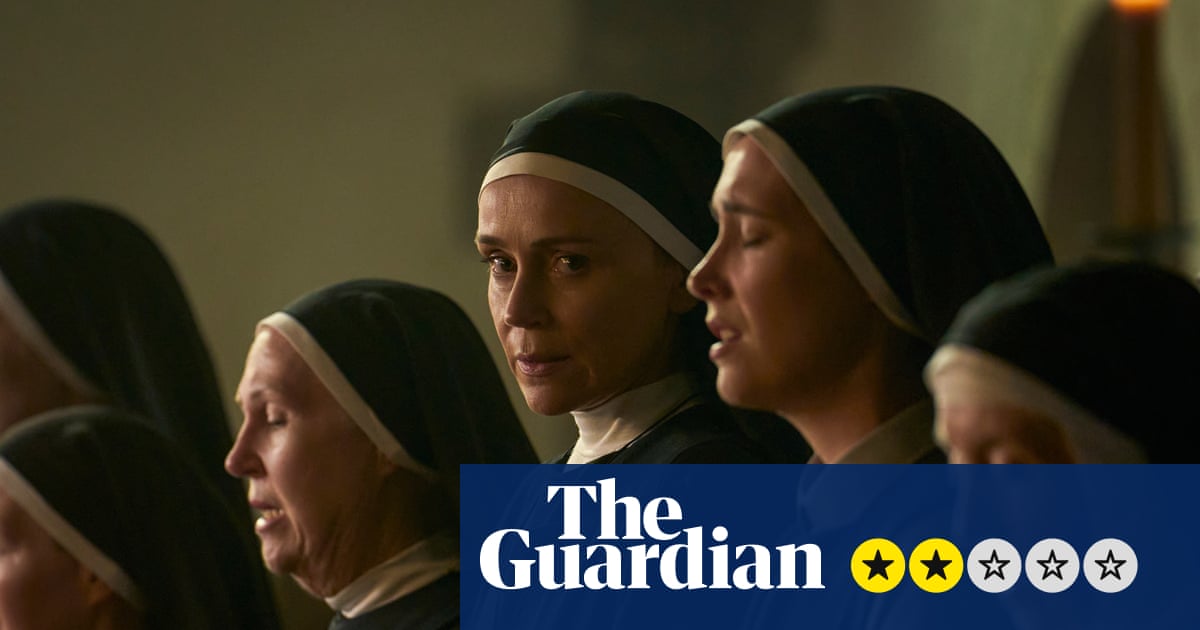
From the outset, the characters feel unrealistic. Anna, played by Keeley Hawes, is supposed to be a woman of deep faith and discipline, yet her dialogue and mannerisms often come across as forced and unconvincing. A scene where she delivers a box of vegetables to a local grocer devolves into an awkward exchange that feels more like a parody than a sincere moment. Similarly, Father David, portrayed by Paapa Essiedu, is meant to be a grounded and compassionate figure, but his interactions with parishioners and colleagues lack the authenticity needed to make his struggle with celibacy feel relatable.
The drama’s biggest flaw lies in its treatment of religious themes. While the story attempts to explore the complexities of faith, duty, and human desire, it does so in a way that feels more like a cheap thriller than a thoughtful examination of spirituality. The Catholic Church’s stance on celibacy is a sensitive and deeply personal issue for many believers, and Falling risks trivializing it by reducing the conflict to a simplistic romantic struggle.
Why the Story Feels Like a Missed Opportunity
The concept of a priest and nun grappling with forbidden love is a powerful one. Historically, such stories have explored the tension between personal desire and religious devotion, often with profound emotional and philosophical weight. Think of films like The Mission or The Song of Bernadette, where faith and love are intertwined in ways that challenge both the characters and the audience.
Yet Falling fails to capture that same depth. The writing is uneven, the dialogue often clunky, and the characters’ motivations feel inconsistent. Essiedu and Hawes bring undeniable talent to their roles, but they are hamstrung by a script that doesn’t give them enough to work with. The result is a drama that feels more like a soap opera than a serious exploration of faith and morality.
One of the most frustrating aspects of Falling is its inability to balance the romantic tension with the spiritual weight of its subject matter. The story’s religious themes are treated with a lightness that feels disrespectful, particularly given the real-world struggles faced by clergy and religious communities. The drama’s portrayal of the Catholic Church and its teachings comes across as reductive, focusing more on the melodrama of forbidden love than on the deeper theological and ethical questions at play.
A Cast That Can’t Save the Story
Paapa Essiedu and Keeley Hawes are two of the most talented actors working today, and their chemistry is undeniable. Yet even their best efforts can’t elevate a script that is fundamentally flawed. Essiedu’s Father David is supposed to be a compassionate and dynamic figure, but his character often feels more like a romantic lead than a man of faith. Hawes’ Anna, meanwhile, is supposed to embody devotion and discipline, but her portrayal often feels more like a caricature than a fully realized character.
The supporting cast, including Niamh Cusack as the abbess Francesca, fares little better. Cusack brings gravitas to her role, but the script doesn’t give her enough to work with, leaving her character feeling underdeveloped. The result is a drama that, despite its talented cast, lacks the emotional resonance needed to make its story compelling.
One of the few bright spots in Falling is its setting. Bristol’s Easton neighborhood, depicted as a deprived and struggling community, provides a stark contrast to the sheltered world of the convent and parish. The drama’s attempts to explore social issues and community activism are commendable, but they are overshadowed by the story’s romantic melodrama. The real-world struggles of the parishioners feel like an afterthought, further distancing the drama from any sense of authenticity.
The Religious Romance Trope: Why It Doesn’t Work Here
The idea of forbidden love between a priest and a nun is a well-worn trope, but it has historically been used to explore profound themes of sacrifice, redemption, and the human condition. Films like The Nun’s Story and The Black Narcissus use religious settings to delve into complex psychological and spiritual struggles. Falling, however, reduces these themes to a shallow romantic conflict.
The drama’s treatment of celibacy is particularly problematic. While the story attempts to portray the challenges faced by clergy, it does so in a way that feels more like a critique of the Church’s teachings than a nuanced exploration of faith. The result is a story that risks alienating both religious and secular audiences, offering neither the depth of a serious drama nor the entertainment value of a lighthearted romance.
For viewers seeking a thoughtful examination of faith and desire, Falling will likely be a disappointment. For those looking for a simple romantic drama, the story’s religious themes may feel like an unnecessary distraction. The drama fails to find the right balance, leaving it as a misguided mess that doesn’t quite live up to its potential.
What’s Next for the Drama?
As of this writing, Falling has not yet concluded its run on Channel 4. While the drama has received mixed reviews from critics, it remains to be seen whether the remaining episodes will redeem the story’s early missteps. Given the talent involved, there is still room for the drama to improve, but the foundation has been laid in a way that makes it difficult to imagine a strong finish.

For now, viewers are left with a drama that is more curious than compelling, more frustrating than fulfilling. Falling may have started with good intentions, but its execution leaves much to be desired. If you’re looking for a thought-provoking exploration of faith and love, this is not the story for you. But if you’re in the mood for a lighthearted romantic drama, even this one may prove too heavy-handed.
Final Verdict: A Missed Opportunity
Falling is a drama that had the potential to be something truly special. With a talented cast and a compelling premise, the story could have explored the complexities of faith, duty, and desire in a way that resonates with audiences. Instead, it delivers a misguided mess that feels more like a missed opportunity than a successful work of art.
For all its flaws, Falling is worth watching—if only to see how far a talented cast can push a flawed script. But the drama’s failure to balance romance with religion leaves it as a cautionary tale about the dangers of treating sacred themes with anything less than the utmost respect.
What do you think? Is Falling a misguided mess, or is there hope for redemption in the remaining episodes? Share your thoughts in the comments below.
Keep reading