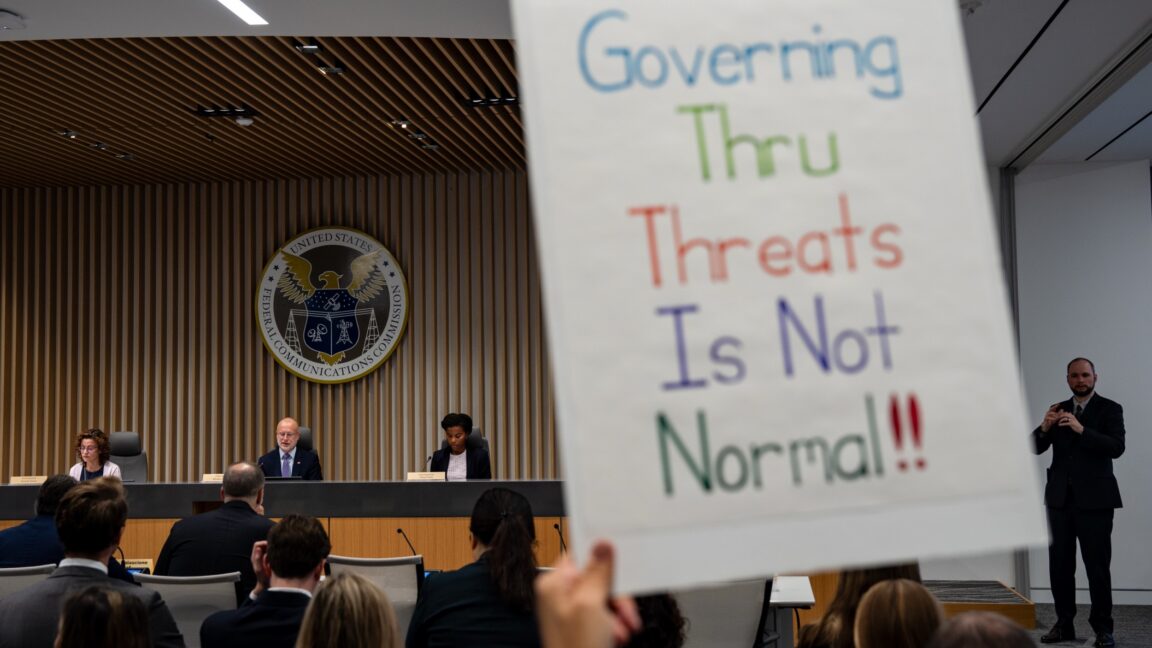
FCC Considers Lifting National Broadcast Ownership Cap: A Deep Dive into the Debate & Potential Impacts
The Federal Communications Commission (FCC) is once again revisiting the national broadcast ownership cap, sparking a heated debate about media consolidation, local programming, and the future of diverse voices in American television. this move, initiated on September 30, 2025, has ignited concerns about the potential for a handful of massive corporations to dominate the media landscape, perhaps silencing local perspectives and limiting news diversity. But what exactly does this cap entail,why is it being reconsidered,and what could the consequences be for viewers across the nation?
Understanding the National Broadcast Ownership cap
Currently,the national ownership cap limits any single broadcast company to reaching no more than 39% of US television households.Established by Congress in 2004, this rule was designed to prevent excessive media concentration and foster competition. The cap aims to ensure that a few powerful entities don’t control the flow of facts to the majority of the American public.However, this cap has been a subject of ongoing contention, with industry lobbyists consistently arguing for its relaxation or elimination.
The FCC is now seeking public comment on whether to modify or eliminate this cap, a process mandated by statute. This Notice of Proposed Rulemaking (NPRM) doesn’t signal an immediate change, but it opens the door to potentially significant shifts in the media ownership structure. You can find the Congressional Research Service report detailing the history of the cap here: https://www.congress.gov/crs-product/R45338.
The Kimmel Controversy & The Core of the Dispute
The recent FCC action was partially triggered by a dispute involving ABC’s late-night host Jimmy Kimmel.Following Kimmel’s on-air commentary critical of a Republican FCC commissioner,several local stations owned by major networks temporarily pulled the show from their broadcast schedules. This incident fueled accusations of censorship and highlighted the potential for corporate influence over local programming decisions.
Commissioner Anna Gomez, the sole Democrat on the republican-majority FCC, strongly criticized the actions of her colleagues and the network affiliates. She argued that the FCC ”seized on a late-night comedian’s comments as a pretext to punish speech it disliked,” characterizing it as “an act of clear goverment intimidation.” Gomez further emphasized that large media conglomerates, seeking FCC approval for mergers and regulatory changes, are incentivized to comply with the wishes of those in power.
This situation underscores a critical tension: the balance between national network interests and the needs of local communities. Gomez’s concerns echo a broader fear that unchecked media consolidation will lead to a homogenization of news and entertainment, diminishing the diversity of voices available to viewers. Related keywords: media consolidation, broadcast regulation, FCC rules, local television, news diversity.
Why is the FCC Reconsidering the Cap Now?
The push to revisit the national ownership cap isn’t new. Broadcasters have long argued that the 39% limit is outdated and hinders their ability to achieve economies of scale, invest in new technologies, and compete with digital media giants like Google and Facebook. They contend that the current rules restrict their ability to grow and innovate.
Recent data from the Pew Research Center (September 2025) shows that local TV news viewership,while still significant,has declined by 18% over the past five years,with a corresponding increase in reliance on digital sources for news. This shift in consumption patterns is frequently enough cited by proponents of deregulation as evidence that the conventional broadcast model needs to adapt to survive. Though,critics argue that loosening ownership rules won’t solve the underlying challenges facing local news and may exacerbate existing problems.
Actionable Tip: Stay informed about FCC proceedings by regularly checking the FCC website (https://www.fcc.gov/) and subscribing to their email updates.
Potential impacts of Lifting or raising the Cap
The consequences of altering the national ownership cap could be far-reaching:
* Reduced Local Programming: A more consolidated media landscape could lead to fewer locally produced news programs, public affairs shows, and community-focused content. stations might prioritize national programming to maximize profits, neglecting the specific needs of their local communities.
* Increased Advertising Rates: Fewer independent station groups could result in less competition for advertising revenue,potentially driving up costs for local businesses.
* Limited Viewpoint Diversity: With fewer owners controlling a larger share of the market, there’s a risk of a narrowing of perspectives and a decline in investigative journalism.
* Greater Corporate Influence: Larg
Keep reading