
The U.S. Food and Drug Administration (FDA) has granted 510(k) clearance for updated software for the Spectralis retinal imaging platform, a move designed to increase the speed and diagnostic capabilities of ocular examinations. According to a formal announcement from the manufacturer, Heidelberg Engineering, the update introduces a 250 kHz scan speed for Optical Coherence Tomography (OCT) angiography and integrates a new green autofluorescence module to improve visualization of the macula. This regulatory clearance marks an expansion of the existing diagnostic suite, which previously relied on 85 kHz and 125 kHz scan speeds.
As a clinician, I recognize that these incremental improvements in scanning velocity are significant for busy ophthalmology practices. Faster acquisition times can reduce the duration patients must remain still, which is often a challenge for individuals with tremor, discomfort, or difficulty maintaining fixation. By doubling the available scan speed, the system aims to provide higher-resolution imaging while minimizing motion artifacts, which are common barriers in high-resolution retinal diagnostics. The update is anticipated to be available for commercial deployment within the United States later this year, according to the Heidelberg Engineering official corporate news portal.
Enhanced Imaging Capabilities and Scan Speeds
The core of this software update is the transition to a 250 kHz scan speed, a substantial jump from the previous 125 kHz threshold. In the context of OCT angiography—a non-invasive imaging technique that visualizes blood flow in the retina—higher scan speeds allow for the capture of more data points in a shorter timeframe. This is critical for clinicians mapping the fine microvasculature of the eye. According to technical specifications provided by FDA 510(k) public database records, the Spectralis platform has been iteratively upgraded to maintain compatibility with modern high-speed data processing requirements in medical imaging.
Furthermore, the inclusion of a green autofluorescence module provides a new diagnostic tool for practitioners assessing macular health. Autofluorescence imaging is a specialized technique that allows physicians to visualize the metabolic activity and health of the retinal pigment epithelium (RPE). By adding a green wavelength option, the software aims to complement existing blue-light autofluorescence methods, potentially offering clinicians a clearer view of specific retinal pathologies, such as those associated with age-related macular degeneration or other degenerative conditions.
Clinical Impact for Ophthalmology Practices
For patients, the primary benefit of these updates is a more efficient and potentially more accurate diagnostic experience. In clinical practice, the ability to obtain high-quality images quickly is not merely a matter of convenience; it directly influences the quality of the data available for treatment planning. Motion artifacts—the blurring caused by involuntary eye movements—can obscure critical details in retinal scans, leading to the need for repeat imaging or, in worse cases, diagnostic uncertainty. By accelerating the scan, the system effectively mitigates some of these limitations.
The Spectralis platform has long been a standard in retinal imaging, particularly for longitudinal studies where tracking changes in retinal thickness or vascular density over time is essential. According to American Academy of Ophthalmology guidelines, the accuracy of diagnostic imaging is fundamental to the management of chronic conditions like diabetic retinopathy and glaucoma. The integration of faster processing and enhanced fluorescence imaging allows for a more comprehensive assessment of the retinal architecture during a single patient visit.
Regulatory Context and Future Availability
The FDA’s 510(k) clearance process is reserved for medical devices that demonstrate “substantial equivalence” to legally marketed predicate devices. This regulatory pathway ensures that the updated Spectralis software meets established safety and effectiveness standards before reaching clinical settings. While the clearance has been issued, the transition from regulatory approval to clinical availability involves several operational steps, including the distribution of software patches and the necessary training for medical staff on the new module interfaces.
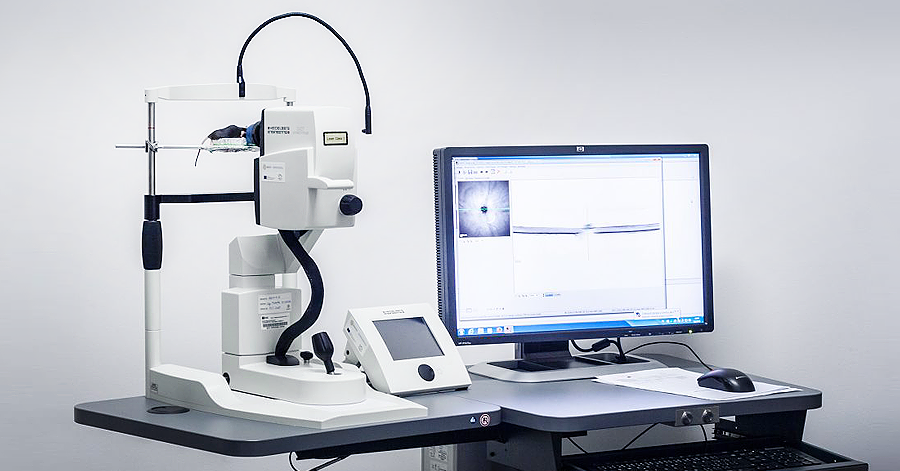
Heidelberg Engineering has indicated that the update will be commercially available to clinics later this year. Practitioners currently using the Spectralis platform should coordinate with their regional representatives to determine the specific timeline for deployment in their local facilities. As with any medical software update, clinicians are encouraged to review the updated user manuals and safety documentation provided by the manufacturer to ensure optimal use of the new 250 kHz scan and green autofluorescence features.
We will continue to monitor the rollout of this technology and provide updates as they become available through official regulatory channels. If you have questions regarding how these technological advancements may impact your clinical practice or patient care, please share your thoughts or inquiries in the comments section below.