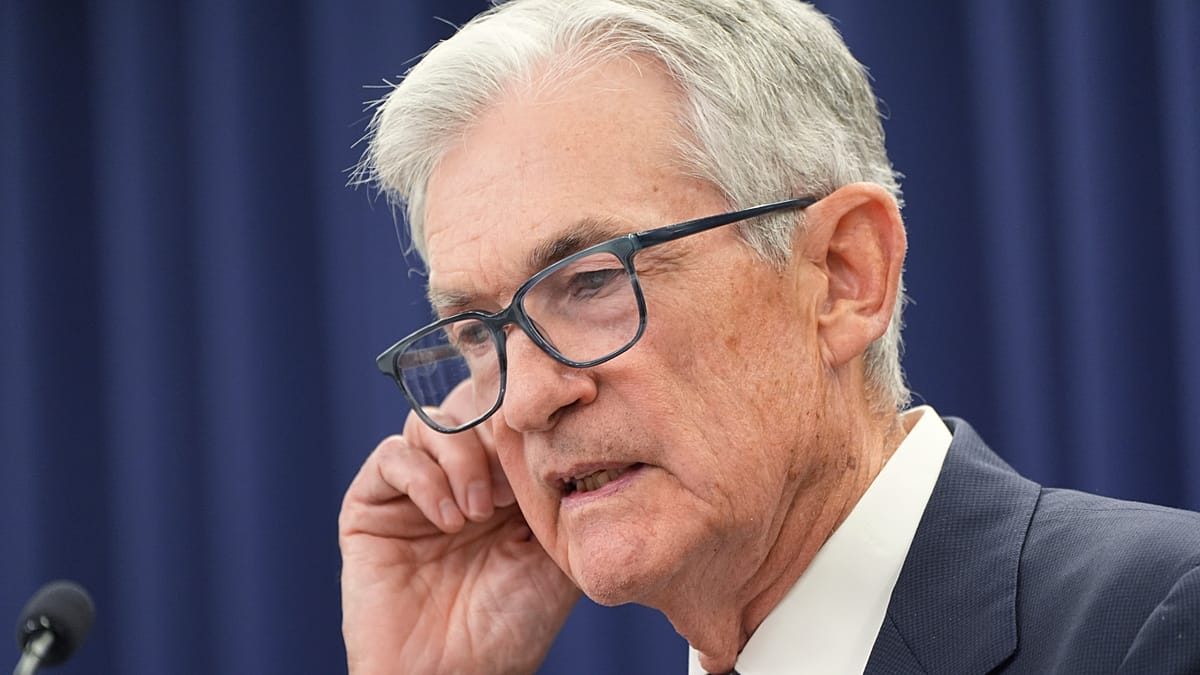
Washington D.C. – The Federal Reserve on Wednesday opted to hold steady its benchmark interest rate, maintaining a range of 3.5% to 3.75%, as policymakers navigate a complex economic landscape increasingly shadowed by geopolitical uncertainty. While acknowledging the escalating tensions in the Middle East, the central bank signaled a belief that the impact on the U.S. Economy will be limited, and surprisingly, maintained its projections for one interest rate cut in 2026. This decision comes amidst rising oil prices, currently above $100 a barrel, and growing concerns about potential disruptions to global energy supplies.
The Fed’s stance reflects a delicate balancing act. The U.S. Economy has demonstrated resilience, but the potential for the conflict in the Middle East to exacerbate inflationary pressures remains a significant risk. Federal Reserve Chair Jerome Powell stated it is “too soon” to fully assess the economic consequences of the ongoing situation, noting that higher energy prices will likely contribute to overall inflation in the near term. Though, the scope and duration of these effects remain unclear. This cautious approach underscores the Fed’s commitment to data-dependent decision-making, closely monitoring both inflation and economic growth.
Navigating Inflation and Geopolitical Risks
The decision to pause rate hikes, for a second consecutive meeting, was accompanied by revised economic projections. The Fed now anticipates inflation to end the year at 2.7%, a slight increase from previous forecasts. Core inflation, which excludes volatile food and energy prices, is also projected at 2.7%. These upward revisions are largely attributed to the anticipated impact of higher gasoline and diesel prices, which are already being felt by consumers. According to Powell, the Fed will “continue to monitor the risks to both sides of our mandate,” referring to its dual goals of price stability and maximum employment.
Despite the inflationary pressures, the Fed continues to project a modest economic expansion. Officials forecast a 2.4% growth rate for the U.S. Economy in 2026, a slight increase from the 2.3% forecast in December. The unemployment rate is expected to remain relatively stable at 4.4% by the end of the year. This optimistic outlook suggests that the Fed believes the U.S. Economy is robust enough to withstand the initial shockwaves from the Middle East conflict. However, this assessment is contingent on the situation remaining contained and not escalating into a broader regional war.
Rate Cut Projections Remain Unchanged
Perhaps the most surprising aspect of the Fed’s announcement was the maintenance of its projections for a single interest rate cut in 2026. This suggests that policymakers believe the current surge in oil prices will be temporary and that inflation will eventually subside, allowing the Fed to resume its easing cycle. The expectation of a rate cut is based on the assumption that the conflict in the Middle East will not significantly disrupt global oil supplies or trigger a broader economic downturn.
The Fed’s decision to hold rates steady, coupled with its projections for a future rate cut, signals a degree of confidence in the underlying strength of the U.S. Economy. However, this confidence is tempered by the inherent uncertainty surrounding the geopolitical situation. As Powell acknowledged, “The U.S. Economy is doing pretty well. It’s just we don’t know what the effects of this will be. And, really, no one does.”
Oil Prices and Global Markets
The recent escalation of tensions in the Middle East has already had a noticeable impact on global markets, particularly the energy sector. Crude oil prices surged above $100 a barrel for the first time since 2022, rattling investors and raising concerns about tighter energy supplies. As reported by Fox Business, this pressure is beginning to translate into higher prices at the pump, especially for diesel fuel, which is closely linked to freight and industrial demand.
The disruption to shipping through the Strait of Hormuz, a vital waterway for global oil transport, is a major contributing factor to the price increases. Attacks on tankers in the region have led to a significant decline in ship movements, fueling concerns about potential supply shortages. The U.S. Has urged its allies to send naval forces to protect tanker traffic, but the situation remains volatile. CNBC reported that international benchmark Brent crude climbed 3.2% to settle at $103.42 per barrel, while U.S. West Texas Intermediate advanced 2.9% to settle at $96.21 a barrel on Tuesday.
Long-Term Inflation Outlook
Looking further ahead, the Fed expects inflation to gradually decline, falling back to 2.2% in 2027 and reaching its 2% target in 2028. This optimistic outlook is predicated on the assumption that supply chain disruptions will ease, energy prices will stabilize, and the labor market will remain relatively balanced. However, achieving these goals will require careful monitoring of economic conditions and a willingness to adjust monetary policy as needed.
The Fed’s projections also suggest that it believes the current inflationary pressures are largely driven by temporary factors, such as supply shocks and increased demand. If these factors subside, inflation is expected to return to its pre-pandemic levels. However, there is a risk that inflation could become more persistent if wage growth accelerates or if expectations of future inflation become unanchored.
Treasury Yields Reflect Investor Caution
The market’s reaction to the Fed’s announcement has been relatively muted. Treasury yields edged lower on Tuesday as investors weighed the escalating tensions in the Middle East and the potential for a more dovish monetary policy. According to CNBC, the benchmark 10-year Treasury yield was less than 2 basis points lower at 4.202%, while the 30-year Treasury bond yield was down 1 basis point at 4.848%. This suggests that investors are pricing in a higher probability of a rate cut in the coming months.
However, the decline in Treasury yields was also limited by concerns about the potential for higher inflation. Investors remain wary of the possibility that the conflict in the Middle East could lead to a sustained increase in oil prices, which would exacerbate inflationary pressures and force the Fed to reconsider its easing plans.
The Middle East Conflict: A Key Risk Factor
The Fed’s acknowledgement of the risks posed by the Middle East conflict is a significant development. In a statement released after its meeting, the central bank said the “implications of developments in the Middle East for the U.S. Economy are uncertain.” MSN reported that this novel language puts the Middle East conflict directly into the central bank’s framework, signaling that officials now see the situation as a live risk to both inflation and growth.
The Fed’s assessment is based on the potential for the conflict to disrupt global energy supplies, increase geopolitical uncertainty, and dampen economic activity. If the conflict escalates or spreads to other countries in the region, the impact on the U.S. Economy could be more significant. However, the Fed believes that the U.S. Economy is currently strong enough to withstand a moderate shock.
The central bank’s next policy meeting is scheduled for May, where policymakers will have a clearer picture of the economic impact of the Middle East conflict. At that time, they will reassess their economic projections and decide whether to adjust monetary policy accordingly. For now, the Fed remains committed to its dual mandate of price stability and maximum employment, while closely monitoring the evolving geopolitical landscape.
Key Takeaways:
- The Federal Reserve held interest rates steady at a range of 3.5% to 3.75%.
- Policymakers expect the conflict in the Middle East to temporarily worsen inflation but have limited impact on overall economic growth.
- The Fed continues to project one interest rate cut in 2026.
- Oil prices have surged above $100 a barrel, contributing to inflationary pressures.
- The Fed will closely monitor the situation in the Middle East and adjust monetary policy as needed.
The Federal Reserve will next meet in May to review economic data and determine its next course of action. Stay tuned to World Today Journal for continued coverage of this developing story and its implications for the global economy. We encourage you to share your thoughts and perspectives in the comments below.
Related reading