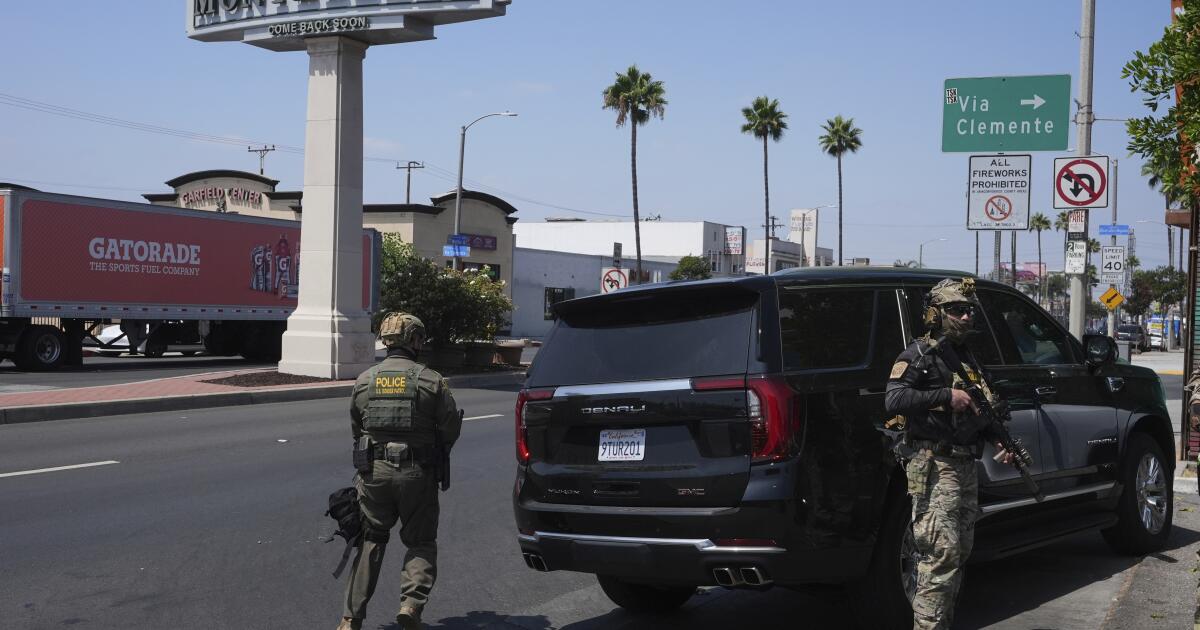
Federal immigration authorities increased enforcement actions against Latino communities following a landmark Supreme Court decision regarding racial profiling, according to recent legal documents and civil rights oversight reports. The scrutiny has drawn intense criticism from advocacy organizations pointing to court filings that allege immigration agents used derogatory language against Latinos in text messages and body-worn camera footage.
The convergence of legal precedent and operational shifts has left immigrant advocacy groups demanding sweeping federal accountability. According to records filed in federal court, attorneys representing affected individuals have highlighted internal communications where enforcement personnel targeted individuals based on ethnicity, raising profound questions about constitutional protections and equal protection under the law.
Legal analysts note that the fallout from these recent disclosures extends far beyond individual enforcement operations in Southern California. Communities across the country are grappling with the practical realities of federal immigration enforcement strategies that critics argue rely on prohibited biases, even as government attorneys defend standard operational procedures in ongoing litigation.
Legal Precedents and Enforcement Shifts
The legal landscape surrounding federal immigration enforcement shifted significantly following judicial reviews of law enforcement practices. Civil rights advocates argue that subsequent enforcement data reveals a distinct uptick in operations disproportionately affecting Hispanic populations. According to reports compiled by legal defense networks, federal agencies adjusted deployment patterns in ways that critics maintain exploit gray areas in constitutional jurisprudence.
Federal court filings central to the current controversy emerged from litigation in the Los Angeles area. Plaintiffs’ attorneys submitted digital evidence, including internal text exchanges and video recordings, purporting to show personnel utilizing ethnic slurs while discussing detained individuals. These filings have become a focal point for organizations monitoring civil liberties violations within federal immigration apparatuses, prompting calls for independent federal investigations.
Government defense teams, responding through formal court submissions, have countered that individual misconduct does not invalidate broader institutional policies necessary for national security and border enforcement. Legal experts following the docket emphasize that the evidentiary weight of the body camera footage and electronic messages will likely determine whether the court certifies class-action status for the impacted plaintiffs.
Impact on Latino Communities and Advocacy Response
The alleged use of discriminatory language by federal agents has reverberated deeply among grassroots organizations and immigrant advocacy coalitions. Community leaders report a measurable chilling effect, noting that families are increasingly reluctant to report crimes, access healthcare, or utilize public services out of fear of targeted enforcement encounters.
Civil rights groups have mobilized legal and public awareness campaigns to address what they describe as systemic bias within federal agencies. According to policy statements issued by national immigration reform coalitions, the reliance on demographic indicators during street-level encounters violates established constitutional safeguards against unreasonable searches and seizures.
Elected officials at various levels of government have also weighed in, demanding transparency from the Department of Homeland Security regarding internal disciplinary measures. Congressional oversight committees have indicated they intend to review agency training protocols and supervisory oversight mechanisms to ensure adherence to non-discrimination mandates.
Next Steps in Federal Court Litigation
The immediate trajectory of the case depends on upcoming scheduling conferences set by the federal district court overseeing the litigation. Attorneys for the plaintiffs are preparing motions for preliminary injunctions aimed at halting specific enforcement tactics identified in the disputed records, while defense counsel continues to challenge the admissibility of certain digital evidence.
Observers can track official court dockets and access public filings through the Public Access to Court Electronic Records system as the litigation progresses toward trial. Public interest groups plan to release further data analyses detailing enforcement metrics once additional discovery documents are unsealed by the court.
We welcome your perspective on these developments. Share your thoughts in the comments below or pass this report along to others tracking federal civil rights litigation.
Worth a look