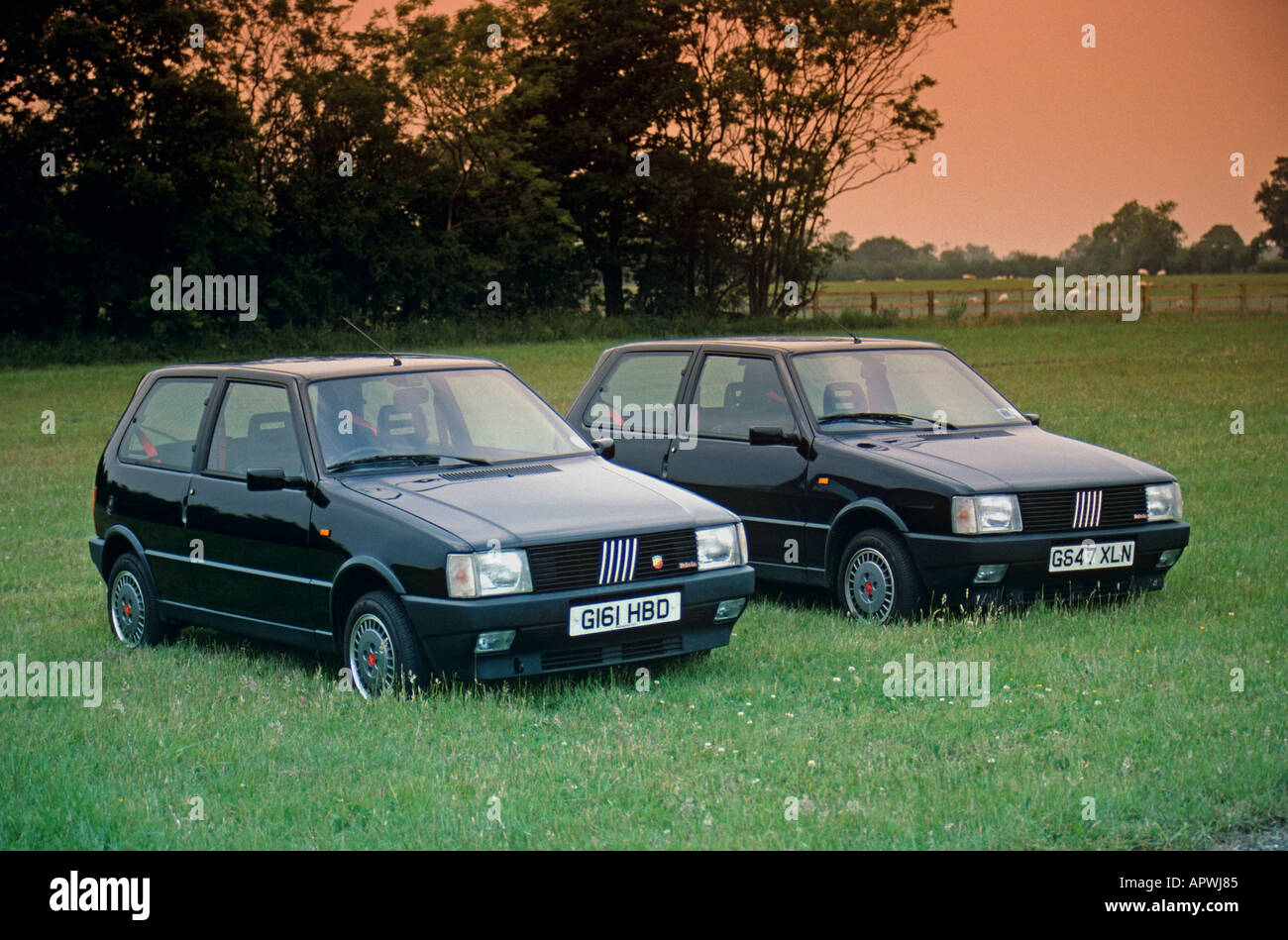
On April 30, 2025, Stellantis Media’s Heritage Hub in Italy marked the 40th anniversary of the Fiat Uno Turbo i.e., a significant milestone in the history of one of Europe’s most influential hatchbacks. The celebration highlighted the model’s enduring legacy as a pioneer in the hot hatch segment, particularly for its role in popularizing turbocharged performance in compact cars during the 1980s. While the original announcement came via a WhatsApp update from Stellantis Heritage, the anniversary itself is grounded in well-documented automotive history, with the Fiat Uno Turbo i.e. First launched in April 1985 as a three-door-only performance variant of the original Fiat Uno, which debuted in 1983.
The Fiat Uno Turbo i.e. Was developed as Italy’s answer to the growing demand for affordable yet sporty urban vehicles, combining the practicality of a supermini with the excitement of turbocharged power. According to verified specifications from automotive archives, the model was powered by a 1.3-liter inline-four engine derived from the Ritmo/Strada platform, featuring Bosch LE-Jetronic fuel injection, Magneti Marelli electronic ignition, and a water-cooled IHI turbocharger with an intercooler — a relatively advanced setup for its time. This combination produced 105 PS (77 kW) at 5,750 rpm and 147 Nm of torque at 3,200 rpm, enabling a top speed of 200 km/h (124 mph) and a 0–100 km/h acceleration time of 8.3 seconds.
Beyond performance, the Fiat Uno Turbo i.e. Was notable for its lightweight construction and efficient packaging. Weighing just 845 kg (1,863 lbs), it achieved a power-to-weight ratio of 8 kg/hp, contributing to its agile handling and responsive dynamics. The car featured a five-speed manual transmission, front-wheel drive, and a torsion beam rear suspension — typical for its class but tuned for sharper feedback. Despite its performance aspirations, it retained the Uno’s practical interior, offering seating for five and a usable trunk space, making it a rare blend of everyday usability and driving enthusiasm.
The model’s design, penned by Giorgetto Giugiaro of Italdesign, carried forward the Uno’s distinctive tall-roof, upright packaging — a concept first explored in the 1978 Lancia Megagamma — but adapted into a more compact, youthful form. This design philosophy emphasized visibility, interior space, and maneuverability in urban environments, traits that helped the Uno become one of the most produced automobile platforms in history. By 2021, over 8.8 million units of the Fiat Uno had been built globally, with production continuing in various markets until 2021 in Europe and as late as January 2014 in Brazil.
In Brazil, where the Uno remained in production far longer than in Europe, the Turbo i.e. Variant developed a strong cultural following, particularly among enthusiasts who valued its simplicity, tunability, and nostalgic appeal. Even today, well-maintained examples command attention in classic car circles, with restored models occasionally appearing at auctions and specialist listings across Europe and Latin America. The 2025 anniversary event at Stellantis’ Heritage Hub included displays of original documentation, engineering sketches, and restored vehicles, underscoring the model’s importance in Fiat’s postwar performance legacy.
The Fiat Uno Turbo i.e. Similarly holds a unique place in automotive history as one of the first widely available turbocharged hatchbacks to emerge in Europe during the mid-1980s, predating more famous rivals like the Volkswagen Golf GTI’s later turbo iterations and helping to democratize performance technology. Its use of electronic fuel injection — denoted by the “i.e.” (iniezione elettronica) badge — was relatively advanced for a vehicle in its segment at the time, reflecting Fiat’s efforts to balance emissions compliance with performance aspirations during the early era of catalytic converter-equipped vehicles (though early Turbo i.e. Models did not include catalytic converters in some markets).
As part of Stellantis’ broader heritage preservation efforts, the Heritage Hub in Italy continues to archive and showcase vehicles that represent turning points in the company’s technological and design evolution. The Fiat Uno Turbo i.e. Stands as a testament to an era when automakers sought to inject excitement into practical city cars, laying groundwork for modern hot hatches that blend efficiency, safety, and driving pleasure. The 40th-anniversary recognition serves not only as a nostalgic look back but also as a reminder of how accessible performance can influence broader automotive trends.
For enthusiasts and historians interested in exploring the Fiat Uno Turbo i.e. Further, Stellantis Media’s official heritage archives provide access to press materials, technical specifications, and historical imagery related to the model and its place in the Uno lineage. These resources are periodically updated and serve as valuable references for understanding the vehicle’s impact on automotive culture in Europe and beyond.
As the automotive world continues to evolve toward electrification and software-defined vehicles, models like the Fiat Uno Turbo i.e. Remind us of the enduring appeal of mechanical simplicity, driver engagement, and the joy of a well-tuned chassis. Whether viewed as a collector’s item, a cultural icon, or a stepping stone in the development of performance hatchbacks, its legacy remains intact four decades after its debut.
To learn more about Stellantis’ heritage initiatives and upcoming events at the Heritage Hub in Italy, visit the official Stellantis Media website or follow their verified heritage channels for announcements regarding exhibitions, vehicle restorations, and historical retrospectives.
We welcome your thoughts and memories of the Fiat Uno Turbo i.e. — share them in the comments below or join the conversation on social media using the official hashtags from Stellantis Heritage.
Keep reading