Ventura County Experiences Earthquake Swarm: What You Need to Know
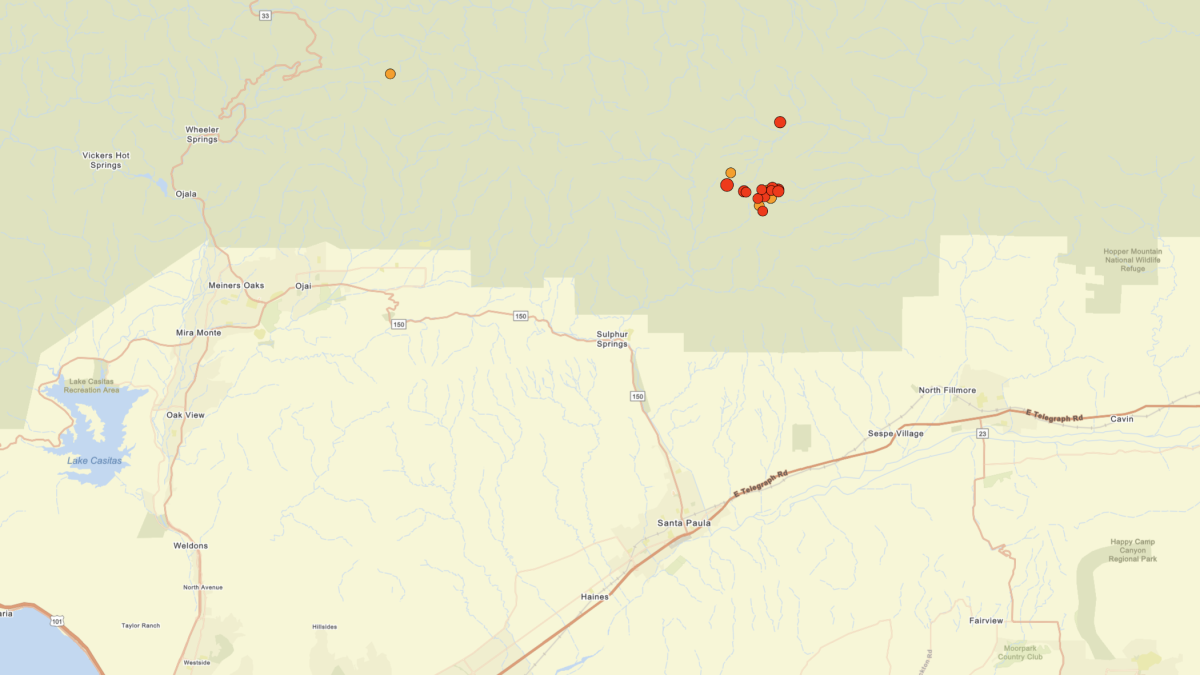
A series of earthquakes rattled Ventura County on Thursday morning, December 11, 2025.The largest tremor registered a magnitude of 3.3, according to the United States Geological Survey (USGS).These events have understandably raised concerns among residents, prompting questions about earthquake preparedness and potential aftershocks.
Where Were the Earthquakes Centered?
The epicenter of the seismic activity was located near Fillmore, approximately 25 miles northeast of Ventura.Weak shaking from the magnitude-3.3 quake was reported in several communities. These included Fillmore,Moorpark,ventura,and Santa Paula,as detailed by the USGS.
More than a dozen additional earthquakes were detected in the same region. Notably, at least six of these smaller quakes exceeded a magnitude of 2.0. This concentration of seismic events is what defines an earthquake swarm.
understanding earthquake Swarms
Earthquake swarms are not uncommon in California. In 2015, a similar swarm occurred west of Fillmore. Researchers at the USGS investigated this event, exploring potential links to crustal deformation. Understanding these swarms requires ongoing monitoring and analysis of geological factors.
Did You Feel the Shaking?
whether or not you experienced shaking depends on several key factors. magnitude, your distance from the epicenter, and local soil conditions all play a role. A stronger magnitude quake is more likely to be felt over a wider area.
Closer proximity to the epicenter also increases the likelihood of feeling the effects. looser soil tends to amplify seismic waves, perhaps increasing the intensity of shaking at your location.
What About Aftershocks?
Following a significant earthquake, aftershocks are common.These smaller tremors occur as the Earth’s crust adjusts to the main event. Sometimes, a larger earthquake can follow an initial tremor, reclassifying the first quake as a foreshock.
The devastating 2011 Japan earthquake and tsunami, for example, was preceded by a magnitude-7.3 foreshock just two days earlier. Aftershocks typically decrease in frequency over time. However, they can continue for days, weeks, months, or even years.
Preparing for Future earthquakes
It’s crucial to be prepared for earthquakes, especially if you live in a seismically active region like California. Here’s a checklist to help you build a disaster emergency kit:
* Water: Store at least one gallon of water per person per day for several days.
* Food: keep a supply of non-perishable food items.
* First Aid Kit: Include essential medical supplies.
* Flashlight & Batteries: Ensure you have a reliable light source.
* Whistle: Signal for help if needed.
* Dust Mask: Protect your lungs from airborne particles.
* Wrench or Pliers: Turn off utilities if necessary.
* Manual Can Opener: For opening canned food.
* Local Maps: Useful if GPS is unavailable.
* Cash: ATMs may not function during a disaster.
Resources:
* USGS Earthquake Information: https://earthquake.usgs.gov/
* NBC Los Angeles Earthquake Coverage: https://www.nbclosangeles.com/news/earthquakes/
* 2015 Fillmore Earthquake Swarm Study: https://www.usgs.gov/publications/2015-fillmore-earthquake-swarm-and-possible-crustal-deformation-mechanisms-near-bottom
Stay informed and prepared. Refresh this page for further updates as the situation develops.
Worth a look