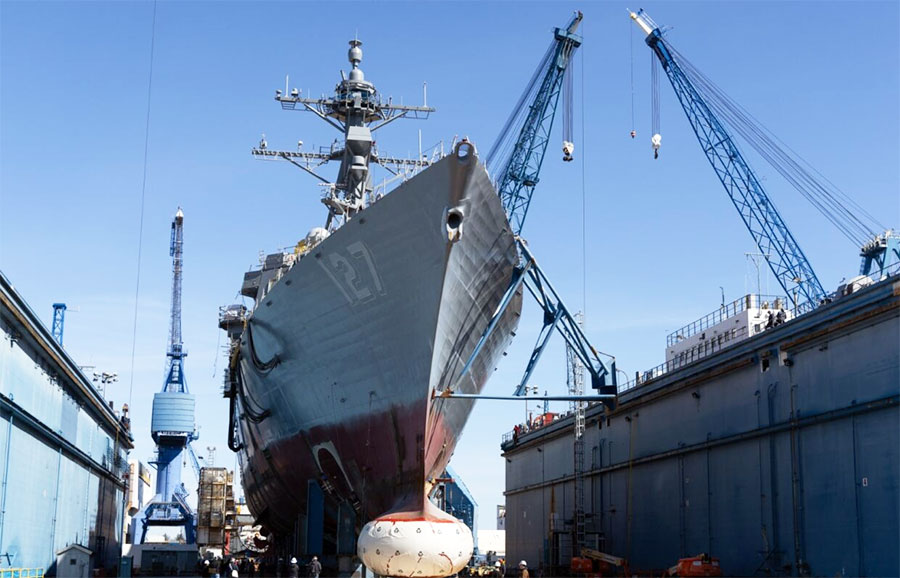
The United States Navy has officially accepted the delivery of the future USS Patrick Gallagher (DDG-127), marking a significant transition in naval architecture. As the final Flight IIA Arleigh Burke-class destroyer, the vessel’s delivery, which was announced on May 28, 2026, concludes a nearly three-decade production lineage of destroyers utilizing the AN/SPY-1D radar system. This milestone, achieved more than two months ahead of the original schedule, represents the final iteration of a specific combat configuration that has served as the backbone of the U.S. surface fleet since the early 1990s.
For those tracking the evolution of naval power, the completion of the Patrick Gallagher is not merely the end of a production line, but the closing of an era. The Arleigh Burke-class destroyer has long been a fixture of maritime security, known for its multi-mission versatility. By finishing the Flight IIA series, the Navy is effectively sunsetting the SPY-1 radar generation, shifting its focus toward newer technological standards. The early delivery of this ship provides the crew with additional time to complete necessary training and certifications, enhancing the overall readiness of the fleet.
The Legacy of the Flight IIA Configuration
The Flight IIA destroyers were designed to provide a comprehensive range of capabilities, including ballistic missile defense, air defense, strike warfare, and anti-submarine operations. According to official naval reporting, the platform’s ability to execute these diverse missions from a single vessel has made it a cornerstone of maritime operations for decades. The Patrick Gallagher preserves this proven configuration, serving as the capstone for a series that defined the late-20th and early-21st-century destroyer design.
While the Flight IIA production has concluded, the broader Arleigh Burke program remains a central element of the U.S. Navy’s surface combatant strategy. The transition away from the SPY-1 radar marks a shift toward more advanced systems, yet the operational requirements for destroyers continue to drive ongoing construction efforts. The Navy’s commitment to maintaining a robust fleet ensures that the production lines for next-generation destroyers remain active, even as this specific variant enters the history books.
Operational Readiness and Fleet Modernization
The acceleration of the Patrick Gallagher’s delivery is a strategic move designed to integrate the vessel into the fleet more rapidly. By finalizing the delivery on May 28, 2026, the Navy gains flexibility in scheduling and operational deployment. This extra time for the crew is critical, as modern Aegis-equipped destroyers require intensive training to manage the complex combat systems that allow for high-end warfare, including the tracking and neutralization of sophisticated aerial and surface threats.
As the U.S. Navy continues to modernize, the focus remains on balancing the proven reliability of the Arleigh Burke platform with the integration of new technologies. The Patrick Gallagher stands as a testament to the longevity of the original design, having evolved through various flight iterations to meet changing global security challenges. The vessel’s entry into service is a reminder that while individual production runs reach their conclusion, the underlying requirement for a versatile and highly capable destroyer remains constant.
Looking Toward the Future
The conclusion of the Flight IIA program does not signal a reduction in naval construction but rather a pivot toward future configurations. The Navy continues to invest in platforms that support power projection and regional stability. For the maritime industry and global observers, the transition signals that the next generation of ships will inherit the multi-mission requirements established by their predecessors while adopting the next evolution of radar and combat management systems.

Official updates regarding the future deployment and commissioning schedule for the USS Patrick Gallagher will be provided by the U.S. Navy through its standard public affairs channels. Observers interested in the ongoing development of the U.S. surface fleet can monitor future announcements from the Department of the Navy for details on how this ship, and its successors, will be deployed to meet the challenges of the coming decade. We invite readers to share their thoughts on the evolution of naval technology in the comments below.