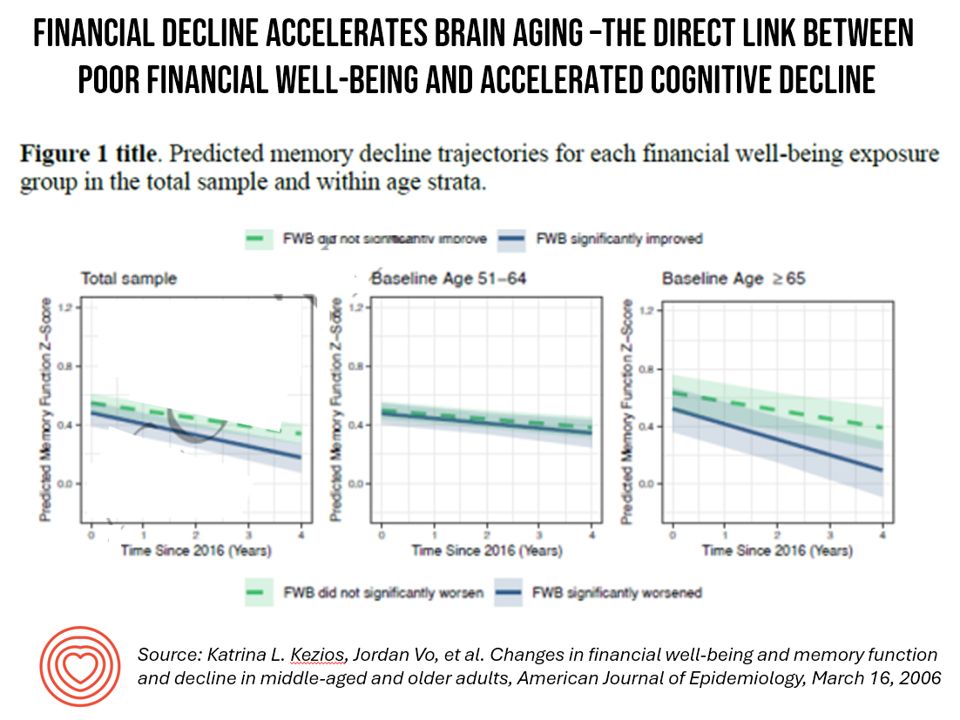
For years, the medical community has viewed brain health through the lens of genetics, diet, and exercise. However, fresh evidence suggests that the state of one’s bank account may be just as critical to cognitive longevity. Research from the Columbia Mailman School of Public Health indicates that a significant loss of financial well-being correlates with about five months of cognitive decline a year, creating a “cognitive penalty” for those facing economic instability.
The study, titled “Changes in financial well-being and memory function and decline in middle-aged and older adults” and published in the American Journal of Epidemiology, highlights a troubling link between worsening financial conditions and accelerated brain aging. This connection suggests that the chronic stress of material hardship may do more than just impact quality of life—it may actively erode memory function in older adults.
As a physician and journalist, I have seen how social determinants of health often dictate clinical outcomes. This research underscores that economic stability is not merely a social convenience but a biological necessity for maintaining cognitive reserve. The findings are particularly stark for those in midlife and older age, where financial declines over time are associated with lower memory scores and a faster rate of cognitive decline.
The Mechanics of Financial Stress and Memory Loss
The research team utilized a rigorous methodology to quantify the impact of economic instability. By applying an 8-item index to data from 7,676 adults aged 50 and over, the study examined “material hardship,” which includes objective struggles such as low income, difficulty paying bills, and reduced access to basic needs. Crucially, the researchers also factored in the psychological burden: the perceived sense of financial stress and dissatisfaction.
The results indicate that those experiencing these hardships face a steeper decline in cognitive performance. Most concerning is the finding that eventual financial improvements did not “rescue” the participants; once the cognitive decline had begun due to financial stress, improving one’s financial situation did not enhance or reverse the declining memory scores.
This suggests a window of vulnerability. The stress associated with financial instability may trigger physiological changes in the brain that, if left unchecked, become permanent. This reinforces the understanding of the Columbia University Mailman School of Public Health’s mission to address the causes of illness and injury to prevent human disease on a systemic level.

The ‘Vulnerability Gap’ in Older Populations
Although financial stress affects all ages, the study identifies a specific “vulnerability gap” among adults aged 65 and over. For this demographic, the association between financial stress and cognitive decline is strongest. This is likely because older adults often have fewer options for financial recovery—such as the ability to enter the workforce or secure new streams of income—compared to those in midlife.

This vulnerability is exacerbated by the rising cost of healthcare in retirement. Data indicates that the median savings at retirement age of 65 is $200,000. However, this amount may be insufficient to cover projected medical expenses. According to reports from EBRI, to have a 90 percent chance of meeting healthcare spending needs in retirement, a man would need to have saved $212,000 and a woman $252,000. For couples enrolled in a Medigap plan, the requirement for a 90 percent chance of coverage jumps to $405,000.
When retirees face a shortfall in these figures, the resulting financial stress can accelerate the very cognitive decline that makes managing those finances even more demanding, creating a devastating feedback loop.

Key Takeaways on Financial Well-Being and Brain Health
- The Cognitive Penalty: Significant loss of financial well-being is linked to approximately five months of cognitive decline per year.
- Irreversibility: Financial recovery does not appear to reverse or “rescue” cognitive scores once decline has occurred.
- High-Risk Group: Adults 65 and older experience the strongest link between financial stress and memory loss due to limited recovery options.
- Material Hardship: Factors such as inability to pay bills and low income are primary drivers of this decline.
- SDoH Impact: Economic stability is a critical social determinant of health that directly influences biological brain aging.
Why This Matters for Public Health Policy
The current global health conversation is heavily focused on longevity and “bio-hacking” brain health. However, this research suggests that we cannot ignore the economic foundations of wellness. If financial instability can accelerate brain aging by nearly half a year every year, then economic policy is, in effect, healthcare policy.
To address the “vulnerability gap,” there is a pressing need for policies that provide more robust financial safety nets for the elderly. When the cost of healthcare exceeds retirement savings, the resulting stress doesn’t just impact a person’s wallet—it impacts their memory and their independence. Integrating financial health screenings into geriatric care could allow providers to identify patients at high risk of cognitive decline before the damage becomes irreversible.
As we brainstorm new innovations in longevity and brain health, financial well-being must remain a top-of-mind priority. Without economic stability, the most advanced medical interventions may be out of reach or undermined by the systemic stress of poverty.
The medical community continues to monitor these trends as more data emerges regarding the intersection of socioeconomic status and neurology. Future updates on public health policies regarding elderly financial support and cognitive care are expected as health departments review the impact of social determinants of health on aging populations.
Do you or a loved one navigate the challenges of financial stress in retirement? Share your thoughts and experiences in the comments below, and share this article to facilitate others understand the link between financial health and brain function.
Worth a look