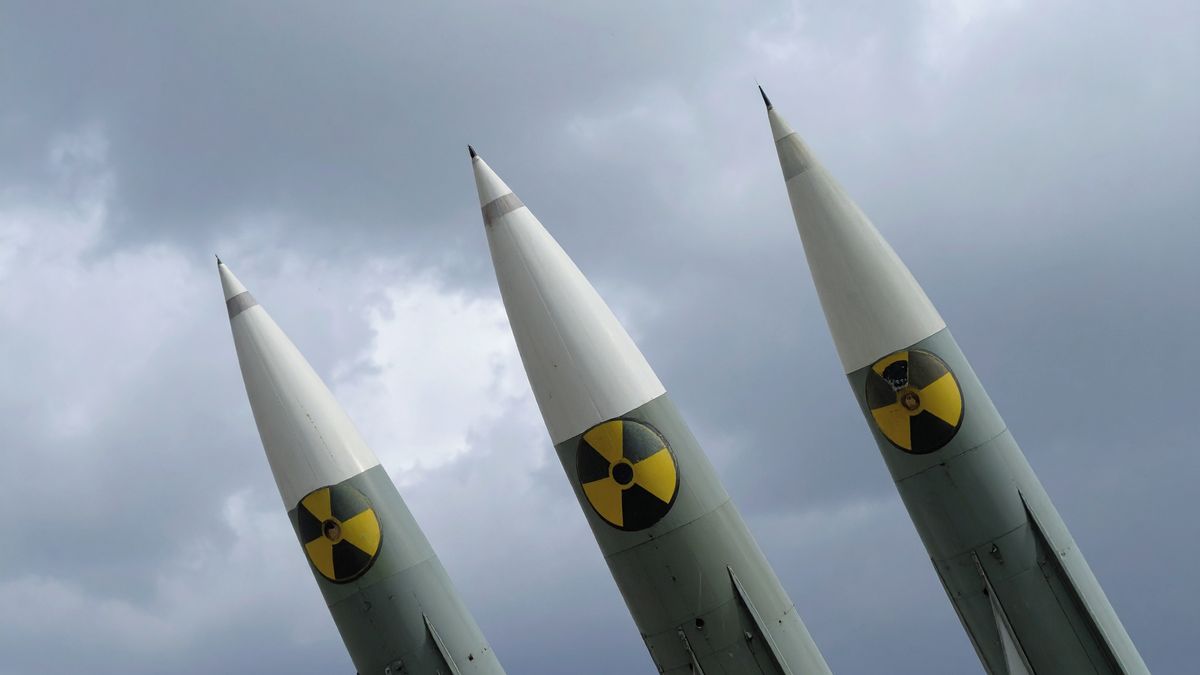
Helsinki – Finland is moving to amend its legislation regarding nuclear weapons, potentially paving the way for their deployment on its territory in the event of war. The move, announced by the Finnish government on Thursday, seeks to align the country’s legal framework with that of its Nordic neighbors – Sweden, Denmark, and Norway – where existing prohibitions on nuclear weapons include a crucial exception for wartime scenarios. This development marks a significant shift in Finland’s security posture following its accession to NATO last year, a decision prompted by Russia’s invasion of Ukraine.
The proposed legislative change centers on Finland’s 1987 Nuclear Energy Act, which currently prohibits the import, production, possession, and use of nuclear weapons. Even as the existing law is comprehensive, some Finnish lawmakers and security analysts have argued that its strictness could inadvertently benefit Russia in a conflict scenario. The amendment aims to remove this perceived disadvantage, allowing Finland to fully participate in collective defense arrangements within the NATO alliance, including the potential for nuclear deterrence. According to Finnish Defence Minister Antti Häkkänen, the amendment is “necessary to enable Finland’s military defence as part of the alliance and the full utilization of deterrents and collective defence within NATO.”
Historical Context: From Neutrality to NATO Membership
For decades, Finland maintained a policy of neutrality, carefully balancing its relations with both East and West during the Cold War. This neutrality was largely dictated by its long border with the Soviet Union and a pragmatic assessment of its geopolitical position. However, Russia’s full-scale invasion of Ukraine in February 2022 dramatically altered Finland’s security calculus. The invasion prompted a swift and significant shift in public and political opinion, with overwhelming support for joining NATO. Reuters reported that Finland formally joined the alliance in April 2023, ending decades of military non-alignment.
Finland’s decision to seek NATO membership was driven by a desire for enhanced security guarantees and a collective defense commitment under Article 5 of the NATO treaty, which stipulates that an attack on one member is considered an attack on all. The move was met with strong condemnation from Moscow, which viewed NATO expansion as a threat to its own security interests. The change in legislation regarding nuclear weapons is a further step in Finland’s integration into the NATO framework and its alignment with the alliance’s broader security strategy.
Nordic Alignment and the Exception for Wartime
Finland is not alone among its Nordic neighbors in maintaining a legal framework that allows for the potential deployment of nuclear weapons during wartime. Sweden, Denmark, and Norway all have similar provisions in their respective laws. These provisions reflect a long-standing understanding that, in a crisis situation, the require for effective deterrence and collective defense may outweigh the peacetime prohibition on nuclear weapons.
Swedish Prime Minister Ulf Kristersson recently addressed the possibility of France deploying nuclear weapons on Swedish territory, stating that the country’s current doctrine prohibits foreign military bases or nuclear weapons during peacetime. However, he added, as reported by the source material, “If we were to find ourselves in a different situation, that particular formulation would not apply.” This statement underscores the evolving security landscape in the region and the willingness of Nordic countries to consider all available options for their defense.
Broader European Shift in Nuclear Deterrence
Finland’s move comes amid a broader discussion within Europe about strengthening nuclear deterrence capabilities. France and Germany recently announced plans to deepen cooperation with European partners in this area, signaling a growing recognition of the need to enhance collective security in the face of rising threats from Russia and instability in the Middle East. Reuters details that, in addition to Germany, Norway has also signed a cooperation agreement with France.
This increased focus on nuclear deterrence reflects a growing concern among European leaders about the credibility of the U.S. Security umbrella, particularly in light of recent political developments and shifting geopolitical priorities. Some European policymakers believe that a stronger European nuclear capability is necessary to ensure the continent’s long-term security and independence. The debate over nuclear deterrence is likely to intensify in the coming years as European countries grapple with the challenges of a more uncertain and volatile security environment.
Domestic Considerations and Parliamentary Approval
The proposed amendment to Finland’s Nuclear Energy Act is expected to face scrutiny in the Finnish Parliament, but it is widely anticipated to pass given the ruling right-wing coalition’s majority. However, the issue is likely to spark debate among opposition parties and civil society groups, some of whom may raise concerns about the potential risks and implications of allowing nuclear weapons on Finnish territory.
Public opinion in Finland on the issue of nuclear weapons is divided. While there is broad support for NATO membership and a strong defense posture, there is also a significant segment of the population that remains wary of nuclear weapons and their potential consequences. The government will need to carefully navigate these competing perspectives as it seeks to build consensus around the proposed legislative change. The debate is expected to focus on the balance between enhancing Finland’s security and upholding its long-standing commitment to arms control and disarmament.
Key Takeaways
- Finland is proposing to amend its laws to allow for the potential deployment of nuclear weapons on its territory during wartime.
- The move is intended to align Finland’s legal framework with that of its Nordic neighbors and to strengthen its collective defense capabilities within NATO.
- The proposed amendment reflects a broader shift in European security policy towards enhanced nuclear deterrence in response to rising threats from Russia.
- The legislation is expected to pass in the Finnish Parliament, but it is likely to spark debate among opposition parties and civil society groups.
- Finland’s decision underscores the profound impact of Russia’s invasion of Ukraine on European security and the willingness of countries to reassess long-held assumptions about neutrality and defense policy.
The proposed legislation will now proceed to parliamentary debate, with a vote expected in the coming weeks. The outcome of this vote will have significant implications for Finland’s security posture and its role within the NATO alliance. The situation remains fluid, and further developments are expected as the debate unfolds. Readers are encouraged to follow updates from official government sources and reputable news organizations for the latest information.
Related reading
- Chicago Fire Season 7 Episode 13: Release Info & Schedule
- Downed Drone Kills Six People on Crowded Beach in Arhipo-Osipovka
- Total Solar Eclipse, Perseid Meteor Shower and Planet Alignment Coincide (archyworldys.com)
- Russia Accused of War Crimes After Drone Hunts Ukrainian Civilian in ‘Safari’ Attack (world-today-news.com)