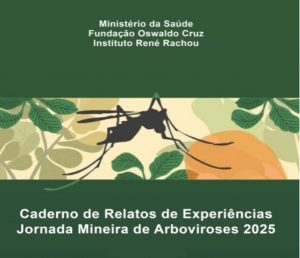
Minas Gerais, Brazil is pioneering a collaborative approach to combating the growing threat of arboviruses – diseases transmitted by mosquitoes and other arthropods – with the recent launch of a comprehensive resource compiling successful local initiatives. The Caderno de Relatos de Experiências, or “Notebook of Experience Reports,” developed jointly by the Oswaldo Cruz Foundation (Fiocruz Minas) and the Minas Gerais State Health Department (SES/MG), details 67 distinct strategies implemented across the state to address diseases like dengue fever, chikungunya, Zika virus, yellow fever, and Oropouche fever. This initiative underscores a growing recognition of the importance of localized, community-driven solutions in public health emergencies.
The publication isn’t simply a collection of reports; it’s a distillation of practical knowledge gleaned from the Seminário Estadual de Arboviroses – the State Seminar on Arboviruses – and the broader Jornada Mineira de Arboviroses, or Minas Gerais Arbovirus Journey, held in 2025. These events served as platforms for sharing best practices among health professionals from municipal health departments, regional health units, and intermunicipal health consortia throughout Minas Gerais. The resulting Caderno aims to disseminate these successful approaches, fostering knowledge exchange and strengthening public health responses at the local level. This collaborative spirit is particularly crucial given the increasing global burden of arboviral diseases, a challenge exacerbated by climate change and increasing urbanization.
A Collaborative Response to a Growing Threat
Arboviruses represent a significant and expanding public health concern worldwide. According to the World Health Organization (WHO), dengue fever alone affects an estimated 100 to 400 million people each year . Chikungunya and Zika, while often less widespread, can cause debilitating symptoms and long-term health complications. The Caderno de Relatos de Experiências addresses this complex landscape by focusing on the specific challenges and innovative solutions developed within the context of Minas Gerais. The state’s diverse geography and socio-economic conditions necessitate tailored approaches, and the publication highlights the adaptability and resourcefulness of local health workers.
The initiatives detailed in the Caderno encompass a wide range of interventions, from enhanced surveillance and vector control strategies to community engagement and health education programs. A key emphasis is placed on strengthening primary healthcare services and improving the capacity of local health systems to respond effectively to outbreaks. The publication also highlights the importance of intersectoral collaboration, involving not only health authorities but also environmental agencies, education institutions, and community organizations. This holistic approach recognizes that addressing arboviral diseases requires a coordinated effort across multiple sectors.
Rigorous Evaluation and Scientific Validation
To ensure the quality and reliability of the information presented, all reports included in the Caderno underwent a rigorous evaluation process conducted by postgraduate students from Fiocruz Minas. This scientific review ensured that the documented experiences met established technical standards and were based on sound evidence. Tatiana Mingote, Coordinator of Surveillance and Reference Services at Fiocruz Minas and one of the publication’s organizers, emphasized the collective nature of the project. “The Notebook of Reports was created with many hands and reflects not only the innovative potential of Minas Gerais municipalities in tackling arboviruses, but also the consolidation of the strong partnership between Fiocruz Minas and SES/MG,” she stated, as reported by Agência Fiocruz de Notícias .
This commitment to scientific rigor is particularly important in the context of public health, where evidence-based interventions are crucial for maximizing impact and minimizing unintended consequences. By subjecting local experiences to independent review, the Caderno provides a valuable resource for policymakers and health professionals seeking to implement effective arbovirus control programs. The evaluation process also helps to identify gaps in knowledge and areas for further research.
Beyond Minas Gerais: A Model for National and Global Application
While the Caderno de Relatos de Experiências focuses specifically on the experiences of Minas Gerais, its lessons are broadly applicable to other regions facing similar challenges. The emphasis on community participation, localized strategies, and intersectoral collaboration represents a promising model for strengthening public health systems and improving responses to arboviral outbreaks worldwide. The publication’s systematic approach to documenting and disseminating best practices can serve as a template for other states and countries seeking to enhance their preparedness and response capabilities.
The launch of this publication comes at a critical time, as the global incidence of arboviral diseases continues to rise. Factors such as climate change, deforestation, and increased international travel are contributing to the spread of these diseases to new areas. Effective control strategies require a proactive and adaptive approach, and the Caderno de Relatos de Experiências provides a valuable resource for those working on the front lines of this global health challenge. The initiative also highlights the importance of investing in local capacity building and empowering communities to take ownership of their health.
Accessing the Caderno de Relatos de Experiências
The Caderno de Relatos de Experiências is available online through the Fiocruz Minas institutional repository, Arca . The publication is freely accessible to the public and is intended to be a valuable resource for health professionals, policymakers, researchers, and community members interested in learning more about effective strategies for combating arboviral diseases. Fiocruz Minas and SES/MG are committed to promoting the widespread dissemination of this knowledge and supporting the implementation of evidence-based interventions across the state and beyond.
The initiative builds upon previous collaborative efforts between Fiocruz Minas and the SES/MG, demonstrating a sustained commitment to strengthening public health infrastructure and addressing emerging health threats. The success of this partnership underscores the importance of fostering strong relationships between research institutions and government agencies in order to translate scientific knowledge into practical solutions. The Caderno de Relatos de Experiências represents a significant step forward in this ongoing effort.
Looking ahead, the ongoing monitoring and evaluation of the implemented strategies will be crucial for assessing their long-term impact and identifying areas for improvement. Continued investment in research and innovation will also be essential for developing new tools and approaches to combat arboviral diseases. The lessons learned from the Minas Gerais experience can inform the development of national and global strategies for preventing and controlling these increasingly prevalent and potentially devastating illnesses.
The next key step will be the dissemination of the Caderno’s findings to a wider audience through workshops, conferences, and online platforms. Fiocruz Minas and SES/MG are planning a series of outreach activities to engage stakeholders and promote the adoption of the documented best practices. This collaborative effort will be essential for ensuring that the knowledge contained within the Caderno translates into tangible improvements in public health outcomes.
What are your thoughts on community-led public health initiatives? Share your comments below, and please share this article with your network to raise awareness about the importance of collaborative approaches to combating arboviral diseases.
Worth a look