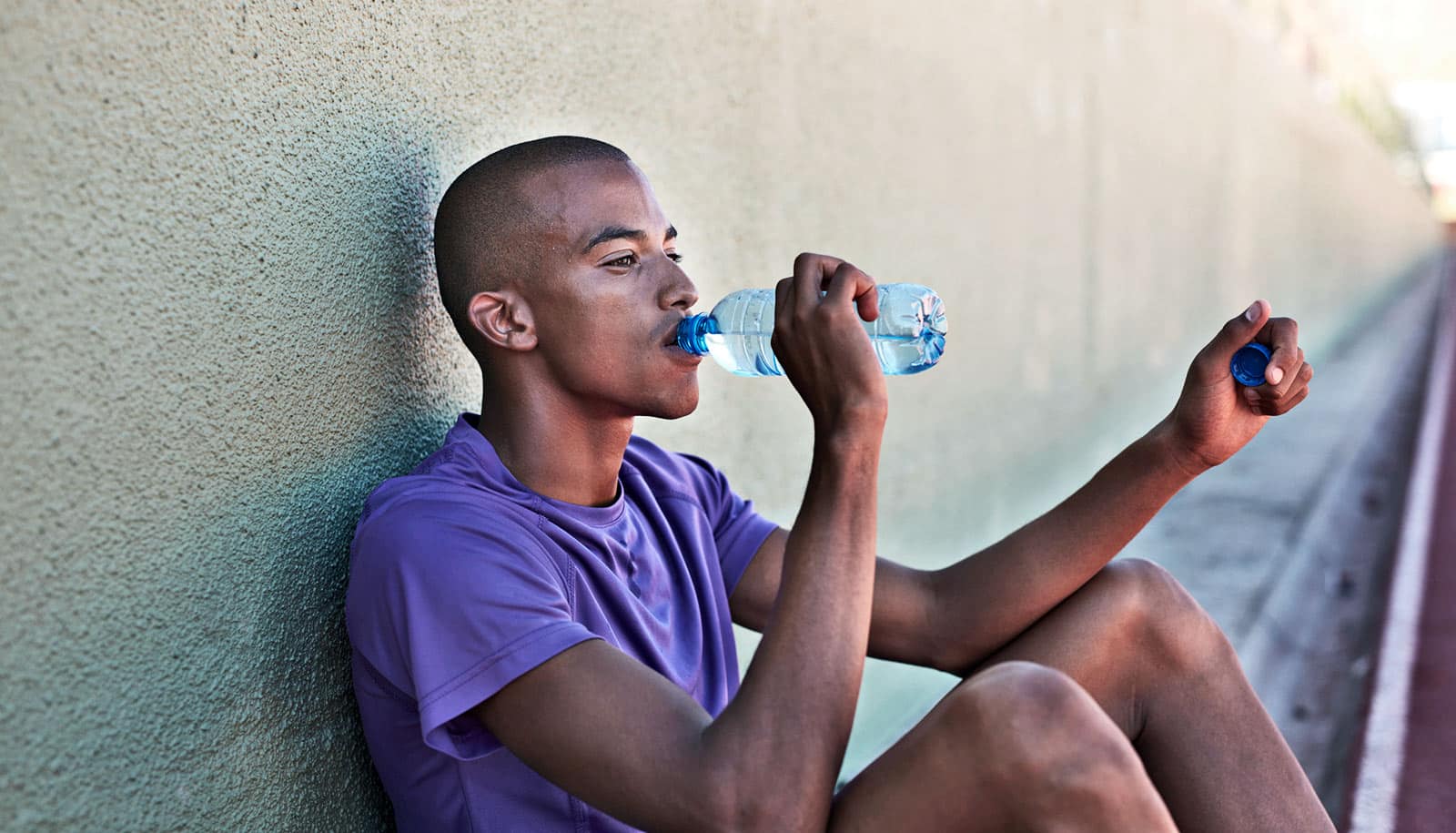
The Endurance Edge: How Physical Fitness May buffer Against Dehydration
Dehydration is a growing concern in a warming world, impacting everything from athletic performance to occupational safety. But new research from the University of California, Riverside suggests a surprising resilience factor: physical fitness. A study published in Physiology and Behavior reveals that highly fit mice actually increased their voluntary running activity when deprived of water, challenging conventional wisdom about the link between dehydration and fatigue. This finding, led by Dr.Timothy Garland, a distinguished professor of ecology, and organismal biology at UC Riverside, offers intriguing implications for human health and performance, especially as climate change intensifies.
The Unexpected response to Thirst
For decades, the prevailing understanding has been that dehydration leads to decreased physical activity.The body conserves energy, fatigue sets in, and performance suffers. Dr. Garland’s team, however, observed a counterintuitive response in a unique population of laboratory mice. The study focused on “high runner” (HR) mice – a selectively bred line developed over 30 years to exhibit exceptional endurance. these mice consistently run three times further than standard control (CON) mice, pushing their aerobic capacity to the limit.
“These HR mice are the endurance athletes of the mouse world,” explains Dr. Garland. “They demonstrate a remarkable motivation to run, even under stressful conditions like food restriction or sleep deprivation.”
The experiment involved allowing both HR and CON mice free access to running wheels for six days, followed by a 24-hour period of water deprivation for half of the mice in each group. The results were striking. While CON mice predictably showed a decline in activity with dehydration, the HR mice increased both the distance and speed of their running.
“Despite losing body weight – a clear indicator of dehydration – their activity levels went up,” Dr. Garland notes. “This was quite remarkable, as dehydration is typically associated with fatigue and reduced activity.”
Reward Substitution: A neurological Clarification
So, what explains this unexpected phenomenon? The research team proposes a compelling theory rooted in a behavioral concept called reward substitution. This suggests that when a primary biological reward – in this case, drinking water – is unavailable, the brain seeks to compensate by amplifying another rewarding behavior.
“Drinking water is a basic drive,but running also appears to be intrinsically rewarding for these mice,” dr. Garland elaborates.”When water is withheld, the brain may shift its focus to the reward derived from running, effectively substituting one drive for another.”
The key, the researchers believe, lies in the HR mice’s superior physical fitness. Their enhanced physiological capacity allows them to sustain this increased activity level even while experiencing the negative effects of dehydration. CON mice, lacking this fitness foundation, were unable to exhibit the same response.
Implications for Human Health and Performance
While this research was conducted on mice, Dr. Garland believes the findings have notable implications for humans. As global temperatures rise and water scarcity becomes more prevalent, understanding how to mitigate the effects of dehydration is crucial.
“Our data suggest that individuals who are more physically fit might potentially be better equipped to maintain performance, even when mildly dehydrated,” he states. “this is particularly relevant in a warming world where dehydration is becoming an increasingly common challenge.”
The potential benefits extend beyond recreational athletes.Dr. Garland highlights the relevance for individuals in physically demanding outdoor occupations, such as agricultural and construction workers.
“These workers frequently enough face high heat and limited access to water breaks,” he explains. “The possibility that improved fitness could provide a physiological buffer against dehydration could have real-world importance, possibly enhancing worker safety and productivity.”
Crucial Caveats and Future Research
dr. Garland is rapid to emphasize that this study is not a license to neglect hydration. “we did not test whether training under mild dehydration could make someone more resilient,” he clarifies. “That would require careful examination. Staying hydrated remains essential.“
his lab is continuing to explore the complex interplay between exercise, environmental factors, and brain function. Current research includes investigating the effects of peppermint essential oil on exercise behavior and examining the impact of sleep deprivation on voluntary running.This ongoing work builds on decades of research focused on the genetics and physiology of voluntary exercise.
The Bottom Line: Proactive Fitness for a Changing Climate
This groundbreaking research from UC Riverside offers a fresh viewpoint on the body’s response to dehydration. While further investigation is needed to fully understand the mechanisms at play and translate these findings to humans, the study underscores the importance of proactive fitness as a potential strategy for mitigating the challenges of a warming world. Investing in physical fitness may not onyl improve overall
Worth a look