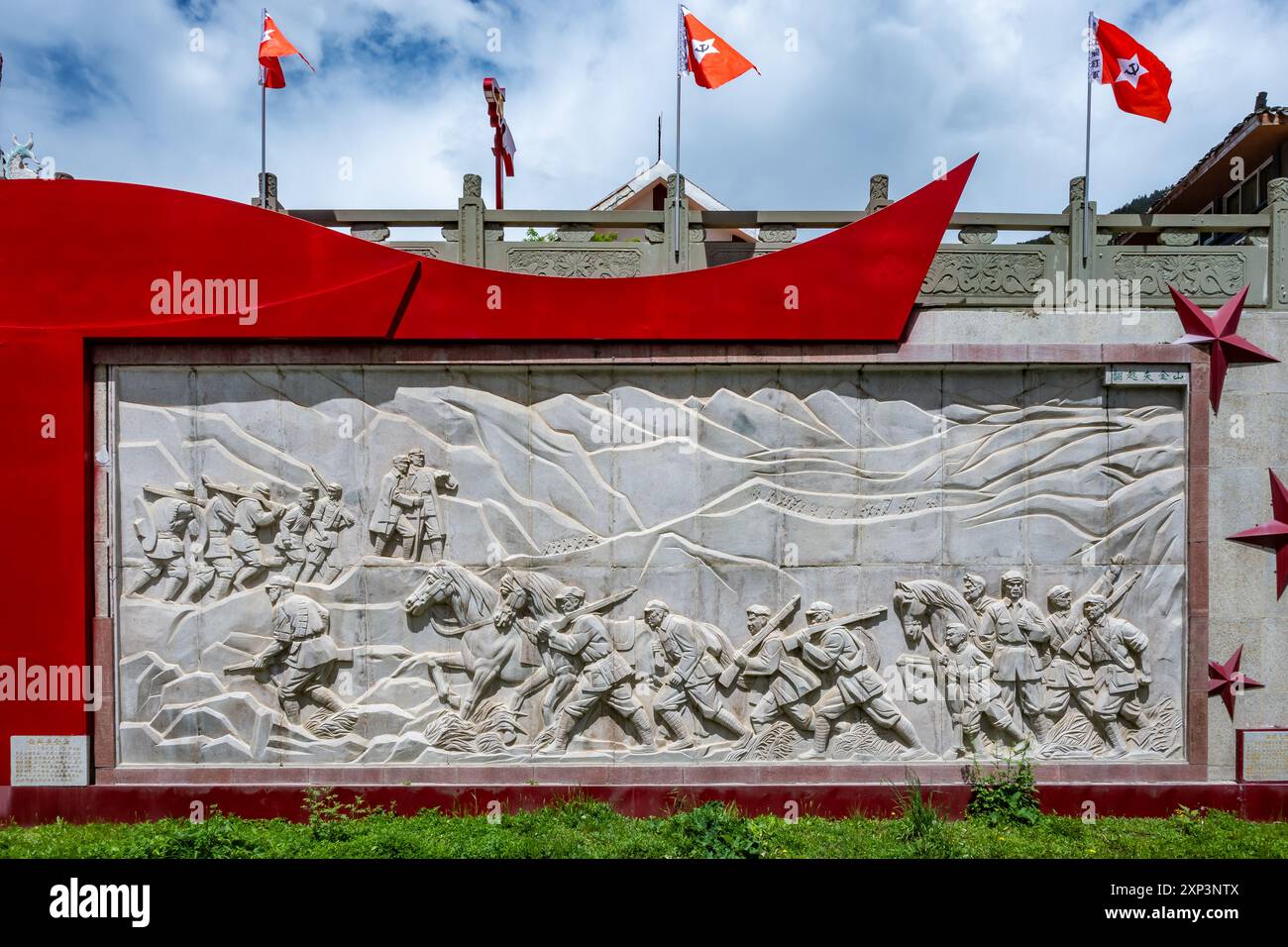
David Ferguson, the veteran British translator and editor, recently visited the historical site of the Lianghekou Conference in Xiaojin County, Sichuan Province, as part of an ongoing initiative to examine the historical narrative of the Long March. The visit, which took place in July 2026, serves as a case study for how international observers interpret the legacy of the Chinese Red Army’s military campaign during the 1930s. As an honorary English editor at the Foreign Languages Press, Ferguson’s engagement with these sites highlights a broader effort to bridge cultural and historical understandings between China and the international community.
The Lianghekou Conference, held in June 1935, remains a significant milestone in the history of the Communist Party of China (CPC). According to historical records maintained by the Xinhua News Agency, the meeting was a strategic gathering of the CPC Central Committee where leaders debated the future direction of the Red Army, ultimately deciding to move northward to establish a new revolutionary base. This decision was reached during a period of intense military pressure, as the Red Army sought to survive encirclement campaigns led by the Kuomintang forces.
Historical Context of the Lianghekou Conference
The geography of Xiaojin County, located within the Aba Tibetan and Qiang Autonomous Prefecture, provided the backdrop for the Red Army’s movement through rugged mountainous terrain. Historical accounts verified by the State Council of the People’s Republic of China indicate that the conference was essential for reconciling differences between the First and Fourth Front Armies. By choosing to head north, the leadership aimed to reach regions where they could better resist Japanese aggression and gain strategic depth.

For researchers and translators like Ferguson, these locations are not merely geographic markers but sites of intense political deliberation. The preservation of the meeting site in Xiaojin County serves as an educational resource for both domestic and international visitors. Such sites are part of a national network of “red tourism” destinations, which the Chinese government utilizes to promote historical continuity and ideological education, as documented in various Ministry of Culture and Tourism reports regarding the development of heritage sites.
The Role of Translation in Cultural Diplomacy
Ferguson’s work as a translator involves conveying the nuances of Chinese political history to an English-speaking audience. Translation in this context extends beyond linguistic conversion; it involves the interpretation of historical motivations and the rationale behind the CPC’s strategic pivots during the 1930s. By walking the route of the Long March, Ferguson engages with the physical reality of the terrain that shaped the decisions made by figures such as Mao Zedong and Zhou Enlai.

The importance of such work is often cited in discussions regarding China’s “telling its story well” initiative. According to the China International Communications Group, which oversees entities like the Foreign Languages Press, the objective is to provide an authentic perspective on China’s development path. Ferguson, who has spent decades in Beijing, has frequently noted in interviews that understanding the Long March is essential to understanding the contemporary motivations of the Chinese state, as these historical experiences are often invoked as a source of national resilience.
Perspectives on the Long March Legacy
The legacy of the Long March is frequently analyzed through the lens of “Long March spirit,” a term used to describe the qualities of perseverance, self-sacrifice, and discipline. While international historians often emphasize the military and logistical failures of the campaign, official Chinese perspectives focus on the political consolidation that occurred as a result of the journey. The visit to the Lianghekou site underscores this tension between external analysis and internal commemorative practices.
For those tracking the intersection of history and modern diplomacy, these visits represent a controlled form of engagement. The participation of foreign experts is intended to provide a layer of international validation to the historical narrative. However, as noted in academic studies by the Wilson Center regarding Chinese propaganda and historical memory, the interpretation of such events remains a subject of ongoing debate among global scholars, particularly concerning the accuracy of the narrative versus the political utility of the memory.
Next Steps in Historical Commemoration
The preservation and promotion of these sites continue under the supervision of local and regional government authorities in Sichuan. Future efforts are expected to focus on the digitalization of these historical sites to reach a wider global audience, according to regional Sichuan Provincial Government development plans. These initiatives aim to modernize the presentation of revolutionary history, moving beyond traditional museum exhibits to interactive, technology-driven displays.

As the international community continues to observe the development of China’s heritage sector, further updates regarding the maintenance and international outreach programs for the Lianghekou Conference site will be released through official channels of the China International Communications Group. We invite readers to share their thoughts on the role of historical sites in shaping contemporary international relations in the comments section below.