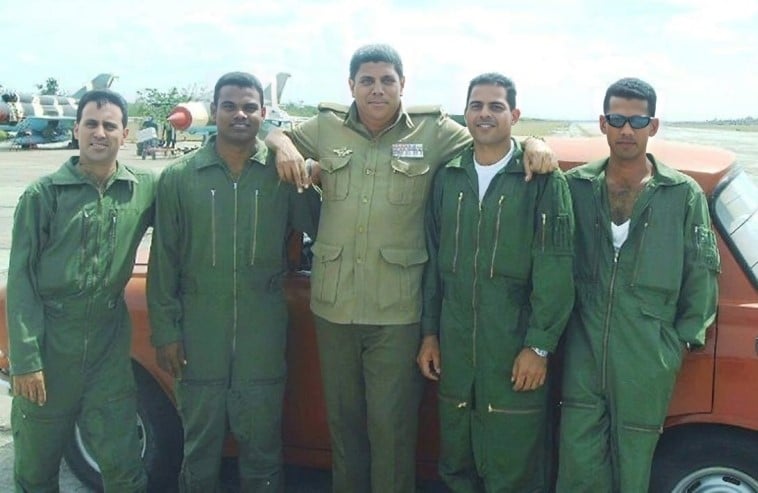
A former lieutenant colonel in the Cuban Revolutionary Air Force has been sentenced in Florida following his guilty plea to federal charges of immigration fraud. The case, which underscores the long-standing legal pursuit of individuals linked to the 1996 shootdown of two civilian aircraft operated by the humanitarian group Brothers to the Rescue, concluded after the defendant admitted to concealing his military background during his entry into the United States.
The sentencing of Pablo Manuel Zulueta-Diaz, who served as a high-ranking officer in the Cuban military, follows a Department of Justice announcement confirming that he had provided false information to U.S. Immigration authorities. By failing to disclose his role within the Cuban Revolutionary Armed Forces (FAR), Zulueta-Diaz managed to secure legal status in the U.S. Before federal investigators uncovered his true history.
The Legal Proceedings and Immigration Fraud Charges
The investigation into Zulueta-Diaz revealed that the former officer had been involved in military operations that ultimately led to international scrutiny. According to court records, the defendant entered the United States and applied for immigration benefits while omitting his extensive service in the Cuban military. Federal prosecutors successfully argued that this omission constituted a deliberate attempt to circumvent U.S. Immigration law, which mandates the disclosure of past military or government service for security vetting purposes.
The U.S. Attorney’s Office for the Southern District of Florida, which spearheaded the prosecution, highlighted the gravity of the offense. In a formal statement, officials noted that the defendant’s failure to disclose his position—specifically his role as a lieutenant colonel—deprived immigration officers of the opportunity to properly vet his history against records related to human rights abuses and international incidents, including the 1996 Brothers to the Rescue tragedy. The court ultimately sentenced him to 10 months in federal prison, followed by one year of supervised release.
Contextualizing the 1996 Shootdown
To understand the significance of this sentencing, one must look back at the events of February 24, 1996. On that day, two Cessna aircraft belonging to the Miami-based organization Brothers to the Rescue (Hermanos al Rescate) were intercepted and destroyed by Cuban MiG fighters while flying over international waters in the Florida Straits. The incident resulted in the deaths of four men: Carlos Costa, Armando Alejandre Jr., Mario de la Peñ. a, and Pablo Morales.
The aftermath of the shootdown had profound geopolitical consequences. The United States government, along with international bodies, condemned the act as a violation of international law. The United Nations Security Council subsequently issued a statement expressing profound regret and concern over the loss of life, as the aircraft were engaged in a mission to spot rafters fleeing Cuba. The incident remains a painful chapter for the Cuban-American community in South Florida and continues to be a focal point for federal investigations into those responsible for the operation.
Key Takeaways Regarding the Case
- Charge: The defendant pleaded guilty to one count of immigration fraud, specifically for providing false information on federal immigration forms.
- Military Background: Zulueta-Diaz served as a lieutenant colonel in the Cuban Revolutionary Air Force, a fact he deliberately withheld from U.S. Authorities.
- Sentencing: The court imposed a 10-month prison sentence, reflecting the seriousness of the deception regarding his military service.
- Brothers to the Rescue: While the defendant was not charged with the shootdown itself, his military history links him to the institution responsible for the 1996 incident that claimed four lives.
The Role of Federal Vetting in National Security
The case of Zulueta-Diaz serves as a reminder of the rigorous standards applied to foreign nationals seeking entry into the United States. Federal law, specifically under Title 8 of the United States Code, requires applicants to provide truthful information regarding their past associations, particularly those involving foreign militaries or organizations that may have engaged in activities contrary to U.S. Interests or human rights standards.
For many investigators, these cases are not merely about administrative errors on paperwork. They represent a broader effort to ensure that individuals who may have been involved in state-sponsored violence or human rights violations are held accountable, even if the legal mechanism is limited to immigration fraud. The Department of Homeland Security and the Department of Justice frequently collaborate on these matters, utilizing global databases and intelligence sharing to cross-reference statements made by applicants with historical records of foreign military personnel.
What Happens Next
Following the completion of his prison sentence, Zulueta-Diaz will enter a period of supervised release. As is standard practice in cases involving non-citizens who have committed federal crimes, the defendant may face additional immigration proceedings, including potential deportation, depending on the final determinations of the Executive Office for Immigration Review (EOIR). These administrative hearings are separate from the criminal proceedings conducted in the U.S. District Court.
As the legal process continues to unfold, the families of the victims of the 1996 shootdown remain vocal in their pursuit of justice. For them, every legal development involving individuals associated with the Cuban military is a reminder of the lives lost nearly three decades ago. Readers interested in tracking the status of similar federal cases can monitor the official press releases from the U.S. Attorney’s Office for the Southern District of Florida for future updates.
This case underscores the complexities of international relations and the long shadow cast by Cold War-era conflicts. We invite our readers to share their thoughts on the balance between national security vetting and the pursuit of accountability for historical events in the comments section below.
Worth a look