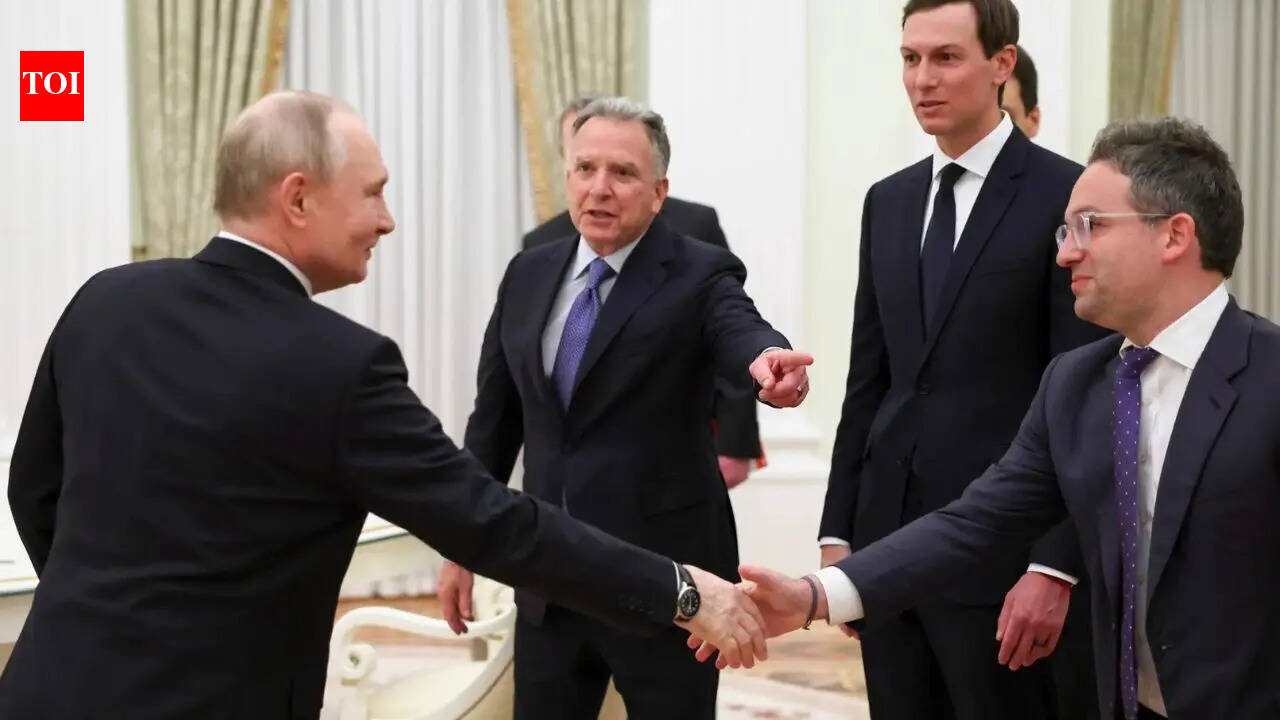
In the high-stakes corridors of the West Wing, the distance between the center of power and the periphery can be measured in a single personnel shift. For Josh Gruenbaum, a 40-year-old former Wall Street executive whose rise within the Trump administration was described as meteoric, that distance has suddenly become a chasm.
Once a key figure in some of President Donald Trump’s most sensitive foreign policy initiatives, Trump aide Josh Gruenbaum sidelined from his roles involving Russia, Ukraine, and Iran. The move effectively strips Gruenbaum of his influence over major geopolitical flashpoints, restricting his focus to a narrow portfolio within an independent body known as the Board of Peace.
This sudden reorganization comes after Gruenbaum had leveraged a position within the General Services Administration (GSA)—as part of Elon Musk’s Department of Government Efficiency (DOGE) cost-cutting task force—to embed himself with the administration’s primary foreign policy envoys. By aligning himself with Jared Kushner and Steve Witkoff, Gruenbaum transitioned from a role involving government procurement to negotiating high-level ceasefires and meeting with world leaders.
The shift signifies more than just a change in office location; it represents a sharp correction in the internal dynamics of the administration’s foreign policy apparatus, where abrasive interpersonal styles have reportedly clashed with the established hierarchy of senior advisers.
From DOGE to the Kremlin: A Meteoric Rise
Josh Gruenbaum’s trajectory within the administration began not in the State Department or the National Security Council, but through the lens of government efficiency. As an ally of billionaire Elon Musk, Gruenbaum was placed within the GSA under the umbrella of DOGE. While his initial mandate was focused on cost-cutting and bureaucratic streamlining, Gruenbaum utilized the position to forge critical alliances with Jared Kushner and Steve Witkoff.

Kushner and Witkoff, both real estate developers with close personal ties to the President, served as special envoys. Gruenbaum initially assisted them in negotiating a ceasefire deal in Gaza, a success that he leveraged to expand his portfolio. His influence grew rapidly, allowing him to move beyond the GSA and into the sphere of great-power diplomacy.
The apex of this rise occurred in January, when Gruenbaum joined Kushner and Witkoff for a high-profile meeting with Russian President Vladimir Putin at the Kremlin. The image of a former Wall Street executive and “pencil-purchasing” bureaucrat shaking hands with the Russian leader underscored the unconventional nature of the administration’s diplomatic approach, as reported by The Wall Street Journal.
Following the Kremlin visit, Gruenbaum’s ambitions grew. He began seeking a formal office within the White House, signaling his desire to transition from an informal adviser to a permanent fixture of the West Wing’s foreign policy establishment.
The Sidelining: A Shift to the Board of Peace
The momentum of Gruenbaum’s ascent halted abruptly in late April. According to reports from Politico, he was quietly removed from the majority of his foreign policy assignments over the course of a week. His responsibilities regarding the conflicts in Ukraine and the tensions with Iran—two of the most volatile portfolios in U.S. Foreign policy—were stripped away.
Gruenbaum has now been reassigned to the Board of Peace, an independent entity described as a Trump-led alternative to the United Nations. In this novel capacity, his scope of function has been drastically narrowed; he is now tasked exclusively with issues pertaining to the Gaza Strip.
This move is widely viewed by insiders as a “sidelining” for several reasons:
- Physical Displacement: He has been removed from the center of power in the West Wing, limiting his daily access to the President and senior decision-makers.
- Portfolio Reduction: Moving from a multi-region portfolio (Russia, Ukraine, Iran, Gaza) to a single-issue focus (Gaza) represents a significant loss of strategic influence.
- Institutional Status: The Board of Peace, while possessing the President’s backing, lacks the formal authority and institutional machinery of the White House or the State Department.
Internal Friction and the Cost of Ambition
The reasons for Gruenbaum’s fall from grace appear to be rooted in personality and professional conduct rather than policy disagreements. Sources indicate that Gruenbaum’s “relentless self-promotion” and an “abrasive work style” created significant friction within the administration.
In the delicate ecosystem of the West Wing, the ability to navigate egos and maintain collaborative relationships with senior advisers is often as important as technical expertise. Gruenbaum reportedly alienated several high-ranking officials, whose frustrations eventually reached a tipping point. The decision to remove him from high-profile assignments suggests that the internal cost of his presence—in terms of morale and cooperation—outweighed the utility of his relationship with Kushner and Witkoff.
This development highlights a recurring theme in the current administration: the tension between “outsider” disruptors brought in via DOGE or personal loyalty and the professional staff tasked with the day-to-day execution of government policy. While Gruenbaum’s ability to scale the hierarchy was rapid, his inability to integrate into the broader advisory structure proved to be a critical liability.
Implications for Trump’s Foreign Policy
The removal of Josh Gruenbaum from the Russia-Ukraine and Iran tracks leaves a void in the informal diplomatic channel operated by Kushner and Witkoff. While the two developers remain central to the President’s vision, the loss of a dedicated coordinator like Gruenbaum may signal a shift in how these “shadow” diplomatic efforts are managed.

the transition of Gruenbaum to the Board of Peace underscores the administration’s continued interest in creating parallel diplomatic structures. By utilizing an independent board to handle Gaza issues, the administration can maintain a level of flexibility and distance from the traditional diplomatic constraints of the State Department.
For the global community, the sidelining of a figure who had direct access to the Kremlin suggests a period of recalibration. The question remains whether the “DOGE-style” approach to diplomacy—characterized by rapid movement and unconventional personnel—will continue to penetrate the highest levels of national security or if the administration will move toward a more stabilized, less abrasive advisory circle.
Key Takeaways of the Gruenbaum Shift
| Feature | Previous Status | Current Status |
|---|---|---|
| Primary Portfolio | Russia, Ukraine, Iran, Gaza | Gaza Strip exclusively |
| Institutional Base | GSA / West Wing orbit | Board of Peace |
| Key Access | Direct access to Putin/Kushner/Witkoff | Removed from central power center |
| Primary Driver | DOGE efficiency/Personal ties | Sidelined due to abrasive style |
The administration has not provided an official statement regarding the specific reasons for Gruenbaum’s reassignment. The next major checkpoint for the administration’s foreign policy will be the upcoming scheduled diplomatic reviews and the continued operationalization of the Board of Peace as a primary vehicle for Middle East negotiations.
World Today Journal will continue to monitor the evolving structure of the U.S. Foreign policy team. We invite our readers to share their perspectives on the impact of unconventional appointments in international diplomacy in the comments below.