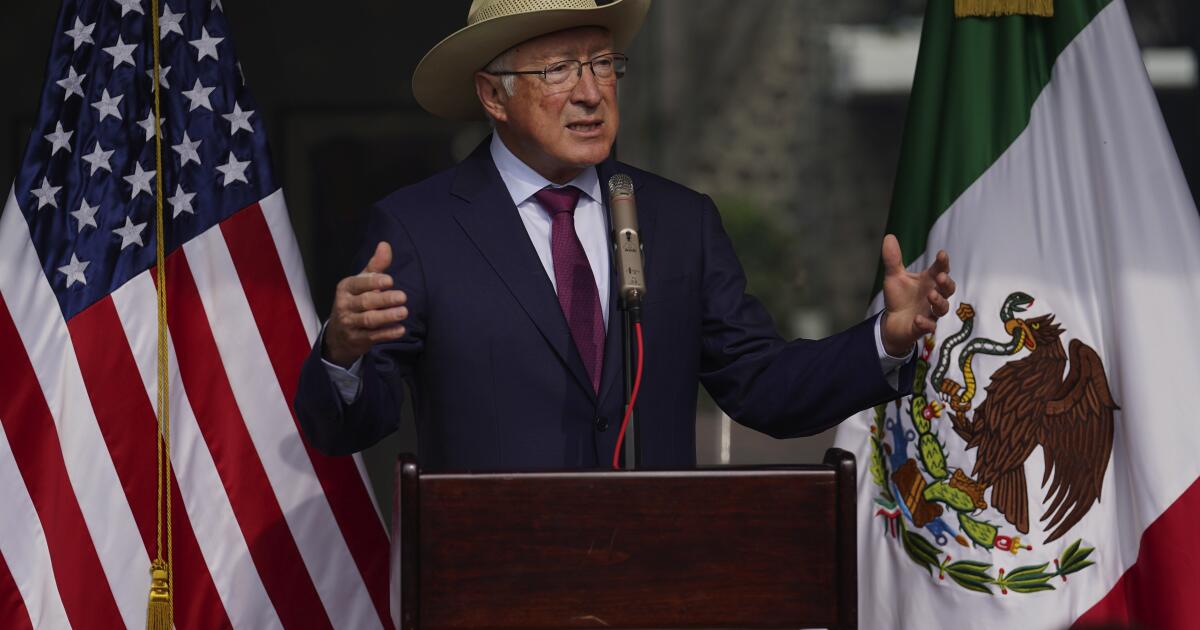
Former U.S. Ambassador to Mexico Christopher Landau has stated that former Mexican President Andrés Manuel López Obrador expressed significant concern that the arrest of high-profile Sinaloa Cartel leader Ismael “El Mayo” Zambada would lead to the exposure of corrupt officials within his administration. Landau, who served as the U.S. envoy to Mexico from 2019 to 2021, characterized these concerns as a reflection of the administration’s anxiety regarding potential cooperation between cartel leadership and American federal prosecutors.
The arrest of Zambada in July 2024, which occurred at a private airfield near El Paso, Texas, has since triggered a cascade of diplomatic and security questions regarding the extent of institutional corruption in Mexico. According to the U.S. Department of Justice, Zambada faces multiple indictments in the United States, including charges related to drug trafficking and money laundering, which have been pending for decades.
Diplomatic Tensions and the Zambada Arrest
The circumstances surrounding Ismael Zambada’s arrival on U.S. soil remain a subject of intense scrutiny. Zambada has alleged through his legal counsel that he was forcibly kidnapped in Mexico by associates of Joaquín Guzmán López—the son of fellow cartel founder “El Chapo” Guzmán—and transported to the United States against his will. This narrative has created a complex legal environment, as the U.S. government maintains that the apprehension was a result of ongoing international law enforcement efforts, according to filings in the U.S. District Court for the Western District of Texas.
For the administration of former President López Obrador, the potential for a high-level cartel figure to testify about past government connections presented a significant political and security risk. Ambassador Landau’s account suggests that the Mexican leadership viewed the prospect of a “spilling of the beans” by a figure as influential as Zambada as a threat to the integrity of their security apparatus. This concern aligns with long-standing criticisms from U.S. officials regarding the effectiveness of the “abrazos, no balazos” (hugs, not bullets) security policy, which sought to address the root causes of violence rather than pursuing direct military confrontation with cartels.
Institutional Corruption and U.S.-Mexico Security Cooperation
The relationship between Mexican leadership and transnational criminal organizations has been a recurring point of contention in bilateral security talks. The U.S. government has historically emphasized the need for greater transparency in Mexican law enforcement, particularly following the 2020 arrest of former Mexican Defense Minister Salvador Cienfuegos in Los Angeles. Cienfuegos was later returned to Mexico after the U.S. dropped charges, a decision that led to significant friction between the two nations, as detailed in reports by the Associated Press and Reuters.
The fear expressed by the former Mexican president, as described by Landau, underscores the fragility of intelligence sharing between the two countries. When the United States conducts high-level arrests without prior coordination with Mexican authorities, it often signals a lack of trust in the local chain of command. This lack of trust is frequently cited by U.S. lawmakers when discussing the efficacy of the Merida Initiative, a security cooperation agreement that governed much of the cross-border counter-narcotics strategy for over a decade, according to the Congressional Research Service.
What Happens Next in the Zambada Case
As the legal proceedings against Ismael Zambada move forward in Texas, the focus shifts to whether the prosecution will seek to leverage his potential testimony against other figures in the Mexican political or security establishment. Under the federal rules of criminal procedure, prosecutors are tasked with evaluating the credibility of cooperating witnesses, and any potential plea agreements would be subject to strict oversight by the presiding judge.

The next phase of the trial will likely involve pre-trial motions regarding the admissibility of evidence and the specifics of the government’s case. Observers in both Washington and Mexico City are watching closely to see if the proceedings move beyond the immediate charges against Zambada to include broader revelations about the influence of the Sinaloa Cartel in Mexican public life. Updates on court filings can be monitored through the official U.S. District Court for the Western District of Texas portal.
The arrest of such a central figure continues to serve as a litmus test for the future of U.S.-Mexico relations under the new administration of President Claudia Sheinbaum. Whether the two nations can bridge the gap in their security priorities remains a primary question for regional stability. We invite our readers to share their analysis of these developments in the comments section below.