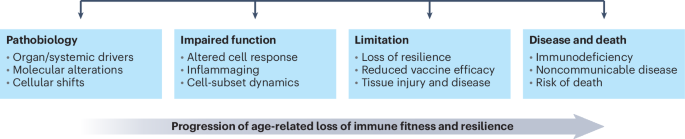
A new framework for selecting immune aging biomarkers in clinical trials has been proposed by researchers, aiming to improve the accuracy of geroscience studies and accelerate the development of therapies targeting age-related diseases. The approach, detailed in a 2026 article published in Nature Medicine, emphasizes the need for standardized biomarker evaluation to address inconsistencies in measuring immune system decline across clinical trials.
Immune aging, the gradual deterioration of the immune system over time, is a key factor in vulnerability to infections, cancer, and chronic diseases. Biomarkers—measurable indicators of biological processes—have become critical tools for assessing immune health and tracking the efficacy of interventions. However, the lack of a unified framework has led to fragmented research, according to a 2026 Nature Medicine article.
“Without a standardized approach, researchers risk comparing apples to oranges,” said the authors of the 2026 Nature Medicine article. “This framework provides a roadmap to ensure biomarkers are both biologically relevant and clinically actionable.”
What Are Immune Aging Biomarkers?
Immune aging biomarkers are specific molecules, cells, or functional metrics that reflect changes in the immune system associated with aging. These can include markers of cellular senescence, such as p16INK4a, or shifts in immune cell populations, like the accumulation of CD8+ T cells. Other biomarkers measure systemic inflammation, such as C-reactive protein (CRP), or the diversity of the T-cell receptor repertoire.

“These biomarkers help us quantify how the immune system ages and respond to interventions,” explained the authors of the 2026 Nature Medicine article. “For example, a reduction in T-cell diversity might indicate accelerated immune aging, while a decline in inflammatory markers could signal a positive response to a therapy.”
The 2026 Nature Medicine article categorizes biomarkers into three tiers based on their validation status: Tier 1 (well-validated, widely accepted), Tier 2 (promising but requiring further study), and Tier 3 (experimental or speculative). This classification aims to guide researchers in selecting biomarkers that balance scientific rigor with practicality.