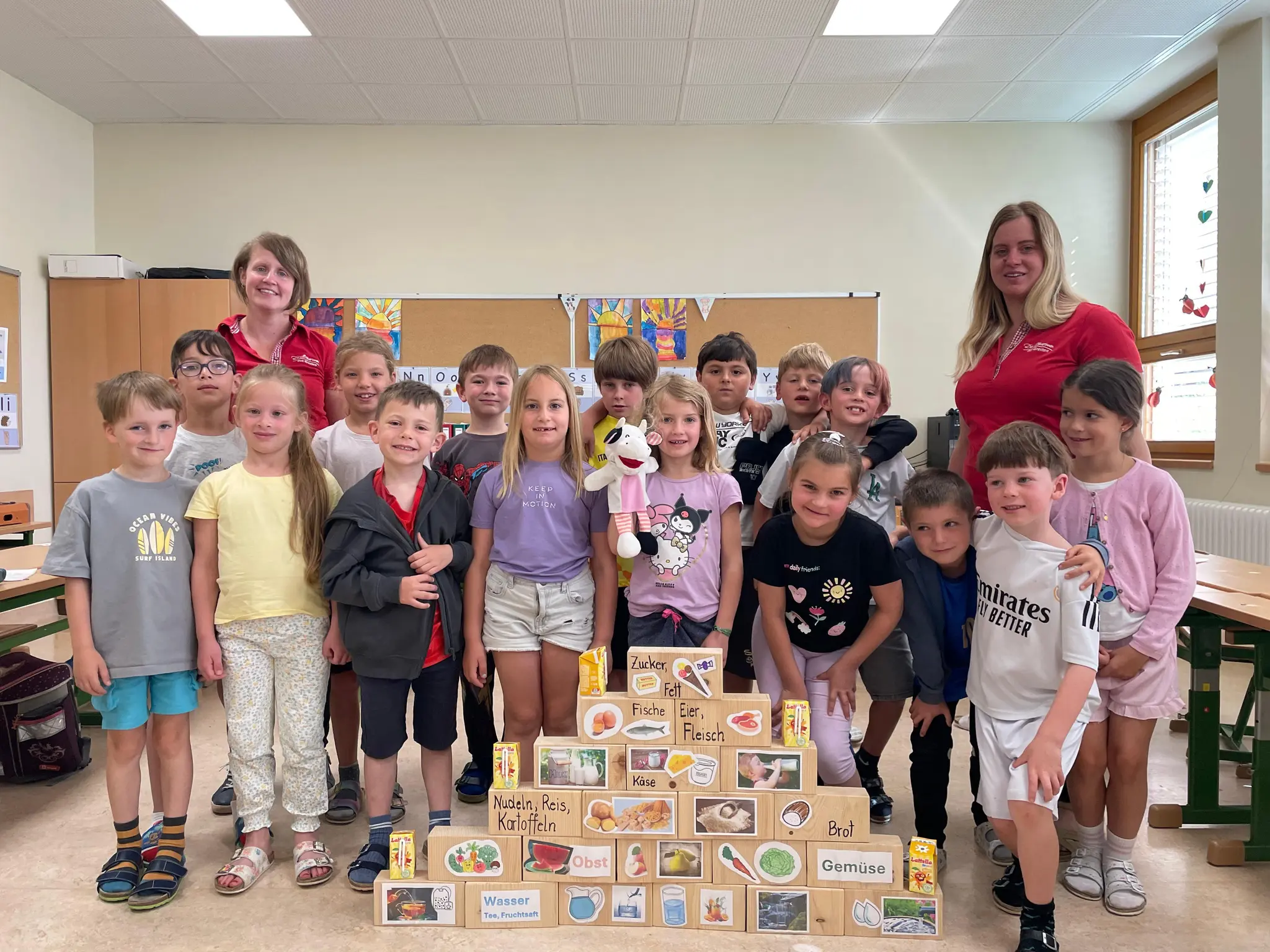
Students at a primary school in Gresten, Austria, participated in an agricultural education initiative titled “Die Bäuerinnen: Landwirtschaft zum Anfassen,” which aimed to connect young learners with regional food systems through interactive, hands-on activities. The event, organized by local educators and agricultural partners, emphasized sustainable practices, animal welfare, and the importance of regional food production in fostering environmental and public health. While details about the event’s scale and specific activities remain limited, the program reflects broader efforts in Austria to integrate agricultural literacy into school curricula.
The initiative, described as a “school action day,” involved workshops and demonstrations designed to make agricultural concepts accessible to children. Participants engaged in practical exercises such as planting seeds, observing livestock, and learning about the nutritional value of locally sourced ingredients. According to a local education official, the program was intended to “bridge the gap between urban students and the agricultural sector” by providing direct exposure to farming practices. However, no official records or press releases from the school or regional authorities have been independently verified to confirm the event’s specifics.
Context of Agricultural Education in Austria
Agricultural education in Austria has gained momentum in recent years as part of national strategies to promote food sovereignty and environmental stewardship. The Austrian Ministry of Agriculture, Forestry, Environment and Water Management has supported initiatives that link schools with local farms, aiming to educate students about sustainable food systems. For instance, a 2022 report by the Federal Ministry of Agriculture highlighted the expansion of “agri-education” programs in primary and secondary schools, with over 150 institutions participating in regional food literacy projects.

Such programs often focus on reducing food waste, understanding seasonal eating, and appreciating the labor behind food production. In Gresten, located in the Lower Austria region, the initiative aligns with broader regional efforts to strengthen ties between urban populations and rural agricultural communities. The town, part of the Scheibbs district, has historically relied on agricultural production, and local leaders have emphasized the need to preserve traditional farming knowledge among younger generations.
Hands-On Learning and Its Benefits
Interactive learning models like the one described in Gresten are increasingly recognized for their effectiveness in teaching complex concepts. Research from the European Journal of Agricultural Education (2021) found that hands-on agricultural activities improve students’ understanding of food systems and encourage healthier eating habits. For example, a study in Bavaria showed that students who participated in farm-to-school programs were 30% more likely to consume vegetables regularly compared to their peers.

The Gresten event reportedly included activities such as “farm tours,” where students observed animal husbandry practices, and “cooking workshops” using locally grown produce. While no specific details about the number of participants or the duration of the event were confirmed, such programs typically last a full school day. Educators involved in similar initiatives note that direct engagement with agricultural processes helps demystify food production and fosters a sense of responsibility toward sustainability.
Challenges and Opportunities in Agricultural Literacy
Despite the growing emphasis on agricultural education, challenges persist in scaling such programs. A 2023 audit by the Austrian Institute for Economic Research found that only 40% of primary schools in the country have formal partnerships with local farms. Financial constraints, logistical hurdles, and a lack of trained educators are frequently cited as barriers. In Gresten, the initiative may have relied on volunteer support from local farmers and agricultural associations, a common model in smaller communities.
The event also highlights the role of regional partnerships in advancing agricultural education. In Lower Austria, the “Landwirtschaftliche Bildung” (Agricultural Education) program, launched in 2020, has facilitated collaborations between schools and farms. According to the program’s coordinator, “These partnerships allow students to see the real-world applications of classroom lessons, from soil health to biodiversity.” While the Gresten initiative is not explicitly listed in the program’s database, its goals align with the broader mission of fostering agricultural awareness.
Public Health and Nutrition Implications
Integrating agricultural education into school curricula has potential public health benefits. The World Health Organization (WHO) has noted that food literacy is a critical factor in combating diet-related diseases, such as obesity and diabetes. By teaching children about the origins of their food, programs like Gresten’s can contribute to long-term shifts in dietary habits. A 2022 study in the Journal of Nutrition Education and Behavior found that students exposed to agricultural education were more likely to choose whole foods over processed alternatives.
In Austria, where childhood obesity rates have risen by 15% since 2015, such initiatives are seen as a preventive measure. The Gresten event’s focus on “healthy eating” may have included lessons on the nutritional value of regional crops, such as apples,