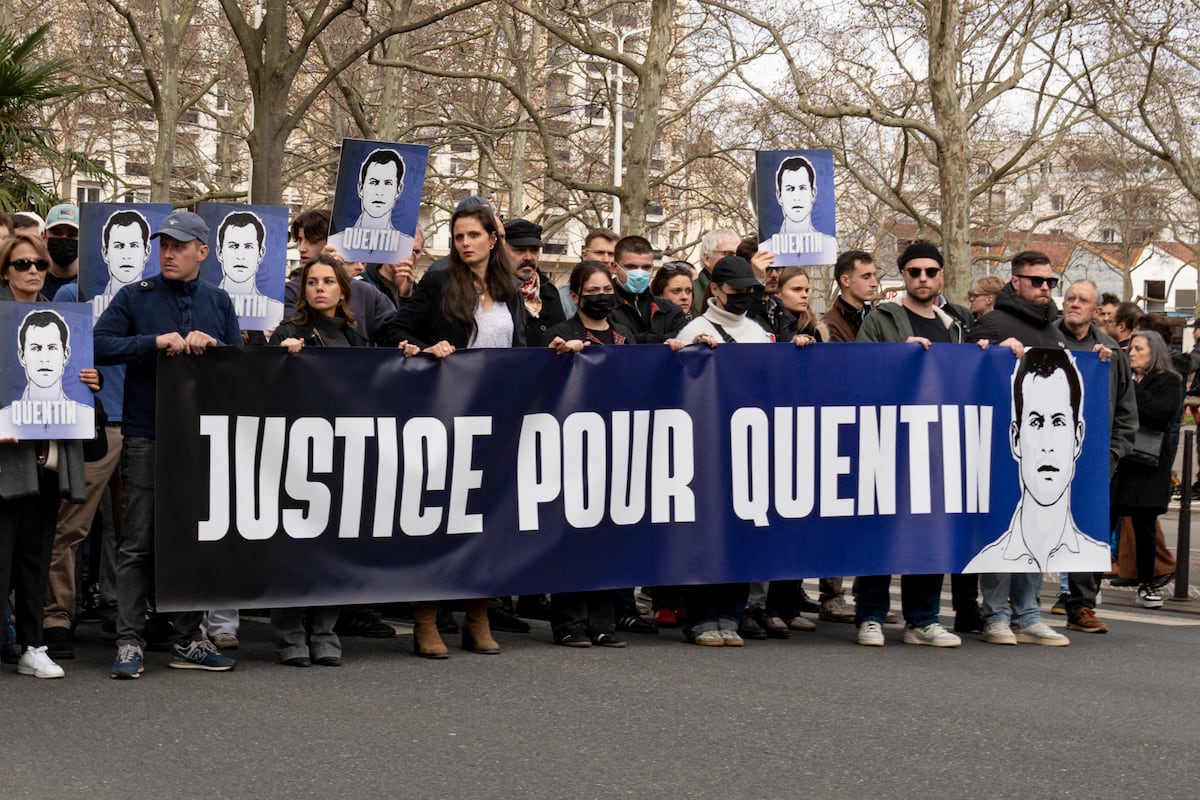
Paris, France – France has summoned the U.S. Ambassador to Paris, Charles Kushner, to protest comments made by the U.S. Embassy regarding the death of Quentin Deranque, a 23-year-ancient far-right activist who died earlier this month following a violent altercation in Lyon. The move underscores growing tensions between the two nations, not only over the specific case but also concerning differing views on political extremism and the appropriate role of international commentary on domestic tragedies. The incident has ignited a fierce debate within France about political polarization and the rise of both far-right and far-left ideologies, particularly as the country approaches the 2027 presidential election.
French Foreign Minister Jean-Noël Barrot announced the decision to summon Ambassador Kushner on Sunday, criticizing the U.S. Embassy’s statement as an unwelcome interference in French affairs. Barrot stated, according to reporting by CNN, that the embassy’s comments amounted to “interference” and that France “rejects any instrumentalization of this tragedy, which affects a French family, for political ends.” The French government believes the U.S. Embassy’s remarks were inappropriate given the sensitive nature of the situation and the ongoing investigation. This diplomatic rebuke highlights a growing strain in transatlantic relations, particularly concerning differing approaches to internal political matters.
The controversy stems from a post shared by the U.S. Embassy in France on X (formerly Twitter) on February 20, 2026, echoing a statement from the U.S. State Department’s Bureau of Counterterrorism. The post expressed concern over reports that Deranque “was killed by left-wing militants,” and asserted that “violent radical leftism is on the rise” and poses a threat to public safety. This assessment, as reported by the Guardian, prompted a strong reaction from the French government, which views it as an attempt to politicize a tragic event and draw parallels to domestic political issues in the United States. The U.S. Embassy’s statement, and the subsequent summoning of Ambassador Kushner, underscores a broader pattern of diplomatic friction between the two countries.
The Death of Quentin Deranque and the Escalating Political Tensions
Quentin Deranque died on February 12, 2026, after sustaining severe head injuries during a brawl in Lyon. The altercation occurred on the fringes of a demonstration against Rima Hassan, a politician from the left-wing France Unbowed party. According to the Associated Press, Deranque was attacked by a group of individuals during the clashes. Eleven people have been arrested in connection with his death, with two individuals charged with murder, as reported by CNN. The incident has deeply polarized French society, with both the left and right attempting to leverage the tragedy for political gain.
The death has sparked a wave of protests and counter-protests across France. A march in Lyon on Saturday, February 21, 2026, drew over 3,000 attendees paying tribute to Deranque, as reported by El País. However, the demonstration was marred by instances of Nazi salutes and racist slogans, highlighting the extremist elements within the far-right movement. This has further fueled concerns about the growing influence of extremist ideologies in France and the potential for further violence. The incident has also drawn international attention, with Italian Prime Minister Giorgia Meloni expressing her condolences and condemning “a climate of ideological hatred sweeping several nations.”
U.S. Commentary and French Rejection of “Interference”
The U.S. Embassy’s statement, and the subsequent comments from the State Department’s Bureau of Counterterrorism, were met with swift and strong condemnation from the French government. French officials argue that the U.S. Intervention was unwarranted and inappropriate, particularly given the ongoing investigation into Deranque’s death. Barrot explicitly rejected any suggestion that France needed “lessons…in matter of violence, from the international reactionary movement,” as reported by the Guardian. This strong rebuke reflects a broader sensitivity within France regarding external interference in its domestic affairs, particularly on politically charged issues.
The timing of the U.S. Comments also raised eyebrows in France, coming shortly after a similar diplomatic incident in August 2025. As noted by El País, Ambassador Kushner was previously summoned by French authorities following criticism of President Macron’s decision to recognize the State of Palestine. Kushner, the father-in-law of Donald Trump’s daughter Ivanka, reportedly criticized Macron’s “lack of action” in combating antisemitism. This pattern of diplomatic clashes suggests a growing disconnect between the two countries on a range of political issues.
Broader Implications and the French Political Landscape
The Deranque case has exposed the deep political divisions within France, particularly as the country prepares for the 2027 presidential election. The far-right National Rally party, led by Marine Le Pen, is currently leading in opinion polls, capitalizing on growing concerns about immigration, security, and national identity. The death of Deranque has provided further ammunition for the far-right, which is portraying him as a martyr for their cause. The incident also puts pressure on President Macron’s government to address the rising threat of extremism and restore public order.
The incident also highlights the complex relationship between France and Italy, with Prime Minister Meloni’s comments drawing criticism from Macron. Macron reportedly responded to Meloni’s remarks with a pointed remark, telling her to “each stay in their own house and the sheep will be protected,” as reported by El País. This exchange underscores the growing tensions between the two countries over issues of immigration, security, and political ideology. The situation is further complicated by the rise of nationalist and populist movements across Europe, which are challenging the traditional political order.
Key Takeaways
- Diplomatic Fallout: France has formally protested U.S. Comments regarding the death of Quentin Deranque, summoning Ambassador Charles Kushner.
- Political Polarization: The incident has exacerbated existing political divisions within France, particularly ahead of the 2027 presidential election.
- Extremism Concerns: The case has raised concerns about the growing influence of both far-right and far-left extremist ideologies in France.
- Transatlantic Tensions: The dispute reflects a broader pattern of diplomatic friction between France and the United States on a range of political issues.
The investigation into Quentin Deranque’s death is ongoing, and further details are expected to emerge in the coming weeks. French authorities are continuing to gather evidence and interview witnesses to determine the full circumstances surrounding the incident. The case is likely to remain a focal point of political debate in France for the foreseeable future, as the country grapples with the challenges of political polarization and the rise of extremism. The next significant development is expected to be the presentation of evidence to the investigating magistrate in Lyon, scheduled for March 10, 2026, according to a statement from the Lyon prosecutor’s office.
What are your thoughts on the international response to this tragic event? Share your comments below, and please share this article with your network to keep the conversation going.
Worth a look
- Lee Jae-myung Orders Extension of Oil Price Caps and Fuel Tax Cuts
- Mamdani Recants Threat to Arrest Netanyahu Over ICC Warrant Limitations
- South Africa Faces R467 Billion Municipal Debt Crisis Amid Rising Xenophobia (time.news)
- TikTok Video Sparks Controversy Over Her ‘Entertained’ Dinner Experience (archynewsy.com)