France Sees Widespread Demonstrations for International Women’s Rights Day
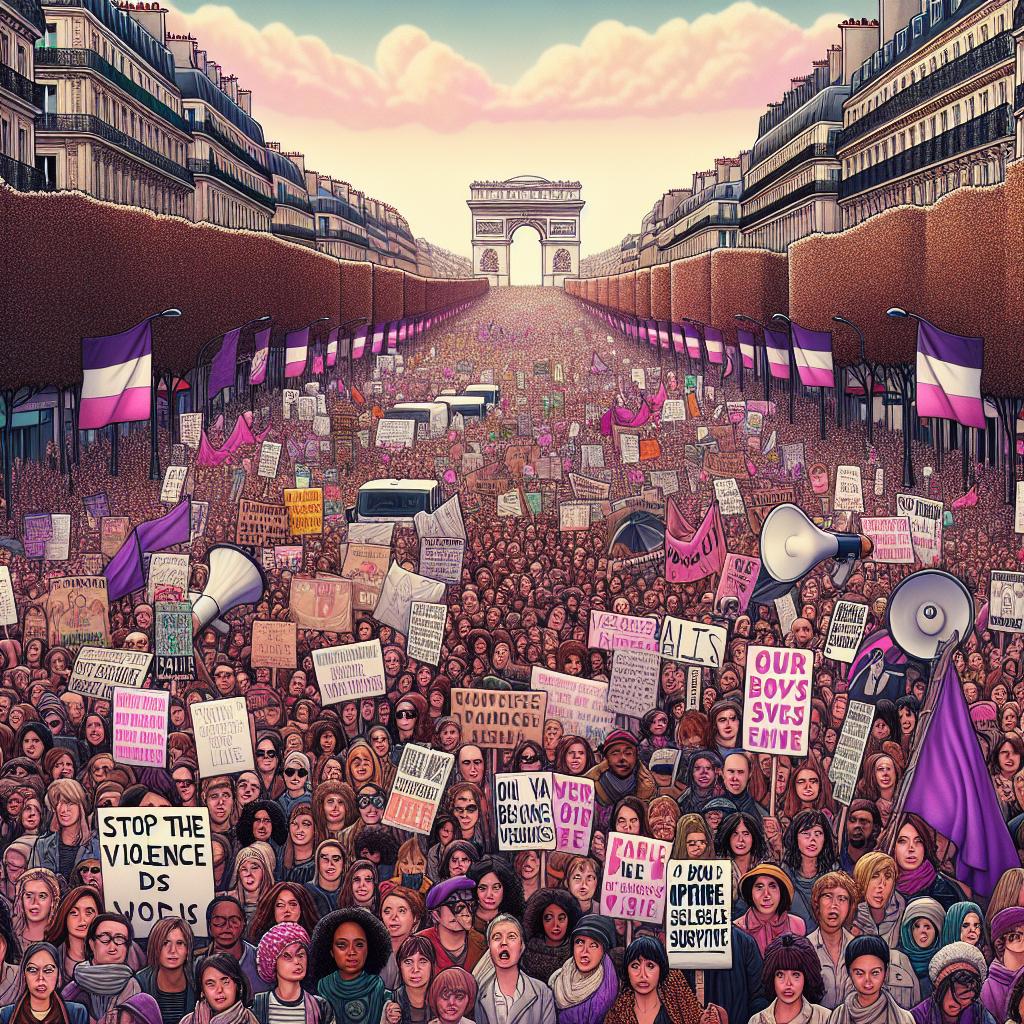
Tens of thousands of people across France took to the streets on Sunday, March 8th, 2026, to mark International Women’s Rights Day, demonstrating against gender-based violence, economic inequality, and the perceived rise of conservatism. The demonstrations, held in approximately 150 locations nationwide, underscored ongoing concerns about women’s rights and safety, particularly in the context of upcoming municipal elections. The core issues driving the protests included calls for increased funding to combat violence against women, improved access to healthcare, and greater economic empowerment. The scale of the mobilization reflects a growing anxiety among activists and advocates regarding potential setbacks to hard-won gains.
In Paris, the main march commenced at Place de la Bataille-de-Stalingrad at 2:00 PM local time, proceeding towards Place de la République. The procession brought together over one hundred organizations – including associations, unions, and collectives – all united in their call for simultaneous rallies throughout the country. This year’s demonstrations were particularly charged, fueled by recent high-profile cases and growing fears surrounding the potential impact of right-wing political gains on women’s rights. The collective action aimed to amplify the voices of those affected by violence and inequality, and to demand concrete action from policymakers.
Gisèle Pelicot and the Fight Against Sexual Violence
A prominent figure at the forefront of the Paris march was Gisèle Pelicot, a woman who gained international recognition after publicly denouncing organized rape perpetrated by her former husband. Her courageous testimony has made her a symbol of resistance against sexual violence. Addressing the crowd around 2:30 PM, Pelicot delivered a powerful message of defiance, stating, “On ne lâchera rien!” (“We will not give up!”). France Bleu reported on the significance of her presence and message.
Alongside her, Caroline Darian, Pelicot’s daughter, stood in solidarity with fellow activists and representatives from the Fondation des Femmes (Women’s Foundation). Darian, who has also filed a complaint against her father alleging sexual assault, expressed her honor at being present with her mother, stating that Pelicot’s presence sent “a true message of hope to all the victims of France.” The participation of both mother and daughter underscored the intergenerational nature of the struggle against sexual violence and the importance of supporting survivors. Suzane, a singer known for her song “Je t’accuse” (I accuse you), also joined the march, adding a cultural voice to the demonstration.
Demands for Systemic Change and Increased Funding
The marchers carried banners and chanted slogans such as “Stop the violence,” “My body, my choice,” and “Function to live, not just survive,” highlighting the diverse range of issues at the heart of the movement. Key demands centered on the prevention and care of sexist and sexual violence, access to healthcare and abortion services, and the economic emancipation of women. Organizers are specifically calling for an annual budget of 3 billion euros dedicated to these efforts, as well as a comprehensive legal framework to address the root causes of inequality and violence.
In November 2025, Minister for Equality between Women and Men, Aurore Bergé, presented the outlines of a proposed framework law encompassing 53 measures. However, the City of Paris website notes that parliamentary delays may postpone its adoption. The proposed legislation aims to address prevention, education, victim protection, support services, and the prosecution of aggressors. The delay in enacting this law has fueled frustration among activists who argue that swift action is needed to protect women’s rights.
Economic inequality remains a significant concern. According to data from the Institut National de la Statistique et des Études Économiques (INSEE) released in 2024, the average salary for women in the private sector was 21.8% lower than that of men. The gender pay gap, even when considering equivalent full-time employment, stood at 3.6%. These statistics, frequently cited by protesters, underscore the persistent economic disadvantages faced by women and the necessitate for policies to promote equal pay and economic opportunity.
Concerns Over the Rise of the Far-Right
Organizers, united under the banner of the Grève Féministe (Feminist Strike) collective, voiced strong concerns about the potential threat posed by the far-right to women’s rights, particularly in the lead-up to the municipal elections scheduled for March 15th and 22nd. Myriam Lebkiri, representing the Confédération Générale du Travail (CGT), summarized the mobilization as a fight for “the emancipation of women” and “against the far-right, which sows racism, misogyny, and homophobia.” This sentiment reflects a broader anxiety that gains by far-right parties could lead to a rollback of progress on gender equality.
The movement has been galvanized by recent legal and media events, including the Pelicot trial, allegations of sexual assault within Parisian schools, and the ongoing fallout from the Epstein case. These incidents have served to highlight the pervasive nature of sexual violence and the urgent need for systemic change. The cases have also fueled demands for greater accountability and justice for survivors.
The night before the main demonstrations, a “feminist and anti-fascist” night march in Paris drew approximately 3,200 participants, according to police sources. The march dispersed peacefully, whereas some instances of vandalism were reported, and one person was taken into custody. This pre-march event signaled the intensity of feeling surrounding the issues at stake and the determination of activists to make their voices heard.
President Emmanuel Macron acknowledged the importance of International Women’s Rights Day in a post on X (formerly Twitter), stating, “The rights of women are never definitively acquired. They are the fruit of struggles at every moment, of victories snatched by courage and a vigilance that must never weaken.”
Les droits des femmes ne sont jamais définitivement acquis. Ils sont le fruit de combats de chaque instant, de conquêtes arrachées par le courage et d’une vigilance qui ne doit jamais faiblir. 🇫🇷
— Emmanuel Macron (@EmmanuelMacron) March 8, 2026
This statement, shared on the day of the mobilization, underscored the government’s recognition of the ongoing struggle for gender equality.
The rallies on March 8th combined the denunciation of violence with demands for social and economic justice, representing a collective response to perceived threats to women’s rights. Activists continue to call for concrete measures and strengthened institutional commitment to address persistent inequalities and violence. The events in France reflect a global trend of increased activism and advocacy for women’s rights, driven by a growing awareness of the challenges that remain.
Looking Ahead: Parliamentary Debate and Continued Advocacy
The immediate focus for advocates will be on the progress of the proposed framework law on gender equality. The timeline for parliamentary debate remains uncertain, but activists are determined to maintain pressure on lawmakers to prioritize its passage. Further demonstrations and advocacy efforts are planned to ensure that the voices of women and survivors are heard. The upcoming municipal elections will also be a key battleground, with activists seeking to elect candidates who champion gender equality and women’s rights. The ongoing dialogue and mobilization are crucial to ensuring that the gains made in recent decades are not eroded and that a more just and equitable future is built for all.
The fight for women’s rights is far from over. Continued vigilance, advocacy, and collective action are essential to address the systemic challenges that persist and to create a society where all women can live free from violence and discrimination. We encourage readers to engage in this important conversation and to support organizations working to advance gender equality.
Worth a look
- Why Gulf States Are Pushing for a Bigger Chinese Role: Growing Frustration Explained
- AMAG Profits Surge in First Half Despite US Tariffs
- Pus Blood Non-Healing Wound Thousands Surgeries Hidden Disease (world-today-news.com)
- Why Nighttime Heat Is Rising Faster Than Daytime Highs in US Cities (daybreakwire.com)