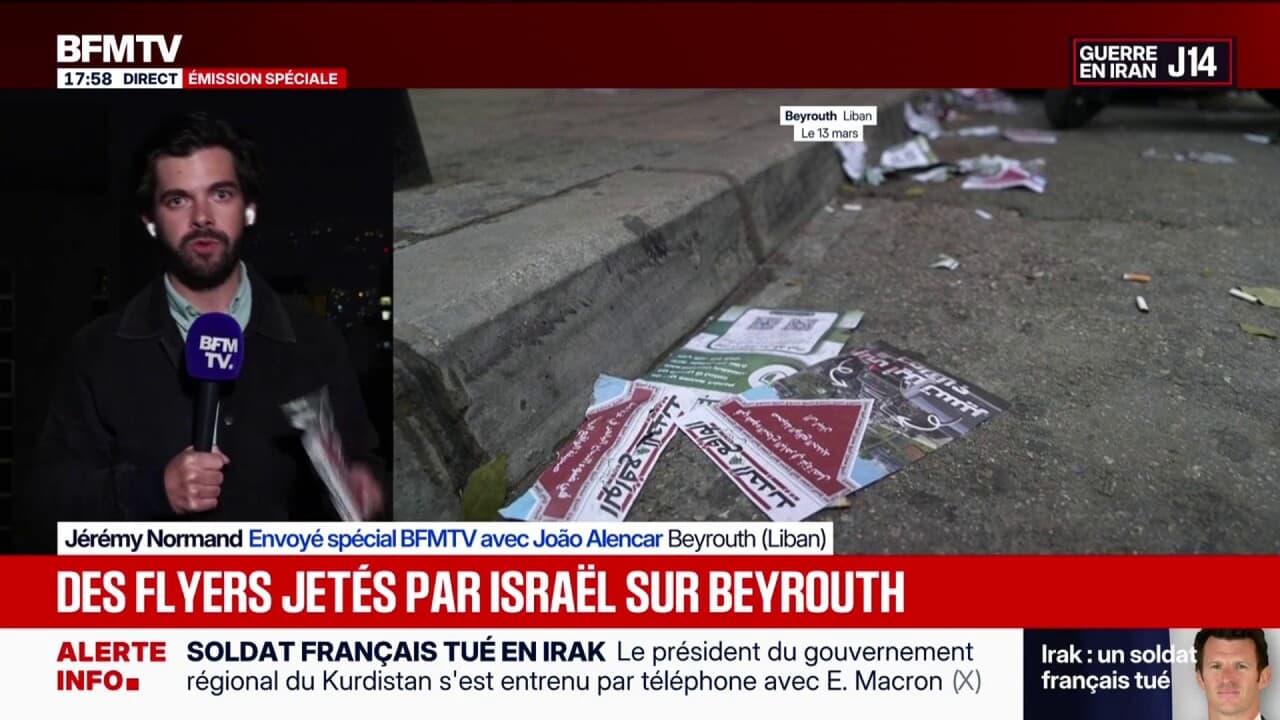
The escalating tensions in the Middle East took a new turn on Wednesday, March 13, 2026, as reports emerged of leaflets dropped over Beirut, Lebanon, by Israeli aircraft. This action, occurring amidst a backdrop of regional conflict and heightened rhetoric, has raised concerns about potential escalation and the impact on civilian populations. The leaflet drop coincides with increased international focus on the broader conflict, including a recent attack in Iraq that claimed the life of a French soldier and escalating statements from the United States regarding Iran.
While the content of the leaflets remains largely unconfirmed, initial reports suggest they were intended as a warning to the Lebanese population. The timing of this event is particularly sensitive, coming after the death of Adjudant-chef Arnaud Frion, a French soldier killed in Iraq on Tuesday evening, March 12, 2026. French President Emmanuel Macron has stated France will continue to act with “sang-froid and calm” despite the loss, reaffirming that France is not currently engaged in war. Simultaneously, former U.S. President Donald Trump has asserted that the United States intends to “totally destroy the Iranian terrorist regime,” further amplifying the volatile atmosphere.
Leaflets Over Beirut: A Signal of Intent?
The dropping of leaflets by Israeli forces over a capital city is a tactic with a complex history in the region. Historically, such actions have served various purposes, ranging from psychological warfare aimed at demoralizing the population to delivering specific warnings about impending military operations. Without confirmed details regarding the leaflet’s content, It’s difficult to ascertain the precise intent behind this particular instance. But, the act itself is a demonstrative one, signaling a clear message from Israel to Lebanon and potentially to other regional actors. The situation is further complicated by the ongoing conflict in Gaza and the broader network of proxy conflicts playing out across the Middle East.
The Lebanese government has yet to issue a comprehensive statement regarding the leaflet drop, but initial reactions suggest concern and a call for restraint. Lebanon, already grappling with a severe economic crisis and political instability, is particularly vulnerable to further escalation. The country shares a border with both Syria and Israel and has historically been a focal point for regional conflicts. The presence of Hezbollah, a powerful Shia political and military organization, within Lebanon adds another layer of complexity to the situation. Hezbollah has engaged in past conflicts with Israel, and any escalation could quickly draw the organization into a direct confrontation.
International Reactions and Concerns
The international community is closely monitoring the situation in Lebanon and Iraq. The death of the French soldier in Iraq has prompted expressions of condolences from various nations and renewed calls for de-escalation. Macron’s emphasis on maintaining “sang-froid and calm” reflects a desire to avoid further entanglement in the region’s conflicts. However, the increasingly bellicose rhetoric from the United States, particularly Trump’s statement about “totally destroying” Iran, raises concerns about a potential widening of the conflict. KSAT reported on the latest developments, highlighting the growing threat to the global economy as the situation deteriorates.
The European Union has similarly expressed concern over the escalating tensions and has urged all parties to exercise restraint. EU officials have emphasized the importance of diplomatic solutions and have offered to facilitate dialogue between the involved parties. However, the prospects for a swift resolution appear dim, given the deep-seated mistrust and conflicting interests at play. The situation is further complicated by the involvement of multiple external actors, each with their own agendas and priorities.
The Situation in Iraq: A French Soldier Lost
The death of Adjudant-chef Arnaud Frion in Iraq represents a significant escalation for France’s involvement in the region. According to reports, Frion was killed in a drone attack. AOL.com and Al Jazeera both reported on the incident, noting that it was the first death of a French soldier in the region since the start of the current conflict. France has a contingent of troops in Iraq as part of the international coalition against ISIS, but their role has increasingly been focused on providing support to Iraqi security forces and training local personnel. The attack raises questions about the security of French forces in Iraq and could lead to a reassessment of France’s military presence in the country.
The Broader Context: Iran and Regional Power Dynamics
The escalating tensions are inextricably linked to the broader geopolitical rivalry between Iran and its regional adversaries, particularly Israel and Saudi Arabia. The United States’ role in the region has also been a significant factor, with its policies often exacerbating existing tensions. The collapse of the Iran nuclear deal in 2018 and the subsequent reimposition of sanctions have contributed to a sense of instability and have emboldened hardliners within Iran. The recent attacks on commercial vessels in the Red Sea, attributed to Houthi rebels in Yemen (backed by Iran), have further heightened concerns about a potential wider conflict.
The situation is further complicated by the ongoing war in Gaza. The conflict has created a humanitarian crisis and has fueled anti-Israel sentiment across the region. Hezbollah has repeatedly exchanged fire with Israel across the Lebanese border, raising fears of a full-scale conflict. The leaflet drop over Beirut can be seen as a signal of Israel’s willingness to escalate the conflict if necessary. The potential for miscalculation and unintended consequences is high, and the risk of a wider regional war remains a significant concern.
What Happens Next?
The immediate future remains uncertain. The next few days and weeks will be critical in determining whether the situation escalates further or whether a path towards de-escalation can be found. Key developments to watch include the Lebanese government’s response to the leaflet drop, any further attacks in Iraq or Lebanon, and the diplomatic efforts of international actors. The United Nations Security Council is expected to hold an emergency meeting to discuss the situation, but the prospects for a meaningful resolution are limited given the deep divisions among its members. The ongoing conflict in Gaza will also continue to be a major factor, and any significant developments there could have ripple effects across the region.
The situation is incredibly fluid, and the potential for miscalculation is high. Continued diplomatic efforts, coupled with restraint from all parties, are essential to prevent a further escalation of the conflict. The international community must work together to address the underlying causes of the instability and to promote a lasting peace in the region.
Stay informed: For the latest updates on this developing story, please refer to reputable news sources such as Reuters, the Associated Press, and the BBC. We will continue to provide updates as the situation evolves.
What are your thoughts on the escalating tensions in the Middle East? Share your comments below.