Spain Marks 50 years Since the End of Franco’s dictatorship, Facing a Troubling Rise in Historical Revisionism
Fifty years ago this week, on November 20th, Spain transitioned from the grip of a nearly four-decade-long dictatorship under Francisco Franco to a nascent democracy. This milestone isn’t simply a historical anniversary; it’s a stark reminder of the fragility of freedom and a moment of reckoning as Spain confronts a concerning trend of historical revisionism,notably among younger generations.
Spanish Prime Minister Pedro Sánchez underscored the importance of the date, writing in elDiario.es that it marked not only the end of Western Europe’s last dictatorship but also “the beginning of a journey that would lead us to regain freedom and prosperity and to win back lost democracy.” He emphasized the unique opportunity Spain now enjoys,a possibility that seemed distant just half a century ago.
A Legacy of Division & Rising Concerns
Tho, the path to fully reconciling with this past remains fraught with challenges. Franco’s legacy continues to deeply divide Spanish society. Experts are increasingly alarmed by the spread of misinformation on social media, fostering a surprisingly positive view of the dictatorship among those with limited firsthand knowledge of the era.
Recent polling data paints a troubling picture. A survey published by El País revealed that nearly one-quarter of Spaniards aged 18-28 believe an authoritarian regime might “sometimes” be preferable to democracy. Moreover, around 40% hold a “very good,” “good,” or neutral opinion of the Franco regime, while 55% view it negatively.
This trend is particularly concerning given the brutal realities of Franco’s rule. His dictatorship, established after the Spanish Civil War (1936-1939), was characterized by:
* Political Repression: Systematic suppression of political opposition, including imprisonment, torture, and execution.
* Censorship: Strict control of the media and artistic expression.
* Economic Hardship: Initial autarky (economic self-sufficiency) led to widespread poverty and hardship, though the economy improved in later years.
* Cultural Suppression: Restrictions on regional languages and cultures, particularly in Catalonia and the Basque Country.
Sánchez directly addressed this issue, stating, “It is indeed precisely now, when some idealise authoritarian regimes and cling to nostalgia for a past that never was, when we must step forward in defense of a freedom that was snatched from us for so many years.”
Commemoration & Political Friction
While the government has designated 2024 as a year to celebrate “50 years of Spain at Liberty,” no official commemorative events were scheduled for the actual anniversary date. The intention is to spread recognition throughout the year.
This approach has drawn criticism from the conservative opposition, who accuse Sánchez of exploiting the past – what they call “playing the Franco card” – to divert attention from corruption investigations facing his coalition government. They’ve vowed to repeal legislation aimed at honoring victims of the Franco regime should they regain power.
The political polarization was evident in events held on Thursday. A mass in Franco’s honor took place at the Valley of Cuelgamuros, formerly known as the Valley of the Fallen - a controversial monument built by the Franco regime to commemorate those who died in the Civil War.
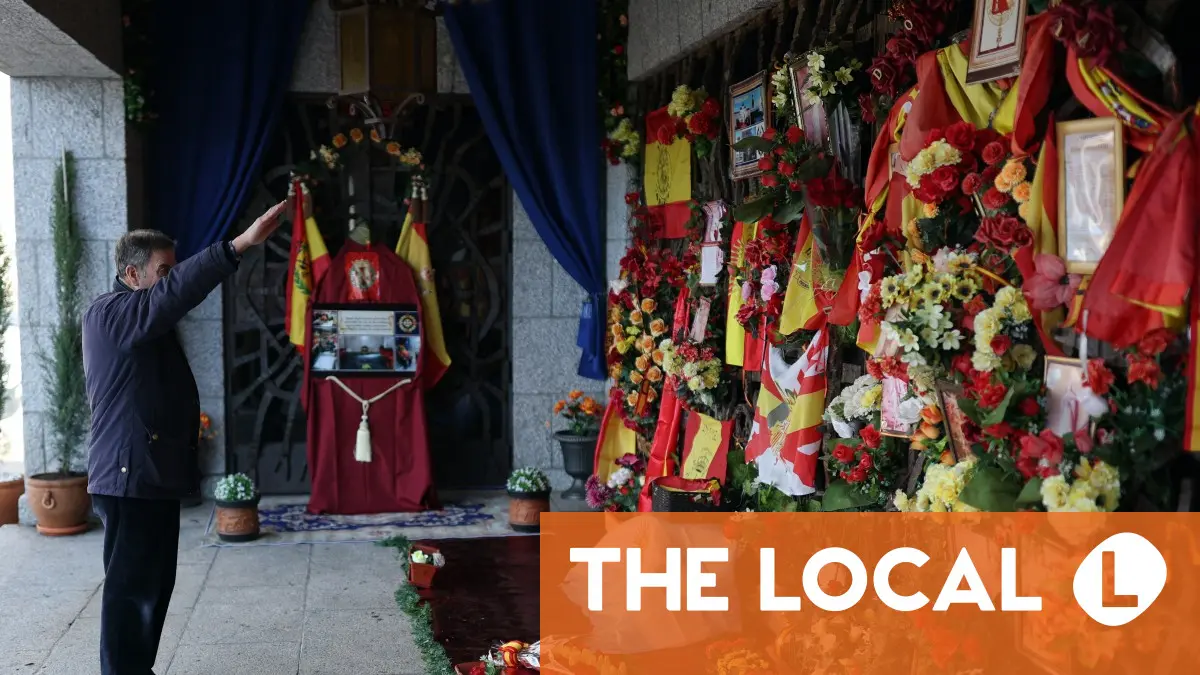
The government controversially exhumed Franco’s remains from the Valley in 2019, renaming it to discourage it from becoming a shrine for far-right sympathizers. Despite this, around 25 people gathered at his current resting place in a Madrid cemetery, some offering flowers and performing fascist salutes.
Luis López, a 48-year-old attendee carrying a Franco-era flag, told AFP that the dictator “did a lot for the country and his true worth is not recognised.” The Francisco Franco Foundation, currently facing dissolution efforts by the government, and Franco’s family organized commemorative masses across Spain.
Why This Matters to You
The situation in Spain serves as a crucial case study for democracies worldwide. It highlights the importance of:
* Historical Education: Ensuring future generations understand the realities of authoritarianism and the value of democratic principles.
* Combating Misinformation: Actively addressing the spread of false or misleading narratives about the past.
* Protecting Democratic Institutions: Vigilantly defending the freedoms and rights
Keep reading