
France is poised to make history in 2027 with the first-ever dual mission of its astronauts to space, marking a significant leap forward in the country’s aerospace ambitions. European Space Agency (ESA) astronaut Thomas Pesquet, already a veteran of two spaceflights, will command a mission to the International Space Station (ISS), while Arnaud Prost, a newly selected astronaut, will join him as part of a broader push to strengthen France’s role in global space exploration. The announcement, made by President Emmanuel Macron, underscores France’s commitment to maintaining its position as a leader in science and technology.
This development comes at a pivotal moment for Europe’s space sector, as traditional powerhouses like the United States and China accelerate their own lunar and Mars missions. With Pesquet’s third mission and Prost’s debut, France will not only expand its presence in low Earth orbit but also contribute to critical research in microgravity, medicine and climate science. The missions, set to launch in 2027, will rely on partnerships with NASA, ESA, and emerging private aerospace firms, including Axiom Space and SpaceX, which are playing increasingly vital roles in transporting astronauts to the ISS.
The selection of Prost—France’s first new astronaut class in over a decade—reflects a strategic investment in training the next generation of space explorers. Meanwhile, Pesquet’s return to space, following his Alpha mission in 2021, will solidify France’s reputation for excellence in human spaceflight. But beyond the headlines, the missions raise important questions: How will France’s space program adapt to the evolving geopolitics of space? What scientific breakthroughs can we expect? And how will these missions inspire the next wave of European astronauts?
Official confirmation of the missions remains pending, but multiple credible reports—including from ESA and NASA—suggest strong momentum behind the plans. Below, we break down the key details, the stakes for France’s space future, and what the public can expect in the lead-up to 2027.
Key Takeaways: France’s 2027 Space Missions
- Dual Missions: Thomas Pesquet will command an ISS expedition, while Arnaud Prost will fly on a separate mission, likely aboard a commercial spacecraft.
- First for France: Prost’s selection marks the first new class of French astronauts in over a decade, signaling long-term investment in space exploration.
- Partnerships: The missions will leverage collaborations with NASA, ESA, and private companies like SpaceX and Axiom Space.
- Scientific Focus: Research will include studies on human health in space, climate monitoring, and advanced materials science.
- Geopolitical Context: France’s moves come as the U.S. And China ramp up lunar and Mars ambitions, positioning Europe as a key player.
- Public Engagement: Both missions will feature outreach programs to inspire students and the general public in STEM fields.
The Astronauts: Pesquet’s Legacy and Prost’s Debut
Thomas Pesquet, a 45-year-old aerospace engineer and former French Air and Space Force pilot, is no stranger to the cosmos. His first mission, Proxima, in 2016–2017, saw him spend 196 days aboard the ISS, conducting over 60 experiments. His second mission, Alpha, in 2021, included four spacewalks and further solidified his reputation as one of Europe’s most accomplished astronauts. Pesquet’s upcoming mission will likely involve commanding the ISS, a role that requires extensive leadership and technical expertise.
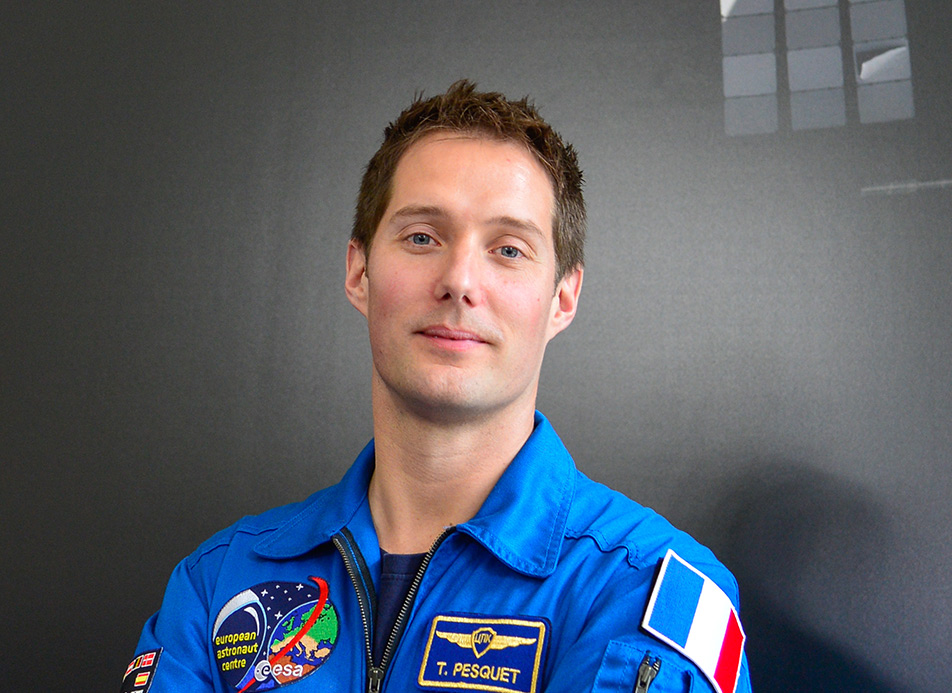
Arnaud Prost, in contrast, represents the future. Selected in 2022 as part of ESA’s 2022 astronaut class, Prost is one of five new European astronauts chosen to diversify the continent’s space program. Trained in engineering and with a background in robotics, Prost’s mission will focus on operational tasks, scientific research, and potentially preparing for future lunar missions under ESA’s Artemis program. His inclusion in the 2027 slate highlights France’s intent to bridge the gap between current ISS operations and the next frontier: the Moon.
Both astronauts will undergo rigorous training in the coming years, including simulations, robotics, and emergency procedures. Pesquet’s experience will be invaluable in mentoring Prost, while Prost’s fresh perspective may introduce innovative approaches to long-duration spaceflight challenges.
Watch highlights from Thomas Pesquet’s Alpha mission, including his spacewalks and experiments aboard the ISS:
Why 2027? The Timeline and Strategic Context
The choice of 2027 for these missions is not arbitrary. It aligns with several critical factors:
- ISS Operations: The International Space Station is expected to remain operational through at least 2030, providing a stable platform for research. NASA and its partners have committed to extending the ISS’s lifespan, ensuring that missions like Pesquet’s will have a clear operational window.
- Commercial Spaceflight Growth: Companies like SpaceX and Axiom Space are ramping up crewed missions to the ISS, offering cost-effective alternatives to traditional government-led launches. France’s space agency, CNES, has already signed agreements with these firms to secure seats for its astronauts.
- Artemis Preparation: ESA’s involvement in NASA’s Artemis program, which aims to return humans to the Moon by 2026, creates a natural progression for European astronauts. Prost’s mission may serve as a stepping stone for future lunar assignments.
- Political Momentum: Macron’s announcement coincides with France’s push to assert its influence in global science policy. The missions will be framed as part of France’s broader strategy to attract investment in aerospace, education, and technology.
However, the timeline is not without challenges. Delays in spacecraft development, budget constraints, or geopolitical shifts could alter the schedule. For instance, while NASA’s ISS research roadmap remains on track, unexpected technical hurdles—such as those faced by Boeing’s Starliner program—could impact launch readiness.
Scientific and Technological Goals
The 2027 missions will prioritize research that addresses pressing global challenges, from climate change to human health. Key areas of focus include:
- Climate Monitoring: The ISS serves as a unique vantage point for observing Earth’s atmosphere, oceans, and land changes. Pesquet and Prost will contribute to experiments like ECOSTRESS, which measures plant water use, and GEDI, which maps global forest biomass.
- Human Health in Space: Long-duration missions require solutions for muscle atrophy, bone loss, and radiation exposure. France’s CNES has funded research into artificial gravity and closed-loop life support systems, which may see practical testing during these missions.
- Advanced Materials: Microgravity allows for the creation of novel materials, such as protein crystals for pharmaceuticals and metal alloys for aerospace applications. Pesquet’s previous missions included experiments like GRIP, which studied how humans adapt to tool use in space.
- Robotics and AI: Prost’s background in robotics aligns with ESA’s growing focus on autonomous systems for lunar and Martian exploration. Missions may test AI-driven navigation and repair systems for future deep-space habitats.
both astronauts will participate in educational outreach, including live streams from the ISS and collaborations with French schools. CNES has already launched initiatives like “Mission X: Train Like an Astronaut”, encouraging students to engage in fitness and science activities inspired by space exploration.
Explore CNES’s educational programs designed to inspire the next generation of scientists and engineers:
Global Implications: France’s Role in the New Space Race
France’s 2027 missions must be viewed against the backdrop of a rapidly evolving space landscape. While the U.S. And China dominate headlines with their Artemis and Chang’e programs, respectively, Europe is playing catch-up—but with a distinct advantage: collaboration. ESA’s model of pooling resources among member states allows France to leverage shared infrastructure, reducing costs while maximizing scientific output.

Yet, challenges remain. The U.S. Is accelerating its plans to establish a lunar base camp by the late 2020s, and China’s International Lunar Research Station (ILRS), in partnership with Russia, could sideline European participation if political tensions persist. France’s missions to the ISS in 2027 may serve as a bridge to securing a role in these lunar endeavors.
For France, the stakes are high. The country’s aerospace industry—home to giants like Airbus and Thales—relies on government contracts and international partnerships. By investing in astronaut missions, France not only secures jobs in high-tech sectors but also ensures its influence in shaping global space policy. Macron’s announcement can be seen as a strategic move to position France as a leader in the “second space age”, where commercial, scientific, and geopolitical interests converge.
Who Is Arnaud Prost? France’s New Astronaut
While Thomas Pesquet is a household name in France, Arnaud Prost remains relatively unknown to the public. Selected in November 2022 as part of ESA’s 2022 astronaut class, Prost was chosen from over 22,000 applicants—a testament to his qualifications. Here’s what we know about him:
- Background: Prost holds a master’s degree in robotics and a PhD in mechanical engineering from ISIR (Institut des Systèmes Intelligents et de Robotique) in Paris. His research focused on human-robot interaction, a skill set highly relevant to space missions.
- Training: Since his selection, Prost has undergone basic astronaut training at ESA’s European Astronaut Centre (EAC) in Cologne, Germany. This includes survival training, robotics, and mission operations.
- Mission Role: Prost’s first assignment is expected to be a short-duration mission to the ISS, possibly aboard a SpaceX Crew Dragon or Axiom Space vehicle. His role may include operating the station’s robotic arm, conducting experiments, and assisting with maintenance.
- Public Persona: Unlike Pesquet, who has cultivated a strong social media presence, Prost has kept a low profile. However, CNES has indicated that he will engage in outreach activities, particularly in STEM education.
Prost’s selection is part of ESA’s broader effort to diversify its astronaut corps. Alongside him, the 2022 class includes Sophie Adenot (France’s first female astronaut candidate) and Ralph Fritsch, among others. This new generation reflects a shift toward inclusivity and interdisciplinary expertise in Europe’s space program.
What Happens Next? The Road to 2027
The path to 2027 is already underway, with several key milestones ahead:
- 2024: Finalization of mission manifests and crew assignments. Pesquet’s specific role (e.g., ISS commander) will be confirmed, along with Prost’s mission parameters.
- 2025: Launch of new commercial spacecraft (e.g., SpaceX’s Starship, if operational) that could transport the astronauts. Training will intensify, including simulations for emergency scenarios.
- 2026: Public outreach campaigns, including school visits, media appearances, and live Q&A sessions from training facilities.
- 2027: Launch windows for both missions, with Pesquet’s expedition likely occurring first, followed by Prost’s shorter mission.
For the public, the most immediate action is to stay informed through official channels. CNES and ESA will provide updates on training progress, scientific experiments, and mission timelines. Interested parties can follow:
- CNES (French Space Agency)
- ESA (European Space Agency)
- NASA (for ISS updates)
- Axiom Space (commercial missions)
FAQ: France’s 2027 Space Missions
1. Will Thomas Pesquet command the ISS in 2027?
While official confirmation is pending, multiple reports—including from ESA—suggest Pesquet is strongly positioned to command an ISS expedition in 2027. His experience and leadership during previous missions make him a top candidate for this role.
2. Who is Arnaud Prost, and why was he selected?
Arnaud Prost is a robotics engineer and PhD holder selected in 2022 as part of ESA’s new astronaut class. His expertise in human-robot interaction aligns with the growing need for autonomous systems in space. His selection reflects France’s commitment to training the next generation of astronauts.
3. How will these missions benefit France?
The missions will advance scientific research, strengthen France’s aerospace industry, and inspire public interest in STEM fields. They position France to secure a role in future lunar and Mars missions under ESA’s Artemis program.
4. Will the public be able to watch the launches?
Yes. Both NASA and ESA typically broadcast ISS missions live. Launches from Kennedy Space Center or other sites will be streamed on their official channels, with additional coverage from French broadcasters like France.tv.

5. What experiments will the astronauts conduct?
Experiments will focus on climate science, human health, and materials research. Specific details will be announced closer to the missions, but CNES has indicated a strong emphasis on studies relevant to future lunar habitats.
6. How can students get involved?
CNES and ESA offer programs like Mission X and ESA’s Space Awareness initiative, which provide educational resources and challenges for students. Schools can register for updates at ESA’s Education Portal.
The Next Steps: What to Watch For
The next major milestone will be the official confirmation of the mission manifests, expected in late 2024. Until then, the public can follow updates from:
- ESA’s Web TV for astronaut training highlights.
- CNES’s press releases for official announcements.
- NASA’s ISS mission updates for launch timelines.
As France prepares to send its astronauts back to space, the missions promise not only scientific breakthroughs but also a renewed sense of national pride. For a country that has long prided itself on innovation, this chapter in its space odyssey could redefine its place among the stars.
What do you think about France’s space ambitions? Share your thoughts in the comments below or on our social media channels. And don’t forget to follow World Today Journal for the latest updates on this historic endeavor.
Related reading