As the tennis world turns its attention to Paris, the 2026 French Open stands as the ultimate test of endurance, tactical discipline and movement on the sport’s most demanding surface. Roland Garros remains a unique challenge where the red clay of the Stade Roland-Garros requires more than raw power. it demands a blend of patience and physical resilience that separates the elite from the hopefuls. With the tournament currently underway, the field of 2026 French Open contenders is shaping up to be one of the most compelling in recent memory.
The narrative heading into this year’s competition has been defined by a mix of established dominance and emerging questions regarding fitness and form. As we analyze the draw, the path to the trophy in Paris is never straightforward. Whether it is the tactical mastery required to navigate long rallies or the mental fortitude needed to handle the pressure of a Grand Slam, the players who find success here must be at the peak of their abilities.
The Frontrunners: Consistency Meets Clay Court Mastery
Heading into the tournament, the conversation regarding the men’s title has focused heavily on those who have shown the ability to maintain a high level of play throughout the European clay-court swing. Jannik Sinner has emerged as a central figure in this year’s discussions. His performance leading into mid-May has been characterized by a string of deep runs in major tournaments, cementing his status as one of the most complete players on the current tour. The Italian’s ability to transition his game to the unique requirements of clay has been a significant development, as he looks to capitalize on a season where he has already secured titles at Indian Wells, the Miami Open, Monte Carlo, and the Madrid Open.
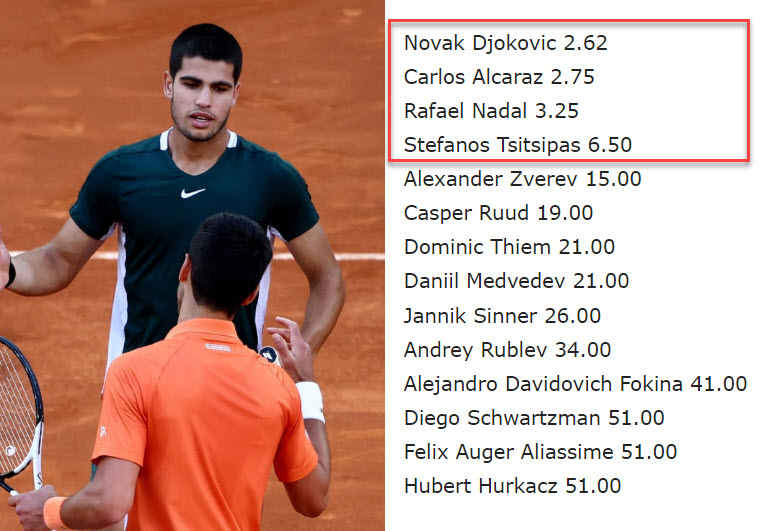
While Sinner occupies the spotlight, the field remains deep with talent. Players like Alexander Zverev, Novak Djokovic, and Arthur Fils are among those frequently mentioned by analysts and spectators alike as individuals capable of navigating the bracket. For competitors like Djokovic, the experience of winning on the sport’s biggest stages remains an invaluable asset, even as the tour sees a shift toward younger, highly athletic contenders who thrive on the tactical nuances of clay.
The Women’s Draw: A Competitive Landscape
On the women’s side, the expectation remains that Iga Swiatek is the player to beat. Her proficiency on clay is well-documented, and she enters Paris as a perennial favorite due to her movement and aggressive baseline play. However, the depth of the women’s field ensures that there is no room for complacency. Challengers such as Aryna Sabalenka and Coco Gauff have consistently proven that they possess the game to challenge for major honors.
For Sabalenka, the challenge lies in maintaining her power game while adjusting to the slower surface, a task she has navigated with increasing success in recent seasons. Gauff, meanwhile, continues to evolve as a player, bringing a high level of tactical awareness and defensive skill that makes her a formidable opponent on any surface. The competition at the 2026 French Open is not just about the favorites; it is about the ability of these top-tier athletes to sustain their intensity over a grueling two-week period.
Factors Influencing the 2026 Title Race
Several variables are currently impacting the potential outcome of the tournament. Injury concerns, which have been a recurring theme in professional tennis, remain a factor for several high-profile players. When a top-tier athlete deals with physical setbacks leading into a Grand Slam, the entire draw can open up, allowing for unexpected runs from lower-ranked players or “dark horses” who find their rhythm at the right time. Tactical discipline is perhaps the most critical factor at Roland Garros. The clay surface slows the ball down, forcing players to construct points rather than relying on quick winners. This favors those who can manage their energy effectively and maintain their focus through extended, high-intensity rallies.
Key Considerations for the Remainder of the Tournament
- Movement and Endurance: The ability to slide on clay and recover quickly is essential for defensive baseline play.
- Tactical Adjustments: Players who can vary their spin and pace often find more success on clay than those who rely solely on flat, powerful groundstrokes.
- Tournament Momentum: Performance during the lead-up tournaments in Monte Carlo, Madrid, and Rome often serves as a barometer for how a player will perform in Paris.
As the tournament progresses, fans and analysts will be watching closely to see which players can best adapt to the specific pressures of the French Open. The combination of the surface’s demands and the high stakes of a Grand Slam ensures that every match carries significant weight. Whether it is a veteran looking to add to their trophy cabinet or a rising star seeking a breakthrough, the 2026 Roland Garros remains the ultimate test of professional tennis excellence.
We will continue to provide updates as the tournament heads toward the final stages. For the latest official match results, draw updates, and schedule changes, please visit the official Roland Garros website. We invite our readers to join the conversation in the comments section below—who is your pick to lift the trophy this year?
Related reading