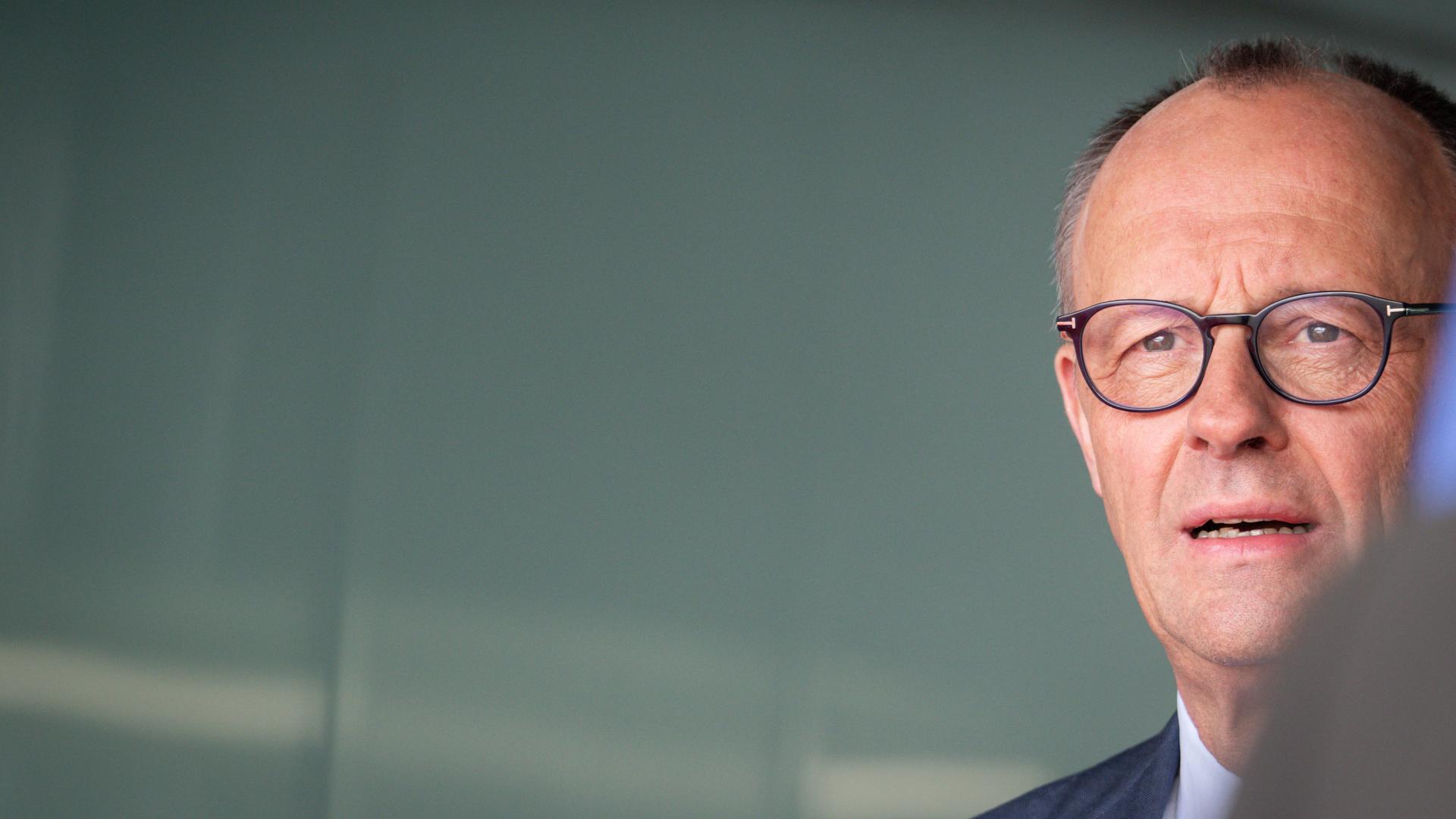
The political landscape within the Christian Democratic Union (CDU) is currently defined by a palpable sense of unease as media reports regarding a potential leadership transition continue to circulate. Friedrich Merz, the federal chairman of the CDU and the designated chancellor candidate for the upcoming federal election, finds himself at the center of a persistent, albeit speculative, discourse concerning his political future. While Merz remains the party’s official choice for the chancellorship, recurring rumors regarding North Rhine-Westphalia’s Minister-President, Hendrik Wüst, have introduced a layer of friction that threatens to undermine party unity during a critical electoral cycle.
These developments reflect the broader volatility of German politics, where internal party dynamics are often scrutinized with extreme intensity. The speculation, which has been amplified across various media outlets, suggests a divide between the conservative base represented by Merz and the more centrist, pragmatic approach associated with Wüst. As the next federal election, scheduled for February 23, 2025, approaches, the pressure on the Union—the coalition of the CDU and its Bavarian sister party, the CSU—to present a unified front has never been higher.
The Origins of the Leadership Speculation
The narrative surrounding a potential challenge to Merz is not a new phenomenon, but it has gained renewed traction as internal frustrations within the party have bubbled to the surface. Observers note that the discussion often centers on the perceived electability of the two men. Friedrich Merz has long been a polarizing figure, known for his firm conservative stance on fiscal and social issues. Conversely, Hendrik Wüst is frequently positioned by analysts as a more moderate, consensus-driven alternative who could potentially appeal to a broader segment of the electorate, particularly in the wake of the “traffic light” coalition’s struggles.

However, it is essential to distinguish between actual political maneuvering and media-driven conjecture. There is no official evidence to suggest that Wüst is actively campaigning for the chancellorship at this stage. Instead, the discourse appears to be fueled by anonymous sources within the party expressing dissatisfaction with the current trajectory of the campaign. According to recent reporting, the CDU leadership has been forced to repeatedly address these distractions to maintain focus on their core policy platform, which emphasizes economic revitalization and migration reform, as outlined in the party’s latest foundational program.
Internal Tensions and the Cost of Disunity
For the CDU, the timing of these rumors is particularly problematic. With the federal election less than two months away, the party is looking to capitalize on the waning popularity of the current administration. Infighting, or even the perception of it, serves as a gift to political opponents who are eager to highlight instability within the conservative camp. The frustration within the party is not merely about personalities; it is a fundamental debate about how to best position the Union to return to power in the Bundestag.
Recent public statements from the CDU hierarchy have been sharp and direct, aimed at stifling any further talk of a leadership change. Merz himself has dismissed the reports as unfounded, characterizing the discussions as distractions that do not reflect the reality of his strong support among the party’s delegates, and membership. The political stakes are incredibly high, as the party seeks to avoid a repeat of the internal divisions that plagued the Union during the 2021 election cycle, which ultimately resulted in the formation of the current coalition government.
Key Takeaways: The State of the CDU
- Official Standing: Friedrich Merz remains the undisputed chancellor candidate for the CDU/CSU, having secured the backing of the party leadership.
- The Wüst Factor: Hendrik Wüst continues to be viewed as a key player in the party’s future, though he has not publicly challenged Merz’s candidacy.
- Electoral Pressure: The upcoming February 23, 2025, election acts as a hard deadline for the party to resolve any internal messaging discrepancies.
- Media Impact: Persistent speculation is being treated as a strategic liability, forcing the CDU to spend valuable time on damage control rather than campaigning.
Looking Toward February 2025
As the campaign moves into its final, most intense phase, the focus for the Union will likely shift toward concrete policy delivery. The economic situation in Germany, characterized by sluggish growth and industrial challenges, remains the primary concern for voters. The CDU’s ability to articulate a clear vision for the nation’s future will be the deciding factor in whether the current speculation remains a peripheral noise or evolves into a genuine electoral hurdle.

The next major checkpoint in this political timeline is the final televised debates and the formal submission of party lists, which will solidify the Union’s platform. For now, the leadership is expected to maintain a disciplined message, emphasizing that the focus is on the country’s challenges rather than internal personnel debates. Supporters and critics alike will be watching closely to see if the party can maintain this posture as the campaign reaches its climax.
We will continue to monitor these developments as official statements are released in the lead-up to the February elections. For those interested in tracking the official progress of the campaign, the Federal Returning Officer’s website provides the most accurate and up-to-date information regarding electoral procedures and party registration. Please feel free to share your thoughts on the current political climate in Germany in the comments section below.
Keep reading