
The global real estate market is witnessing a significant shift toward adaptive reuse, where discarded industrial shells are reimagined as avant-garde residential spaces. This trend, characterized by the industrial warehouse conversion, blends the raw, utilitarian aesthetics of the past with the sustainable, wellness-focused requirements of modern habitation. For many homeowners, the appeal lies in the sheer volume of space and the architectural freedom that a warehouse provides, allowing for an open-concept lifestyle that traditional residential builds cannot replicate.
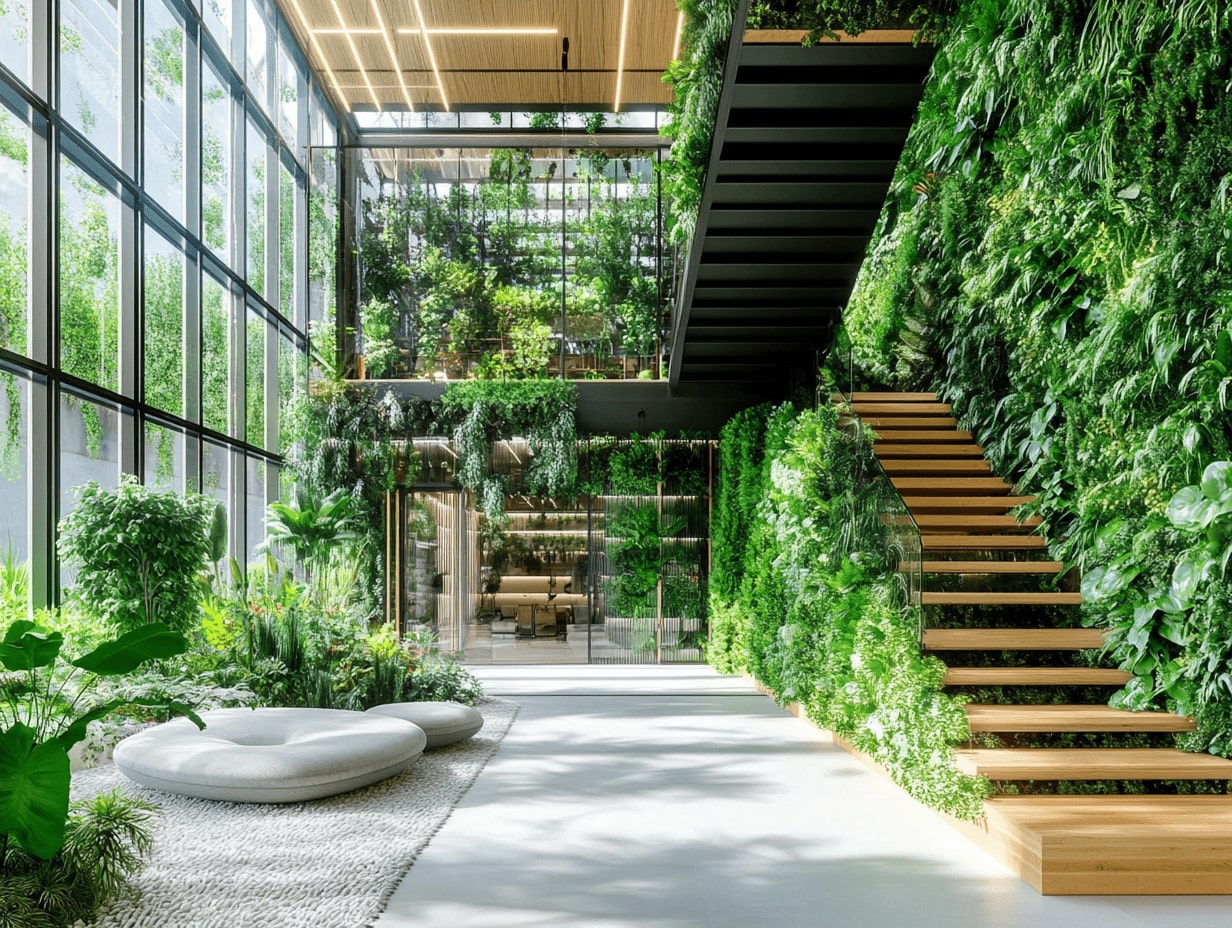
One such transformation has recently captured attention: the conversion of a stark industrial warehouse into a sanctuary designed to blur the line between the built environment and the natural world. Julie and Stefaan, the couple behind the project, invested a renovation budget of €375,000 to turn a cold, functional structure into a dream home. Their vision was not merely to inhabit a building, but to create a space where nature feels as though it is “embracing everything,” reflecting a growing architectural movement toward biophilic living.
From an economic perspective, such projects represent a complex intersection of high-risk investment and high-reward asset appreciation. Converting an industrial site requires navigating stringent zoning laws and addressing significant structural challenges—such as insulation and energy efficiency—that are often more costly than new construction. However, the resulting properties often command a premium due to their uniqueness and the inherent value of large-scale, open-plan living areas.
The project undertaken by Julie and Stefaan serves as a case study in how focused financial planning and a clear design philosophy can transform a liability into a luxury asset. By prioritizing light, greenery, and organic flow, they have moved beyond the typical “industrial loft” aesthetic to create a residence that prioritizes psychological well-being and environmental integration.
The Financial Blueprint of a Warehouse Transformation
Converting an industrial site into a habitable residence is a venture that demands rigorous budgetary discipline. For Julie and Stefaan, the €375,000 renovation budget was the engine that drove the project from a skeletal warehouse to a finished home. In the context of European real estate, such a budget must cover not only the aesthetic finishes but the critical “invisible” infrastructure required for residential certification.
Industrial buildings are typically designed for machinery and storage, not human comfort. So the primary expenditures often go toward thermal bridging, high-performance insulation, and the installation of complex HVAC systems to maintain a consistent temperature in high-ceilinged spaces. The cost of upgrading electrical grids and plumbing to meet residential codes often consumes a significant portion of the initial capital before a single piece of furniture is moved in.
the process of adaptive reuse often involves navigating the legalities of “change of use” permits. In many jurisdictions, transitioning a property from industrial to residential zoning requires meeting specific safety and environmental standards, including fire escape regulations and wastewater management. While these hurdles increase the upfront cost, they are essential for ensuring the long-term marketability and legality of the home.
For the economically minded, the value proposition of an industrial warehouse conversion lies in the square footage. By acquiring a structure that may have been undervalued due to its industrial designation, homeowners can create a high-value residential property that offers a scale of living—such as mezzanine levels and double-height ceilings—that is prohibitively expensive in traditional luxury developments.
Biophilic Design: When Nature Embraces Architecture
The defining characteristic of Julie and Stefaan’s home is the integration of biophilic design. This architectural approach seeks to connect occupants more closely to nature, based on the hypothesis that humans possess an innate tendency to seek connections with nature and other forms of life. Rather than treating the warehouse as a box to be decorated, the couple designed the space so that the outdoors feels integrated into the interior.
The phrase “as if nature is embracing everything” describes a layout where greenery is not an afterthought but a structural element. This is often achieved through the use of internal courtyards, floor-to-ceiling glass walls, and the strategic placement of indoor gardens that mirror the surrounding landscape. By maximizing natural light, the design reduces the reliance on artificial lighting and enhances the circadian rhythms of the inhabitants, a key tenet of wellness-centric architecture.
The contrast between the “hard” elements of the warehouse—exposed steel beams, polished concrete floors, and raw brickwork—and the “soft” elements of lush vegetation creates a sensory balance. This juxtaposition prevents the industrial aesthetic from feeling sterile or oppressive, turning the vastness of the warehouse into a breathable, organic environment.
Beyond aesthetics, biophilic design has documented benefits for mental health. Research into environmental psychology suggests that integrating natural elements into the workspace and home can lower stress levels, improve cognitive function, and increase overall life satisfaction. By investing in a home that prioritizes this connection, Julie and Stefaan have created a residence that functions as a sanctuary from the urban hustle.
The Logistics of Industrial-to-Residential Conversion
The journey from a warehouse to a dream home is fraught with technical challenges that require a multidisciplinary approach to construction. The first hurdle is typically the “shell” of the building. Industrial warehouses often suffer from dampness and poor ventilation, necessitating the installation of advanced moisture barriers and breathable wall systems to prevent mold and structural decay.
Another critical consideration is the management of acoustics. The very features that make industrial spaces attractive—high ceilings and hard surfaces—also make them acoustic nightmares, leading to excessive echo and noise pollution. To combat this, designers often incorporate acoustic panels, heavy textiles, and strategic partitions that break up sound waves without sacrificing the open-concept feel of the space.

Lighting is perhaps the most vital element in a successful conversion. Because warehouses are often deep structures with limited window openings, the introduction of skylights and light wells is essential. In Julie and Stefaan’s project, the emphasis on light serves two purposes: it sustains the indoor greenery and ensures that the massive interior volume does not feel cavernous or dark.
The selection of materials also plays a pivotal role. To maintain the industrial soul of the building while adding residential warmth, a palette of sustainable materials is often used. This might include reclaimed wood for flooring, natural stone for countertops, and lime-based plasters that allow the walls to “breathe.” These choices not only align with the biophilic theme but also increase the energy efficiency of the home by utilizing materials with better thermal mass properties.
Economic Impact and the Future of Adaptive Reuse
The trend of converting industrial spaces is not merely a stylistic choice; it is a response to the global need for more sustainable urban development. The Royal Institute of British Architects (RIBA) and similar global bodies have long advocated for the reuse of existing structures to reduce the carbon footprint associated with demolition and new construction. Every warehouse saved from the wrecking ball represents a massive saving in embodied carbon—the energy already spent to create the original concrete and steel.
From a market analysis perspective, these properties are becoming “trophy assets.” As the demand for flexible, large-scale living spaces grows—driven in part by the rise of remote work and the need for home offices—the value of converted warehouses is likely to rise. They offer a versatility that traditional homes lack, allowing owners to easily reconfigure their spaces as their needs evolve.
However, the success of these projects depends on the balance between preservation and modernization. The most successful conversions are those that respect the history of the building while ruthlessly updating its functionality. Julie and Stefaan’s approach exemplifies this balance: preserving the industrial scale while introducing a contemporary, nature-driven living philosophy.
As urban centers continue to evolve, we can expect to see more “hybrid” spaces. The boundary between commercial, industrial, and residential is blurring, leading to a new era of urban living where the home is no longer just a place to sleep, but a multifunctional ecosystem that supports work, wellness, and environmental stewardship.
For those considering a similar path, the lesson is clear: a successful industrial warehouse conversion requires a marriage of bold vision and meticulous financial planning. While the €375,000 investment was significant, the result is a property that transcends standard real estate metrics, providing a quality of life that is deeply connected to the natural world.
The next phase for many of these adaptive reuse projects involves the integration of “smart home” technologies to further optimize energy use in these large volumes. As energy costs fluctuate globally, the focus will shift toward making these converted giants as carbon-neutral as possible, ensuring that the homes of the future are as sustainable as they are elegant.
We invite our readers to share their thoughts on the rise of adaptive reuse. Do you believe the industrial aesthetic is a timeless trend or a passing phase? Let us know in the comments below or share this article with your network.
Worth a look