
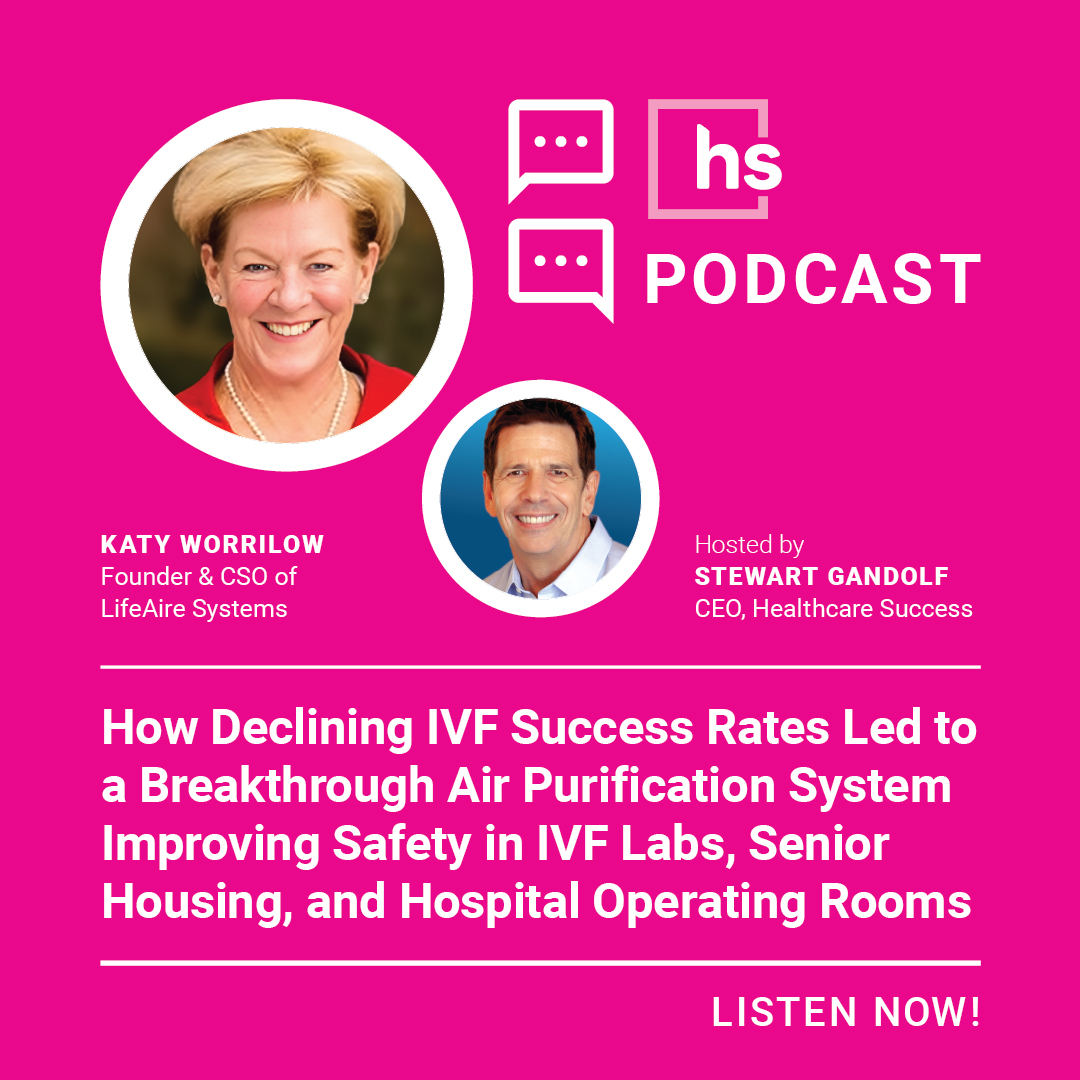
In the quiet corridors of in vitro fertilization laboratories, where the creation of life unfolds in incubators and petri dishes, a quiet crisis was unfolding. Despite consistent protocols, skilled staff, and state-of-the-art equipment, pregnancy rates began to falter in ways that defied explanation. For Dr. Katy Worrilow, a reproductive physiologist with over two decades of clinical experience, the pattern was impossible to ignore: unexplained drops in success rates that persisted across years, even as every other variable remained constant.
The turning point came not from a microscope or a hormone assay, but from the smell of asphalt on a hospital’s helipad. One evening, as Worrilow left her facility at a Level I trauma center, she noticed fumes rising from a resurfacing project. Curious, she asked for the material safety data sheet and discovered toluene—a volatile organic compound known to be cytotoxic—was being released. When she returned to her lab and tested the air, she found toluene present at parts per billion levels: concentrations far below human detection, yet sufficient to compromise the delicate process of embryo culture.
That moment sparked a years-long investigation into how invisible airborne contaminants—both chemical and biological—could be silently undermining reproductive outcomes. What began as a quest to protect the human embryo evolved into a broader mission: to eliminate airborne threats in healthcare environments where air quality directly impacts patient safety. The result was the development of a novel air purification technology now deployed not only in IVF labs but also in operating rooms, neonatal intensive care units, senior living facilities, and even international airports.
From IVF Labs to Hospital-Wide Protection: The Science Behind the Technology
At the core of the innovation is a fundamental distinction between filtration and destruction. Traditional HEPA filters, while effective at capturing particles, do not destroy them. Instead, they trap pathogens—bacteria, viruses, fungal spores—on their surface, where they can remain viable, multiply, or even release volatile byproducts that may re-enter the air stream. In sensitive environments like IVF labs, where embryos are cultured for up to six days, this poses a significant risk.
Worrilow’s team sought a solution that would not merely capture but destroy airborne threats entirely. After years of research and development, they engineered a system installed within ductwork that achieves a nine-log reduction in pathogens—meaning that for every one billion microorganisms entering the system, only one survives. This level of efficacy far exceeds the six-log standard typically associated with sterility in healthcare settings.

To validate the technology’s robustness, the team selected the anthrax spore as a benchmark—one of the most resilient biological agents known. Demonstrating efficacy against anthrax provided confidence that the system could neutralize a broad spectrum of threats, including influenza, SARS-CoV-2, MRSA, and C. Difficile. In fact, during the COVID-19 pandemic, existing clients reported that the system achieved a 145-log reduction against SARS-CoV-2, a testament to its powerful oxidative mechanism.
Importantly, the technology operates on a single pass of air, avoiding the need for multiple recirculation cycles. It also does not produce harmful byproducts such as ozone, a critical consideration in clinical settings where air safety is paramount.
Real-World Impact: Data from Hospitals and Senior Living Facilities
The technology’s journey from concept to clinical adoption was guided by a commitment to evidence. Before pursuing commercialization, the company invested in rigorous, IRB-approved studies to validate its impact in real-world healthcare settings. One such study, conducted in a hospital setting and compared against HEPA filtration, found a 30.2% reduction in healthcare-associated infections (HAIs) in units protected by the modern system.
That reduction in infections translated into measurable operational benefits: a statistically significant decrease in length of stay by 39.7%, a decline in readmission rates, and an estimated 23% cost savings per bed due to shorter hospitalizations. These findings were not modeled or projected—they were derived from actual patient data collected during the study period.
Similar benefits emerged in senior living environments. In one facility, a single unit installed on the roof was able to service an entire floor, reducing resident illness and infection by 39% and staff callouts by 47%. The latter is particularly significant in long-term care, where staffing shortages can compromise continuity of care and increase reliance on temporary agencies, which may lead to inconsistencies in resident familiarity and care quality.
For facilities lacking ductwork, the company has developed a modular, in-room unit currently undergoing evaluation through the FDA’s 510(k) process as a Class II medical device. This adaptation ensures that the technology can be deployed even in older buildings where retrofitting ductwork is impractical or cost-prohibitive.
Expanding Beyond Healthcare: Airports and Global Adoption
The technology’s success in healthcare settings attracted interest from other high-traffic, high-risk environments. Notably, an international airport reached out after reviewing published studies on the system’s performance in hospitals. The airport’s goal was to adopt a standard deemed “healthcare-appropriate” for its terminals, particularly in areas like TSA screening zones, where close contact among travelers and staff increases exposure risk.

Following installation, the airport reported a significant decline in staff callouts among TSA agents—a group historically vulnerable to respiratory illness due to constant public interaction. While the airport did not disclose specific figures, the improvement was described as “significant” by company representatives, echoing the trends seen in healthcare and senior living settings.
Today, the system is in use across more than 40% of IVF programs in the United States, with installations also reported in Canada, Europe, and Asia. Its adoption reflects a growing recognition that environmental factors—especially air quality—are not peripheral to clinical outcomes but central to them.
Why This Matters: Rethinking Environmental Health in Medicine
For decades, infection control in hospitals has focused on hand hygiene, surface disinfection, and personal protective equipment. While these remain essential, they address only part of the transmission pathway. Airborne pathogens—whether viruses like influenza or bacteria like tuberculosis—can travel distances, linger in poorly ventilated spaces, and infect individuals who have had no direct contact with an infected person.

The function emerging from Worrilow’s lab underscores a paradigm shift: that the air we breathe in healthcare settings is not a passive backdrop but an active determinant of health. Just as we sterilize instruments and disinfect surfaces, we must now consider the air itself as a vector that requires active management.
This perspective is gaining traction among infection control specialists and hospital administrators. Guidelines from organizations such as ASHRAE (American Society of Heating, Refrigerating and Air-Conditioning Engineers) increasingly emphasize the role of ventilation and air cleaning in reducing disease transmission. The pandemic accelerated this awareness, but the roots of the idea extend further back—into reproductive medicine, where the fragility of early development made even trace contaminants impossible to ignore.
Looking Ahead: Research, Regulation, and the Future of Air Safety
The company continues to invest in basic science research to understand exactly how airborne contaminants interfere with biological processes. Collaborations with institutions like Duke University and Lehigh University are investigating the mechanisms by which pollutants—both chemical and microbial—induce oxidative stress, disrupt cellular signaling, or trigger inflammatory responses in embryos and other sensitive cells.
From a regulatory standpoint, the technology’s path forward includes pursuing additional FDA classifications and seeking alignment with emerging standards for air quality in healthcare. While no federal mandate currently requires such advanced air purification in hospitals or long-term care facilities, growing evidence may influence future guidelines, particularly in specialty units like immunocompromised patient wards or neonatal nurseries.
For now, the message to healthcare leaders is clear: investing in air quality is not an indulgence—it is a clinical imperative. As one study concluded, the air in a hospital room may be as consequential to a patient’s outcome as the medication they receive or the skill of the surgeon who treats them.
Those interested in learning more about the technology, its clinical validation, or ongoing research can visit the company’s website or review peer-reviewed publications in journals such as Fertility and Sterility and American Journal of Infection Control. As the science of environmental health advances, one lesson is becoming impossible to ignore: sometimes, the most powerful interventions are the ones we cannot see.