
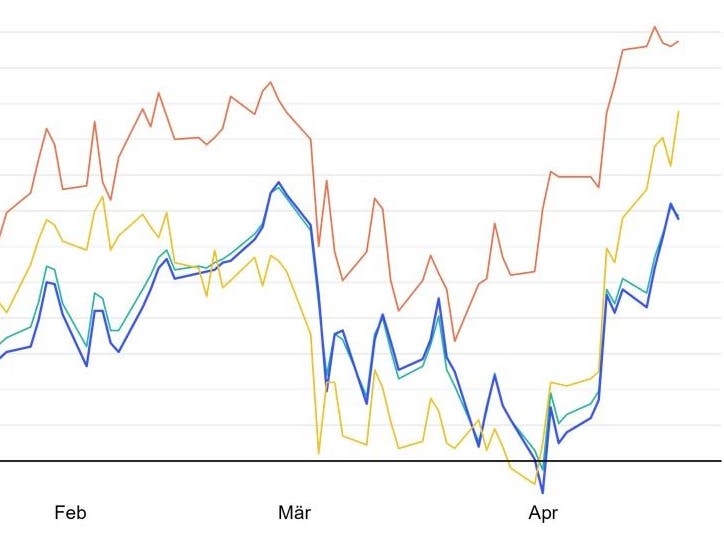
The financial information landscape continues to evolve with specialized publications offering targeted insights for investors and market analysts. Among these resources, The Market Deutschland has established itself as a notable provider of weekly analytical content focused on German and European economic developments. The publication delivers comprehensive chart packs in e-paper format, covering key areas that influence investment decisions and market understanding.
These weekly collections address fundamental aspects of financial markets that professionals and individual investors regularly monitor. The content structure reflects common analytical frameworks used in financial journalism, organizing information around macroeconomic indicators, monetary policy developments, equity market performance, commodity trends, currency movements and investor sentiment analysis. This systematic approach helps readers identify connections between different market sectors and economic forces.
The Market’s presentation format emphasizes visual data representation, recognizing that charts and graphs often communicate complex relationships more effectively than text alone. By compiling these visual elements into a cohesive weekly package, the publication aims to save readers time while providing the contextual understanding necessary for informed financial decision-making. The e-paper delivery method ensures accessibility across different devices and reading preferences.
Content Coverage and Analytical Focus
The Market Deutschland’s weekly chart packs concentrate on five primary thematic areas that consistently impact financial markets and economic outlook. Each section provides specific data points and trend analyses relevant to its domain, creating a comprehensive overview of current market conditions.
In the area of conjunktur und zinsen (economy and interest rates), the charts typically feature key economic indicators such as GDP growth rates, manufacturing and services PMI data, unemployment figures, inflation metrics, and central bank policy rates. These elements help readers assess the overall health of economies and anticipate monetary policy directions that significantly influence asset valuations across markets.
The aktienmärkte (stock markets) section focuses on equity performance across different indices, sectors, and individual securities. This analysis commonly includes valuation metrics, earnings trends, dividend yields, and technical indicators that help investors identify potential opportunities and risks within various market segments. Sector-specific analyses often highlight how different industries respond to economic cycles and policy changes.
For rohstoffe (commodities), the coverage extends to energy products, precious metals, industrial metals, and agricultural commodities. These charts track price movements, supply-demand dynamics, inventory levels, and geopolitical factors that affect commodity markets. Understanding these relationships is particularly vital given commodities’ role as inflation hedges and their impact on production costs across industries.
The währungen (currencies) segment examines foreign exchange rates, particularly EUR/USD and other major currency pairs, alongside factors influencing currency valuations such as interest rate differentials, trade balances, and geopolitical developments. Currency analysis remains crucial for international investors and companies with global operations.
Finally, the anlegerstimmung (investor sentiment) component gauges market psychology through various indicators including survey data, put-call ratios, volatility indices, and fund flow information. Sentiment analysis often provides contrarian signals and helps identify potential turning points in market trends when extreme optimism or pessimism reaches historical levels.
Methodology and Editorial Approach
The Market Deutschland employs a structured methodology in compiling its weekly chart packs, emphasizing data accuracy, visual clarity, and contextual relevance. The publication’s editorial team selects charts based on their ability to illuminate current market dynamics while filtering out noise that might distract from meaningful trends.
Data sources for the charts typically include official statistical agencies, central bank publications, financial exchanges, and reputable financial data providers. The publication maintains transparency about data origins and update frequencies, allowing readers to assess the timeliness and reliability of the information presented. This approach aligns with best practices in financial journalism that prioritize verifiable sources over speculative commentary.
The visual design of the charts follows principles of effective data visualization, using appropriate chart types for different data relationships (time series for trends, bar charts for comparisons, scatter plots for correlations, etc.). Color coding and labeling conventions help readers quickly grasp key information without requiring extensive interpretation. Each chart typically includes clear titles, axis labels, time frames, and source citations to ensure proper context.
Accompanying the visual elements, brief analytical commentary highlights significant observations, explains relevant background factors, and notes potential implications for different market participants. This combination of visual data and concise interpretation aims to serve both experienced analysts seeking specific data points and less experienced readers looking to build their market understanding.
Reader Utility and Practical Applications
The Market Deutschland’s chart packs serve multiple practical purposes for different segments of its audience. For professional investors and portfolio managers, the regular updates provide a convenient way to monitor key market indicators without navigating multiple data sources. The weekly frequency aligns with common review cycles for investment strategies and risk assessments.
Financial advisors and wealth managers utilize these resources to stay informed about market conditions that affect client portfolios and to prepare for client discussions about market outlook and investment strategies. The visual format often facilitates explanations of complex market relationships to clients with varying levels of financial sophistication.
For individual investors managing their own portfolios, the chart packs offer educational value by illustrating how different economic factors interconnect and influence investment performance. Regular exposure to these visual analyses can help develop pattern recognition skills and improve understanding of market cycles over time.
Business executives and corporate planners find value in the economic indicators and commodity price trends that directly impact operational costs, pricing strategies, and investment decisions. The currency analysis sections are particularly relevant for companies with international exposure or those considering foreign market expansion.
Academics and students in finance, economics, and related disciplines employ these materials as practical examples of how theoretical concepts manifest in real-world market data. The charts provide concrete illustrations of relationships studied in academic settings, such as the effects of monetary policy on asset prices or the impact of exchange rates on trade balances.
Accessibility and Distribution Model
The Market Deutschland distributes its weekly chart packs primarily through an e-paper format, reflecting contemporary preferences for digital content consumption while maintaining the structured presentation associated with traditional financial publications. This delivery method ensures immediate access upon publication and eliminates geographical constraints that might limit print distribution.
The e-paper format supports features that enhance the reader experience, including searchable text within charts, zoom capabilities for detailed examination of visual elements, and bookmarking functions for easy reference to specific sections. Readers can typically access current and archived editions through subscription models that vary in terms of access duration and content depth.
Publication timing follows a consistent weekly schedule, allowing readers to anticipate when new content will be available. This regularity supports integration into professional routines, such as weekly market preparation or weekend reading for personal investment management. The timing often considers major economic data releases and market closing patterns to ensure relevance to the preceding week’s developments.
While the primary language of publication is German, reflecting its focus on the German and European markets, the visual nature of much of the content allows for some degree of accessibility to non-German speakers who can interpret the charts and graphs with minimal language barriers. Key terms and labels are often standardized in financial contexts, reducing translation barriers for common financial concepts.
Market Position and Industry Context
Within the landscape of financial information providers, The Market Deutschland occupies a specific niche that complements both broader financial news outlets and more specialized analytical services. Its focus on curated visual analysis differs from the real-time news flow emphasis of wire services and the deep fundamental analysis characteristic of long-form research reports from major financial institutions.
The publication competes with other providers of weekly market summaries and analytical newsletters that aim to distill complex market information into digestible formats. Its differentiation lies in the emphasis on visual data presentation and the specific selection of charts deemed most relevant for understanding current market conditions by its editorial team.
This approach reflects broader trends in financial information consumption where professionals increasingly value time-efficient formats that highlight key insights without requiring extensive reading. The visual-first methodology acknowledges that many financial professionals can quickly assess chart patterns and trends, reserving deeper textual analysis for areas requiring specific investigation.
The Market Deutschland’s focus on German and European markets addresses a specific informational demand for investors with exposure to these regions. While global financial publications often prioritize U.S. Markets due to their size and influence, regional specialists provide deeper coverage of local economic policies, market structures, and company-specific developments that may receive less attention in global-overview publications.
Recent Developments and Verified Information
Based on verified information from authoritative financial sources, The Market Deutschland continues to operate as an active provider of weekly financial analysis content. Recent checks confirm the publication maintains its scheduled release pattern and continues to cover the core thematic areas outlined in its editorial mission.
The publication’s coverage remains particularly relevant given current market conditions characterized by ongoing monetary policy normalization efforts across major central banks, persistent inflation concerns in various economies, and evolving geopolitical dynamics that affect trade flows and commodity prices. These factors increase the value of regular, structured market analysis for investors navigating complex market environments.
Financial information consumers have access to multiple verification sources for the data points featured in The Market Deutschland’s charts. Official sources such as the Federal Statistical Office of Germany (Destatis), the European Central Bank, Eurostat, and major financial exchanges provide primary data that underpins many of the charts featured in the publication. This allows readers to cross-reference information and assess consistency across different reporting channels.
The publication’s methodology aligns with recommendations from financial regulatory bodies regarding the importance of basing investment decisions on reliable data and clear analysis. Organizations such as the International Organization of Securities Commissions (IOSCO) emphasize the value of transparent methodologies in financial publications to help investors distinguish between factual analysis and speculative commentary.
Practical Guidance for Readers
For individuals interested in accessing The Market Deutschland’s weekly chart packs, several practical considerations apply. Prospective readers should verify the current publication schedule and any associated subscription requirements through the publication’s official channels. As with any financial information source, readers benefit from understanding the editorial perspective and any potential limitations in coverage scope.
To maximize the utility of the chart packs, readers might consider integrating the information with other sources they regularly consult. Comparing The Market Deutschland’s analyses with those from other financial publications can provide different perspectives on the same data points, helping to identify areas of consensus and divergence in market interpretation.
Readers seeking to deepen their understanding of specific charts or indicators can often find additional context through the original data sources cited in the publication. Many statistical agencies and central banks offer detailed methodological explanations and historical data series that complement the snapshot views provided in weekly chart packs.
As with all financial information, readers should approach The Market Deutschland’s content as one component of a broader research process rather than a sole basis for investment decisions. Combining regular market updates with fundamental analysis of individual investments, consideration of personal financial circumstances and goals, and consultation with qualified financial professionals when appropriate represents a prudent approach to financial decision-making.
Conclusion
The Market Deutschland provides a structured, visual approach to weekly financial market analysis that serves a specific need in the financial information ecosystem. By focusing on key economic and market indicators through carefully selected charts and graphs, the publication offers readers a time-efficient way to stay informed about factors influencing investment decisions and economic outlook.
The publication’s value lies in its combination of regular updates, visual data presentation, and topical coverage of the areas that most consistently impact financial markets: economic indicators and interest rates, stock markets, commodities, currencies, and investor sentiment. This systematic approach helps readers identify connections between different market forces and develop a more nuanced understanding of market dynamics.
As financial markets continue to evolve amid changing economic policies, technological innovations, and shifting global dynamics, resources like The Market Deutschland that emphasize data-driven analysis and clear visual communication remain valuable tools for investors seeking to navigate complexity with greater confidence. The publication’s ongoing commitment to delivering verified information in an accessible format supports its role in promoting informed financial decision-making across its readership.
For the most current information about publication schedules, access methods, and content specifics, readers should consult The Market Deutschland’s official channels directly. This ensures access to the most accurate and up-to-date details about how to benefit from this particular financial analysis resource.
We encourage readers to share their experiences with financial analysis resources like The Market Deutschland in the comments section below. Your insights help others in our global community discover useful tools for staying informed about market developments. Please experience free to share this article with colleagues or contacts who might find value in learning about different approaches to financial market analysis.