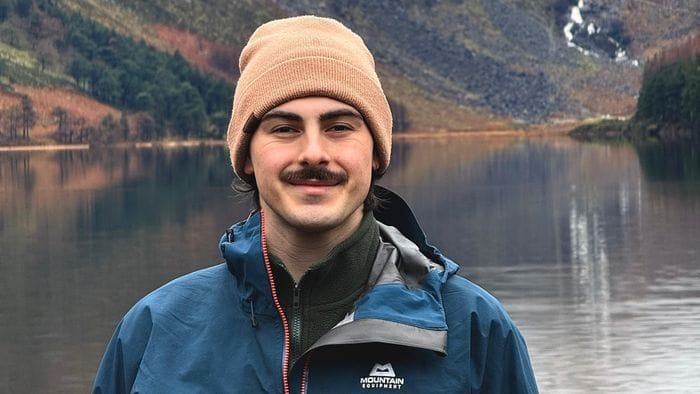
In the quiet town of Tavernola Bergamasca, a young boy’s fascination with dinosaurs and science fiction films laid the groundwork for a journey that would lead him across Europe to one of Ireland’s most prestigious academic institutions. Years later, that same curiosity about the natural world has found expression in advanced laboratory operate focused on the invisible mechanics of life itself.
Matteo Nosè, now 26, is a doctoral candidate at Trinity College Dublin, where he conducts research in the Monaghan Lab using cutting-edge microscopy techniques to study cellular and tissue behavior. His work centers on fluorescence lifetime imaging (FLIM) and Brillouin microscopy—methods that allow scientists to observe biological processes with exceptional precision without disturbing the samples under examination.
This path began not in a family legacy of academia, but through personal exploration. Nosè recalls being captivated by Jurassic Park and the Back to the Future trilogy during childhood, films that shaped his early vision of what a scientist could be. “Those movies created in me an ideal image of the scientist,” he has said, describing how they sparked a lasting interest in discovery, and understanding.
His academic foundation was built at the Antonietti Institute in Iseo, followed by undergraduate and graduate studies in Brescia. He completed a master’s degree in Medical Biotechnology in April 2024, graduating with top honors—110 e lode. The program provided rigorous training in genetic manipulation, cellular mechanisms, and disease pathways, areas he had long wanted to explore through hands-on research.
Before joining Trinity College, Nosè gained early laboratory experience in Brescia’s experimental oncology and immunology department during his undergraduate studies. Later, he spent time in Brno, Czech Republic, where he combined theoretical knowledge with practical lab work, reinforcing his commitment to experimental science.
In Dublin, his research focuses on applying advanced imaging to understand how cells respond to mechanical forces and biochemical signals—insights that could inform future developments in regenerative medicine and disease modeling. The Monaghan Lab, part of Trinity’s School of Physics, specializes in developing and applying novel optical techniques to biological systems, aligning closely with Nosè’s interests in the microscopic world.
Life outside the lab has also taken root in Ireland. Through the university’s climbing club, Nosè met his partner, Arina, a 25-year-old fellow enthusiast of the sport. The couple now lives together in Dublin, balancing academic pursuits with shared outdoor activities that have become part of their routine.
Trinity College Dublin, founded in 1592, is Ireland’s oldest university and consistently ranks among the top institutions in Europe for research output. Its physics and biomedical research programs attract international students seeking access to state-of-the-art facilities and interdisciplinary collaboration opportunities.
The FLIM and Brillouin techniques Nosè employs represent significant advances in biophotonics. FLIM measures how long a molecule remains in an excited state after absorbing light, providing information about its local environment—such as pH, ion concentration, or molecular interactions. Brillouin microscopy, meanwhile, detects subtle shifts in light scattered by acoustic vibrations within materials, offering a non-invasive way to assess mechanical properties like elasticity and viscosity at the microscale.
These methods are particularly valuable in studying complex biological systems where traditional approaches might alter or damage the specimen. By combining them, researchers can correlate biochemical activity with mechanical behavior in real time, opening new avenues for understanding processes such as embryonic development, cancer progression, and tissue healing.
Whereas Nosè’s work remains focused on foundational science, the techniques he uses are increasingly adopted in preclinical research and pharmaceutical testing. Experts note that such imaging methods could reduce reliance on invasive biopsies and improve the accuracy of drug response predictions in laboratory models.
His story reflects a broader trend of young European scientists pursuing specialized training abroad, often drawn by specific laboratory strengths or funding opportunities. In Nosè’s case, the alignment between his interests in advanced microscopy and the Monaghan Lab’s expertise made Trinity College a natural next step after completing his master’s in Italy.
As of April 2026, Nosè continues his doctoral research in Dublin, with no public announcement regarding post-graduation plans. Updates on his work would typically emerge through academic conferences, peer-reviewed publications, or official announcements from Trinity College’s School of Physics.
For readers interested in following developments in biophotonics and cellular imaging, Trinity College Dublin regularly shares research highlights through its website and official social media channels. The university also hosts public lectures and open days that provide insight into ongoing projects across its science faculties.
What began as a childhood fascination with dinosaurs on screen has evolved into a disciplined pursuit of knowledge at the smallest scales of life—a reminder that scientific careers often start not with certainty, but with curiosity.
Keep reading