
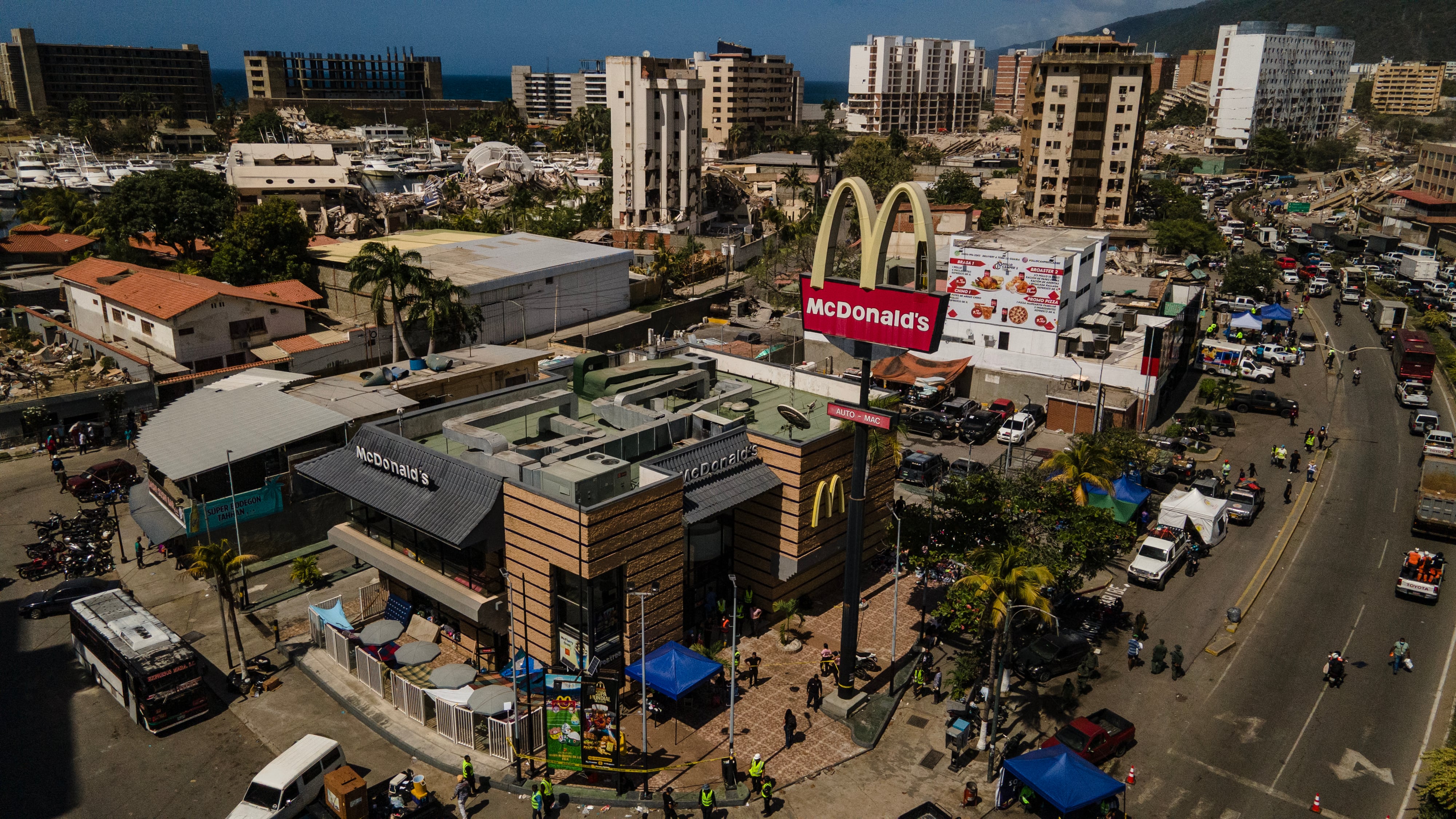
Medical volunteers in La Guaira, Venezuela, have transformed a vacant McDonald’s restaurant into an emergency field hospital to treat survivors of a recent, severe earthquake. The facility, which currently operates without standard medical infrastructure, serves as a primary point of care for those injured in the disaster, according to reports from the region. The conversion highlights the significant gap between emergency medical needs and institutional capacity one week after the event.
The makeshift clinic is sustained entirely by the efforts of local volunteers and private donations from the community. Medical personnel on-site have described performing complex procedures, including obstetric care, under extreme environmental conditions. The improvised hospital now stands as a symbol of the broader challenges facing the affected population, as authorities continue to assess the impact of what is described as one of the most significant natural disasters in the country in over a century.
Emergency Care in Unconventional Settings
The transition of commercial infrastructure into medical space has become a necessity in La Guaira as traditional healthcare facilities struggle to absorb the surge of patients. Medical staff report working in temperatures exceeding 40 degrees Celsius (104 degrees Fahrenheit), often relying on mobile phone lights to perform surgical interventions. The lack of reliable electricity and sterile environments has forced doctors to utilize specialized tools in improvised settings.
In one documented instance, a patient arrived at the site having delivered a child independently, requiring immediate surgical intervention to address life-threatening complications. According to reports from the medical team, doctors successfully performed a manual procedure to remove placental remnants using surgical-grade instruments. This operation, conducted under the constraints of the improvised environment, prevented significant blood loss and stabilized the patient.
Institutional Response and Community Resilience
The reliance on a repurposed fast-food location for critical care underscores the severity of the infrastructure damage in the region. While national disaster response protocols typically dictate the deployment of mobile military or government-run field hospitals, the presence of these volunteer-led efforts suggests a reliance on civil society to fill the void left by formal institutional failures. Local residents and survivors have provided the bulk of the supplies, ranging from basic bandages to specialized surgical equipment.
The situation in La Guaira remains fluid, with international aid organizations and local government agencies coordinating the next phases of recovery. According to the United Nations Office for the Coordination of Humanitarian Affairs (OCHA), disaster response in Venezuela often faces logistical hurdles, including the distribution of medical supplies to remote or heavily damaged areas. The current, localized reliance on volunteers is a common feature of the initial, chaotic phase of such large-scale events.
What Happens Next for Affected Populations
As the first week following the earthquake concludes, the focus is shifting from immediate search-and-rescue operations to the stabilization of essential services. The temporary hospital in La Guaira is expected to continue operations until more permanent medical structures can be re-established or until patients can be transferred to functional regional hospitals. Government authorities have announced that damage assessments are ongoing, with further updates on infrastructure recovery expected in the coming days.

Residents seeking information on medical support or disaster relief are encouraged to monitor updates from local civil defense authorities and official government portals. The sustainability of the volunteer-run facility depends on the continuous flow of donated medical supplies and the physical endurance of the personnel on the ground. Future reports from the Venezuelan Ministry of Health are expected to outline the long-term strategy for replacing these temporary measures with formal medical services.
Have you been affected by the recent earthquake in Venezuela or are you involved in local relief efforts? Please share your experiences or updates in the comments below.