
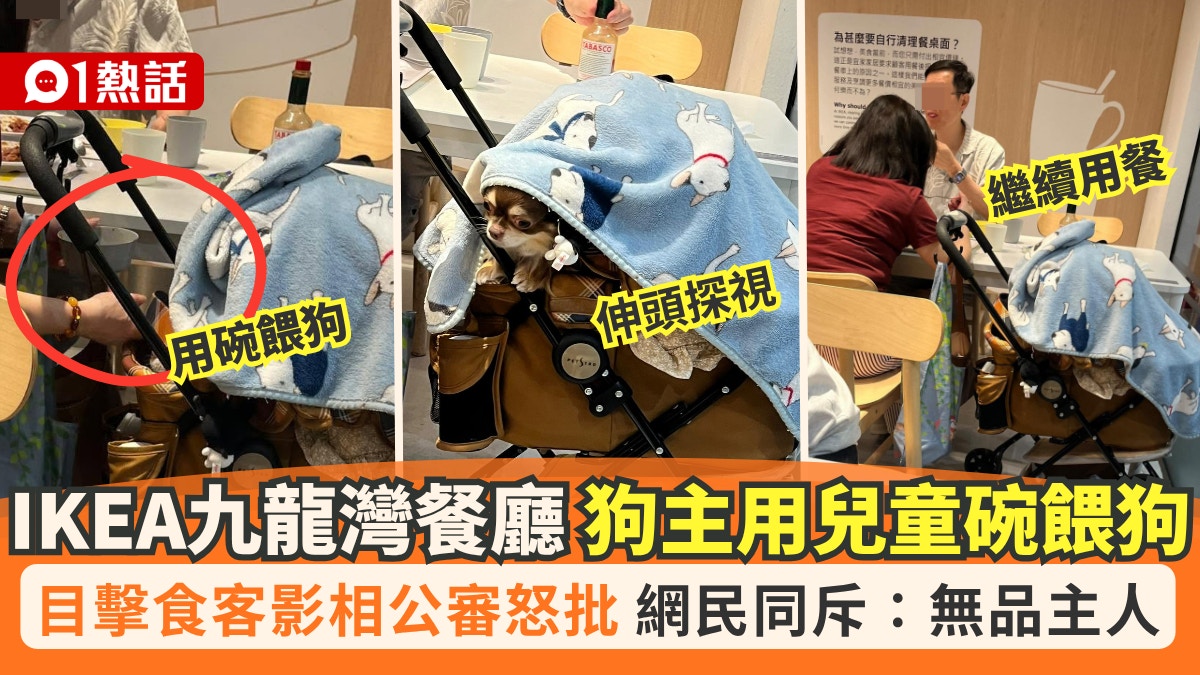
A pair of diners at the IKEA restaurant in Kowloon Bay, Hong Kong, faced public scrutiny after they were observed feeding a dog using the store’s children’s tableware. The incident, which occurred in a high-traffic retail dining area, has reignited discussions regarding pet policies and hygiene standards in public food service establishments across the territory.
According to eyewitness accounts circulating on social media platforms, the two individuals were accompanied by a dog while dining at the IKEA location. Photographs shared by other patrons appeared to show the dog consuming food directly from a plastic bowl typically provided for children in the cafeteria. The incident prompted immediate criticism from fellow diners, who raised concerns about the potential health risks and the appropriateness of bringing animals into food preparation and consumption zones.

IKEA Hong Kong maintains specific guidelines regarding the presence of animals within its stores. Under the company’s established customer service policies, pets are generally not permitted inside the restaurant areas, as these spaces are governed by strict food safety and hygiene regulations enforced by the Hong Kong Food and Environmental Hygiene Department (FEHD). The FEHD stipulates that food premises must take necessary measures to prevent the contamination of food and equipment, which includes the exclusion of animals from areas where food is handled or served, unless they are service animals assisting persons with disabilities.
The use of public-use dishware for animal feeding has been identified by health officials as a violation of basic sanitation protocols. In accordance with the Food Business Regulation, restaurant operators are required to ensure that all utensils are cleaned and sanitized after each use and are protected from contamination. Allowing a pet to eat from a bowl intended for human use, particularly a bowl designated for children, poses a significant cross-contamination risk that is not mitigated by standard dishwashing procedures.
Public reaction to the incident has been polarized, with many local residents expressing frustration over what they perceive as a lack of consideration for other patrons. Others have pointed to the broader challenge of pet-friendly infrastructure in Hong Kong, where the availability of facilities that accommodate both pets and their owners remains limited. This scarcity often leads to tension in shared public spaces, as pet owners seek venues that allow them to keep their animals nearby.
Retailers and food service providers in Hong Kong frequently navigate the balance between accommodating pet owners and maintaining compliance with stringent health codes. While some commercial centers have introduced designated pet-friendly zones, standard restaurant interiors are almost universally restricted to ensure compliance with Cap. 132X Food Business Regulation. Failure to adhere to these standards can result in warnings or penalties from the FEHD, which regularly conducts inspections to ensure that hygiene levels are maintained.

As of this report, there has been no official statement from IKEA regarding potential changes to enforcement or increased monitoring at the Kowloon Bay location. The company’s policy remains that only service animals are permitted in areas where food is served. Customers with concerns regarding hygiene practices in public dining areas are encouraged to contact the Food and Environmental Hygiene Department directly to submit formal feedback or lodge a complaint regarding specific safety violations.
This incident serves as a reminder of the importance of adhering to store policies and local health regulations when visiting public establishments. For further updates on retail policies or regional health mandates, readers are encouraged to monitor official announcements from the relevant government departments and the respective corporate websites.