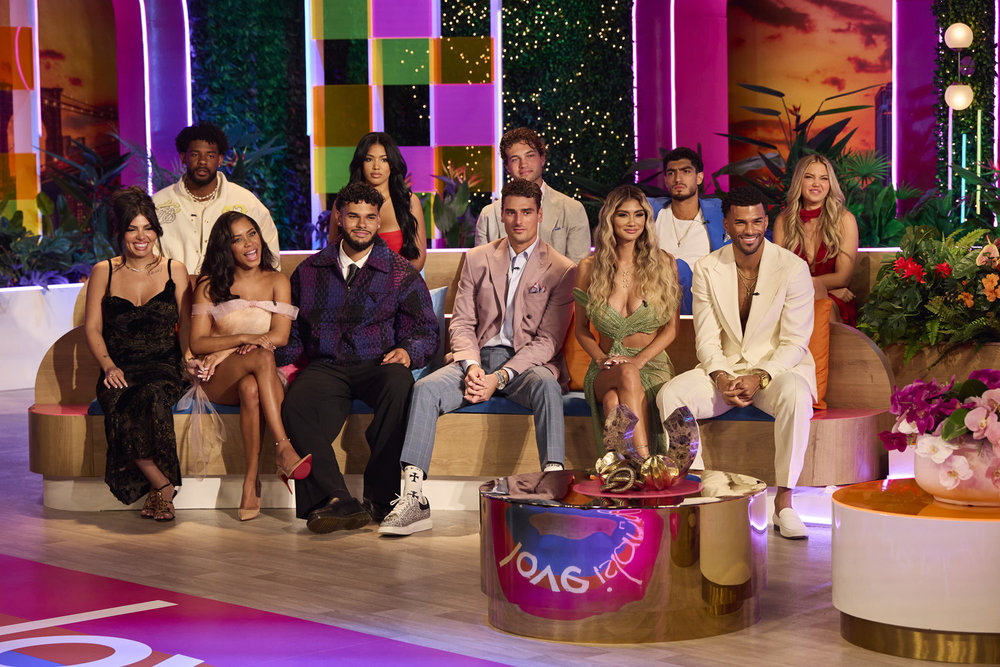
The series creates a repeatable blueprint for digital entrepreneurship. Contestants enter the show as “bombshells” and exit as personal brands, utilizing their social media growth to secure contracts with global beauty and fashion houses. This pipeline is evident in the career trajectories of recent winners and fan favorites who have converted short-term television fame into long-term capital.
From the first season to the most recent iterations, the show’s impact extends beyond the romantic couplings. It now functions as a primary casting ground for other high-stakes reality programming, creating a specialized class of “professional reality stars” who move fluidly between different competitive formats to maintain their public profile.
Converting Villa Fame into Brand Capital
The financial transition from contestant to influencer often begins with a surge in social media followers. For many, this visibility leads to high-profile partnerships with beauty and fashion giants.

Serena Page, the winner of Season 6, exemplifies the shift toward a professional public career. Her trajectory demonstrates how the show’s winner’s circle can be leveraged into a multifaceted business venture.
Kordell Beckham has similarly diversified his professional output. After stating his ambitions to be a brand ambassador for Cheez-Its during his time on the show, Beckham has since modeled for Rihanna’s Savage x Fenty and secured an acting role in the Keke Palmer-produced project Southern Fried Rice.
The Pipeline to Multi-Platform Reality Stardom
Love Island USA serves as a gateway to other competitive reality formats, allowing stars to sustain their relevance across different networks. Justine Ndiba has become one of the most prolific examples of this crossover success.
Other contestants have followed a similar path of “reality longevity.” Yamen Sanders, who debuted in the first season of Love Island USA, has maintained a consistent presence in the genre through appearances on Temptation Island, Love Island: All Stars, and Netflix’s Perfect Match. This movement between shows suggests that the “villa” is less a destination and more a starting point for a broader career in entertainment.
Cashay “Cash” Proudfoot of Season 3 also transitioned from the dating villa to the competitive environment of The Challenge, highlighting the shift from romantic pursuit to competitive television as a means of maintaining visibility.
Redefining Influence and Representation
The show’s impact is not only financial but cultural, as contestants use their platforms to challenge traditional norms. Kyra Green, a Season 1 participant, returned for Love Island Games and identified as a bisexual islander, coupling with Megan from the UK series.
Representation in style and identity has also played a role in the “influencer” transition. Cashay Proudfoot was noted for providing representation for short-haired Black women during her tenure in Season 3. Similarly, Olandria Carthen has used her “Alabama Barbie” persona to bridge the gap between regional identity and global fashion influence.
For others, the post-show experience is about professional pivots. Kay Kay Gray, a Season 5 original cast member and oncology nurse, has maintained a connection with her audience through TikTok updates, focusing on personal growth and healing after her time in the spotlight.
Strategic Career Pivots Post-Villa
Not every success story follows the modeling or acting route. Some contestants pivot toward media hosting and podcasting. Chelley Bissainthe, a Season 7 alumna, has transitioned into a full-time career in the spotlight by hosting red carpets and appearing on podcasts, securing work with entities such as Billboard and Cécred.

Clarke Carraway, a Casa Amor bombshell from Season 7, has built a career as a creator and model. Following her appearance on Beyond the Villa with partner Taylor, Carraway has focused on the “creator economy,” utilizing the initial spark of television fame to build a sustainable digital presence.
JaNa Craig has also utilized the post-show window to elevate her public profile, moving from the dating dynamics of the show to red carpet appearances and social media growth, signaling a move toward a more curated celebrity image.
As the franchise continues to evolve, the focus for new contestants is increasingly on the “after-show” strategy. The ability to turn a few weeks of televised romance into brand deals is now as central to the experience as the search for love.
Do you think the “influencer pipeline” changes the authenticity of the dating process? Share your thoughts in the comments below.
Related reading