
For millions of women worldwide, the gradual recession of the hairline and the slow disappearance of eyebrows can be more than a cosmetic concern—it may signal frontal fibrosing alopecia (FFA), a progressive scarring hair loss disorder that disproportionately affects postmenopausal women. While awareness of autoimmune hair loss conditions like alopecia areata has grown, FFA remains underdiagnosed and misunderstood, often dismissed as a normal part of aging. Yet for those living with it, the emotional and psychological toll can be profound. As a physician and health journalist, I’ve seen firsthand how early recognition and targeted treatment can make a critical difference in managing symptoms and improving quality of life.
Frontal fibrosing alopecia is characterized by the irreversible loss of hair at the frontal hairline and, in many cases, the eyebrows—a condition that can progress to affect the entire scalp over time. Unlike non-scarring alopecias, FFA leads to permanent fibrosis (scarring) of the hair follicles, making regrowth unlikely without intervention. The disorder is strongly linked to hormonal changes, particularly those occurring during menopause, though its exact cause remains an active area of research. What we do know is that FFA is not just a hair loss condition; it is a systemic autoimmune response that may also involve inflammation in other parts of the body.
Given its complex nature, accurate diagnosis and evidence-based treatment are essential. Below, we explore the latest clinical understanding of FFA, its potential triggers, diagnostic challenges, and emerging therapeutic approaches—all backed by peer-reviewed research and expert consensus.
What Is Frontal Fibrosing Alopecia (FFA)?
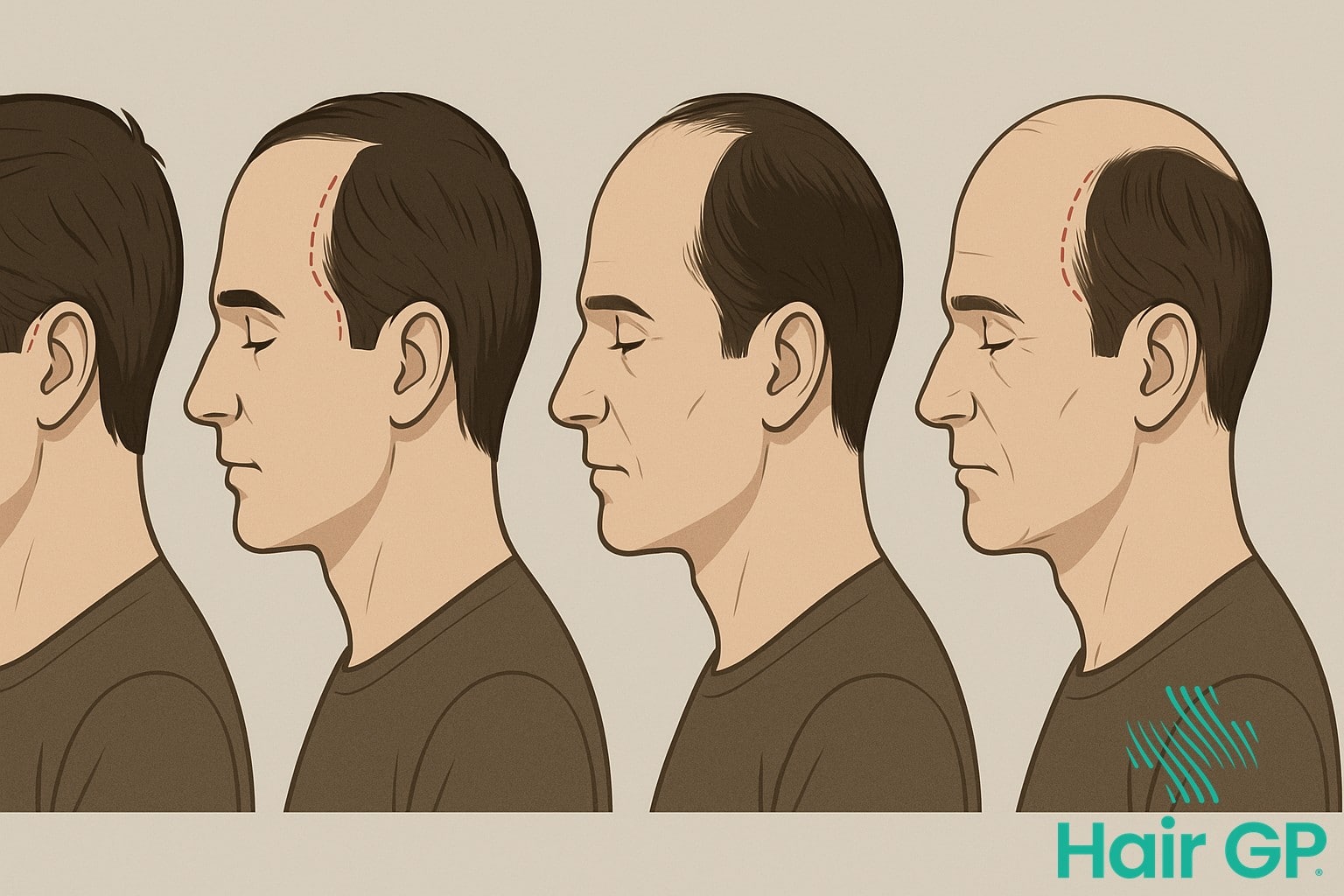
Frontal fibrosing alopecia is a primary lymphocytic cicatricial alopecia (PCLA), meaning it is a type of scarring hair loss driven by an overactive immune response. The hallmark of FFA is the gradual recession of the frontal hairline, often accompanied by loss of the lateral eyebrows—a pattern that can create a distinctive “H” or “M” shape when viewed from above. Unlike androgenetic alopecia (common male/female pattern baldness), FFA does not respond to conventional hair loss treatments like minoxidil or finasteride, underscoring the need for specialized care.
According to a comprehensive review published in the Journal of the American Academy of Dermatology, FFA was first described in the medical literature in 1994, but its incidence has risen significantly in recent decades, particularly among postmenopausal women. While the exact prevalence is difficult to determine due to underreporting, studies suggest that FFA accounts for approximately 1-2% of all alopecia cases, though this figure may be an underestimate given diagnostic delays. The condition is rarely seen in premenopausal women or men, though rare cases have been documented in transgender individuals undergoing hormone therapy.
Key diagnostic features of FFA include:
- A progressive recession of the frontal hairline, often with a sharp demarcation.
- Loss of the lateral one-third of the eyebrows (madarosis), which may precede scalp involvement.
- Perifollicular erythema (redness around hair follicles) and scaling.
- Histopathological evidence of lymphocytic infiltration and fibrosis on scalp biopsy.
Who Is Affected by FFA?
While FFA can theoretically affect anyone, the overwhelming majority of cases occur in postmenopausal women, with an average age of onset in the late 50s to early 60s. This strong association with hormonal shifts suggests that estrogen deficiency may play a role in triggering the autoimmune response. However, the condition has also been observed in:
- Premenopausal women, though far less commonly.
- Transgender women undergoing estrogen therapy, where FFA may emerge as a rare side effect.
- Postmenopausal men, though cases are exceedingly rare.
Beyond hormonal factors, research suggests that environmental and genetic predispositions may contribute to FFA. A 2021 study in Dermatology Practical & Conceptual highlighted a potential link between FFA and exposure to certain topical products or chemicals, though causality has not been established. Patients with FFA often report a history of other autoimmune conditions, such as thyroid disease or vitiligo, supporting the theory that FFA is part of a broader autoimmune spectrum.
Diagnosing FFA: Challenges and Best Practices
One of the greatest barriers to effective management of FFA is delayed or missed diagnosis. Many women attribute their hair loss to aging or stress, delaying medical consultation for years. When they do seek help, primary care providers or dermatologists may initially misdiagnose FFA as androgenetic alopecia or alopecia areata, leading to inappropriate treatments.
A definitive diagnosis of FFA requires a combination of clinical examination and scalp biopsy. Dermatologists typically look for:
- The classic “frontal band” of hair loss, often with a sharp edge.
- Eyebrow involvement, particularly the lateral third.
- Perifollicular inflammation or scaling.
If the clinical presentation is suggestive but not definitive, a punch biopsy of the affected scalp may be performed to identify lymphocytic infiltration and fibrosis—a hallmark of scarring alopecias. However, biopsies can be painful and are not always necessary if the diagnosis is clear clinically. Some experts recommend a trichoscopic evaluation (dermoscopy) as a non-invasive first step to assess hair follicle miniaturization and inflammation patterns.
Treatment Options: What Works and What Doesn’t
Unlike non-scarring alopecias, FFA does not respond to conventional hair loss treatments. However, emerging research offers hope for managing symptoms and potentially slowing progression. Current treatment strategies focus on:
1. Anti-Inflammatory and Immunosuppressive Therapies
The primary goal of FFA treatment is to reduce inflammation and modulate the immune response. First-line options include:
- Topical corticosteroids: Applied directly to the scalp, these can reduce inflammation and may help preserve remaining hair follicles. However, long-term use is limited by side effects like skin thinning.
- Calcineurin inhibitors (e.g., tacrolimus, pimecrolimus): These non-steroidal anti-inflammatory creams are often used for eyebrow involvement and may be better tolerated than steroids for long-term use.
- Oral antimalarials (e.g., hydroxychloroquine): Used off-label, these drugs have shown promise in small studies for reducing scalp inflammation in FFA patients.
A 2022 retrospective study in Journal of Drugs in Dermatology reported that combination therapy with topical corticosteroids and oral antimalarials led to stabilization or improvement in 60% of participants over a 12-month period. However, responses vary widely, and some patients experience no benefit.
2. Hormonal Therapies
Given the strong association between FFA and menopause, some clinicians explore hormonal interventions, though evidence is limited:
- Topical estrogen: Applied to the scalp, estrogen creams or serums have anecdotal reports of slowing progression, but no large-scale trials confirm efficacy.
- Systemic hormone replacement therapy (HRT): While HRT is commonly used for menopausal symptoms, its role in FFA is unclear. Some patients report improvement, while others see no effect.
A 2023 case series in Dermatologic Therapy suggested that topical estrogen combined with anti-inflammatory agents may offer synergistic benefits, but further research is needed.
3. Emerging and Experimental Treatments
Researchers are investigating novel approaches to target the underlying autoimmune mechanisms of FFA:
- Janus kinase (JAK) inhibitors: Originally developed for rheumatoid arthritis, these oral medications are being studied for their potential to suppress the immune response in FFA. Early case reports show promise, but long-term safety data are lacking.
- Biologics (e.g., rituximab): Used in severe autoimmune diseases, these drugs target specific immune pathways. A small study in International Journal of Trichology reported partial improvement in FFA patients treated with rituximab, though responses were variable.
- Platelet-rich plasma (PRP): While PRP is often marketed for hair regrowth, its role in FFA is controversial. Some clinicians use it off-label to stimulate follicle health, but evidence is mixed.
4. Supportive and Cosmetic Approaches
Since FFA leads to permanent scarring, many patients turn to non-medical strategies to manage appearance and emotional well-being:
- Hairpieces and extensions: Custom-made frontal hairpieces can restore a natural hairline and improve self-confidence.
- Eyebrow tattooing (microblading): A popular option for restoring eyebrows, though results may fade over time.
- Psychological support: Hair loss can significantly impact mental health. Support groups and counseling can help patients cope with the emotional toll.
Living with FFA: Patient Perspectives and Advocacy
For many women, the diagnosis of FFA is not just about hair loss—it’s about reclaiming agency over their appearance and health. Online communities, such as the National Alopecia Areata Foundation and Frontal Fibrosing Alopecia Support Group, provide vital peer support and resources. Patients often share strategies for managing symptoms, from dietary changes to alternative therapies, though it’s crucial to approach these with caution.
Advocacy efforts are also gaining traction. In 2024, the American Academy of Dermatology (AAD) launched an awareness campaign to educate dermatologists and the public about FFA, emphasizing early recognition and referral to specialists. Organizations like the Alopecia UK are pushing for increased funding for FFA research, particularly into its autoimmune triggers.
“Frontal fibrosing alopecia is often dismissed as ‘just hair loss,’ but the emotional impact is profound. Early diagnosis and targeted treatment can make a difference—yet many women wait years for answers.” @DrHelenaFisch
— Dr. Helena Fischer (@DrHelenaFisch) June 1, 2026
What’s Next for FFA Research?
While significant progress has been made in understanding FFA, critical gaps remain. Current research priorities include:

- Identifying the precise immune pathways driving FFA to develop more targeted therapies.
- Investigating potential environmental triggers, such as chemical exposures or infections.
- Evaluating the long-term safety and efficacy of emerging treatments like JAK inhibitors and biologics.
- Improving diagnostic tools to reduce delays in treatment.
One promising avenue is the study of microbiome interactions. Recent research suggests that alterations in the scalp microbiome may contribute to inflammation in FFA, opening doors for probiotic or antimicrobial therapies. A 2025 pilot study in Journal of Investigative Dermatology found that topical antimicrobials combined with anti-inflammatory agents showed early promise in stabilizing disease progression.
Key Takeaways: What You Need to Know
- FFA is a progressive scarring alopecia primarily affecting postmenopausal women, characterized by frontal hairline recession and eyebrow loss.
- Diagnosis requires clinical evaluation and often a scalp biopsy to confirm lymphocytic inflammation and fibrosis.
- Current treatments focus on reducing inflammation, with topical corticosteroids, antimalarials, and emerging biologics showing varying degrees of success.
- Hormonal factors play a role, but FFA is not solely a menopause-related condition—other autoimmune triggers may be involved.
- Early intervention is critical to preserve remaining hair follicles and improve quality of life.
- Patient advocacy and research funding are essential to advancing treatments and raising awareness.
When to See a Doctor
If you or a loved one is experiencing gradual hairline recession, eyebrow thinning, or scalp inflammation, consult a dermatologist or trichologist (hair specialist) as soon as possible. While FFA is not curable, early diagnosis can help manage symptoms and improve outcomes. Keep a record of your symptoms, including photos, to share with your healthcare provider.
For those seeking support, the following resources can provide guidance:
- National Alopecia Areata Foundation – Offers educational materials and support groups.
- Frontal Fibrosing Alopecia Support Group – Peer support and treatment updates.
- American Academy of Dermatology – Find a specialist near you.
The next major checkpoint in FFA research will be the 2026 International Investigative Dermatology (IID) Congress, where updates on clinical trials for JAK inhibitors and biologics are expected. Meanwhile, the Frontal Fibrosing Alopecia Research Fund is actively seeking participants for ongoing studies. If you or someone you know has been diagnosed with FFA, consider reaching out to these organizations to explore potential opportunities for involvement.
Frontal fibrosing alopecia may not yet have a cure, but the landscape of diagnosis and treatment is evolving rapidly. By staying informed, seeking specialized care, and connecting with the broader FFA community, patients can take proactive steps toward managing their condition—and reclaiming confidence along the way.
Have you or a loved one been affected by FFA? Share your experiences in the comments below, or connect with others in our Health Community. Together, we can raise awareness and drive progress in this often-overlooked condition.